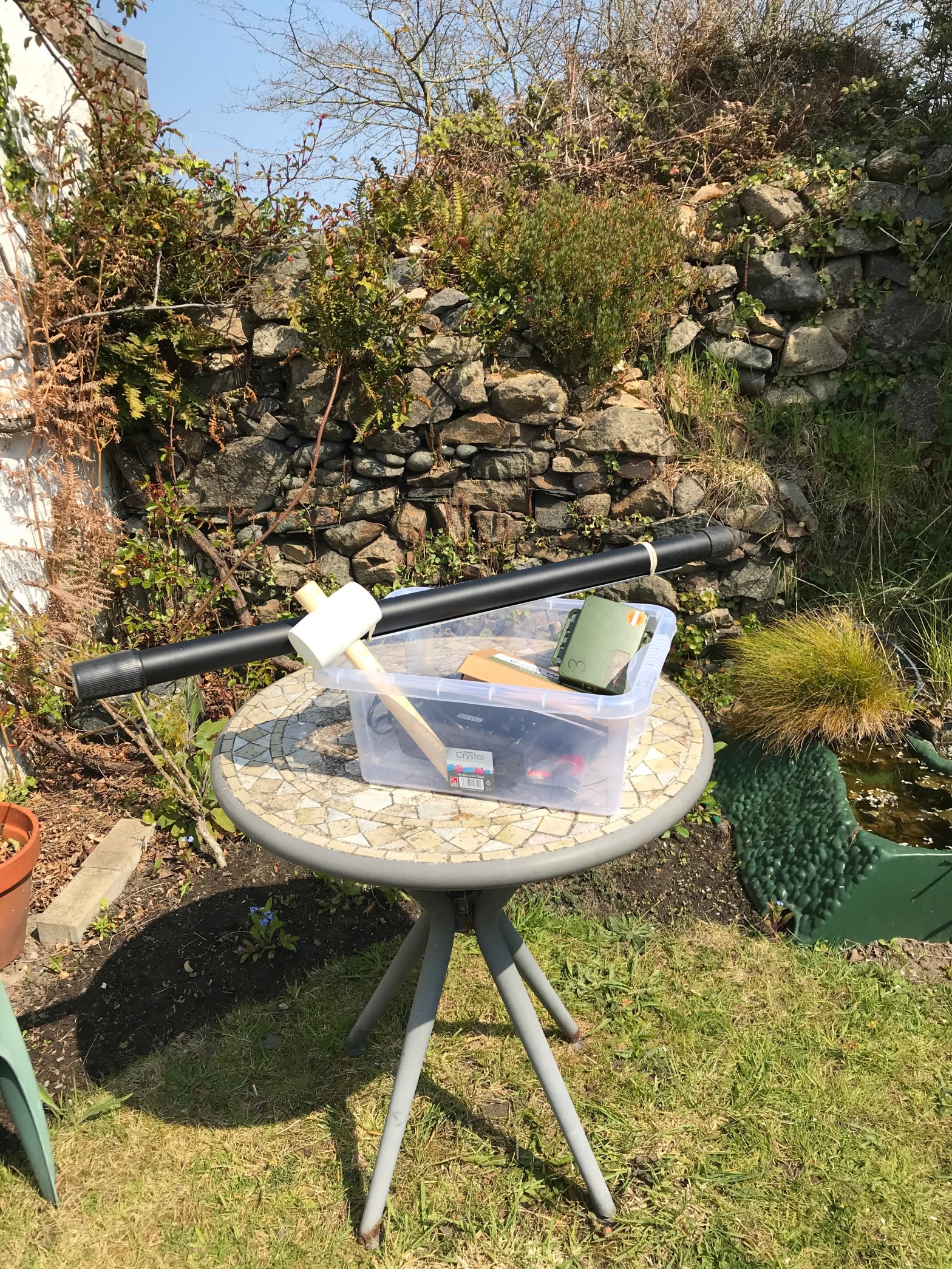
It’s the Bailiwick Bat Survey and the photo shows the equipment I picked up at the Biological Records Centre this morning. Honestly, I was rather taken aback by the amount of stuff, I was expecting something simple like a posh version of the detector that can be plugged into a smartphone. Why do I manage to do this on the day that my car is going in for a service? I am also rather alarmed as I am taking it over to Sark on Monday, with an extra stake and mallet for the detector at Sark School, so I think some stuff will go over on the Viking (Sark’s freight boat) on Thursday. As long as I don’t have to travel on the Viking, everything will be fine. We had to use it last autumn in rough seas. It was nasty, short and brutish!
The bat survey has had a good take up with many squares already allocated, so before I take my car to the garage later on, I will drop off the stake and post at a spot in my square and go back to set up the detector later this evening. (Not between 6.30 – 8.30 as I’m doing a Zoom course on moths – when do I get to cook my chicken stir fry?). The survey is linked to Guernsey’s Strategy for Nature and is running from this month through to the end of October. For more information go tohttps://www.biologicalrecordscentre.gov.gg/our-projects/bbs/ Sarah Allez of La Societe Guernesiaise is the co-ordinator and would be very pleased to give any advice and information. It’s the first time there has been an island-wide survey so the results will be interesting. She would be very happy to have some more volunteers, so if you’re reading this, give it a thought.
I enjoy seeing a tiny Pipistrelle bat flitting and darting up and down the lane in front of my cottage at dusk. I’ll be very interested to find if there are other bats out there. A few years ago I came across a dead Pipistrelle in the garden. Its fur was like velvet, so soft. As with other local species, habitat loss is a factor in the decrease of numbers. I would like to think that one result of this survey will be a greater awareness of the importance of maintaining and, if possible, increasing our natural habitats.
 Natural history of the Bailiwick of Guernsey