
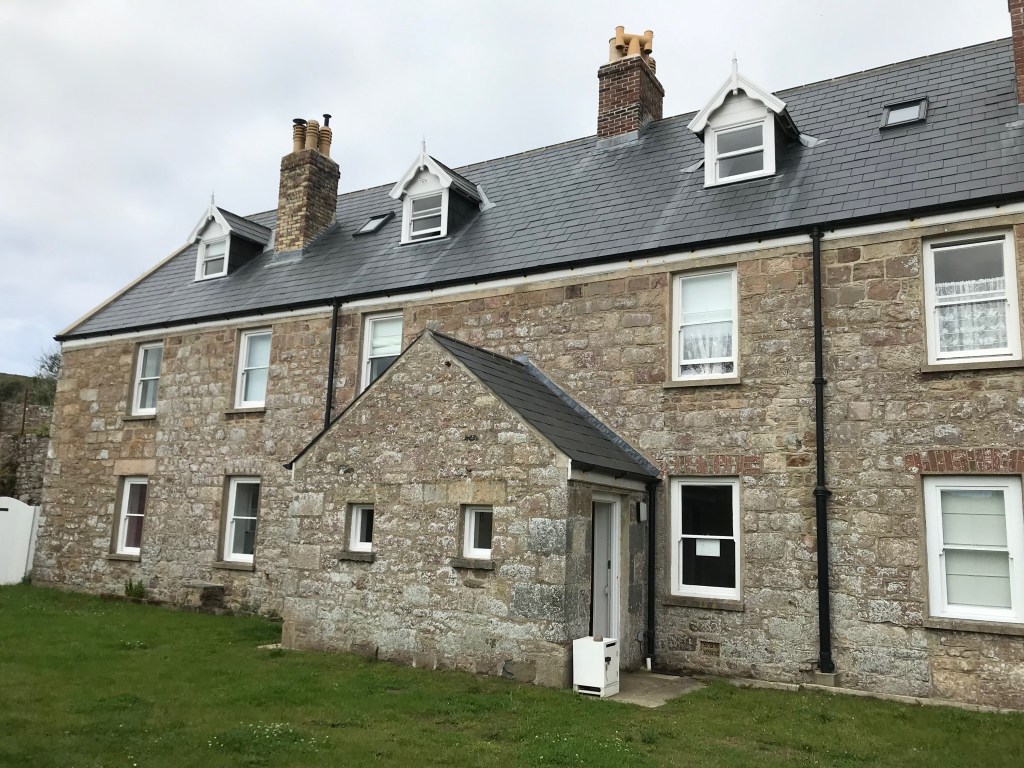
A summer trip to Alderney for a few days and, sadly, my last stay at the Nunnery in the beautiful location of Longis Bay, as the Alderney Bird Observatory will no longer be able to use it as hostel accommodation from the end of August.
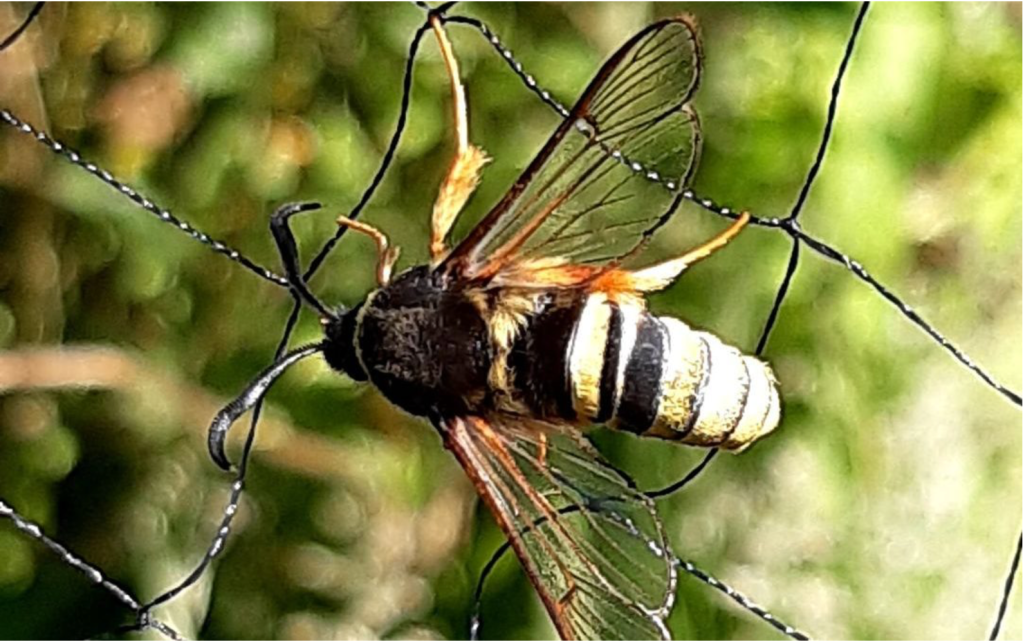
We did some ringing one morning, but the star of the show was a Lunar Hornet Moth. I had never seen one before. According to my field guide, this species of clearwing moth is local in the Channel Islands, but rarely seen and then usually in the morning when they have just hatched. I suspect that many people, like myself, glance at it and think ‘Wasp’. It spends two years as a larva, its favourite habitat is mature willows or poplar in damp ground. This is the case where the nets are at Longis where a stream runs down to the sea – I tried to jump it and didn’t make the opposite bank so Trevor had to haul me out with the furling pole! It flew off just moments after Trevor photographed it.
A short walk along the coast from Longis Bay bring you to Houmet Herbé which has had many bird sightings over the years. Common Terns are breeding in the old fort which is just offshore. It is close enough to see the adults bringing in fish to feed to their chicks. There is a wide variety of plants which in turn attract many insects.
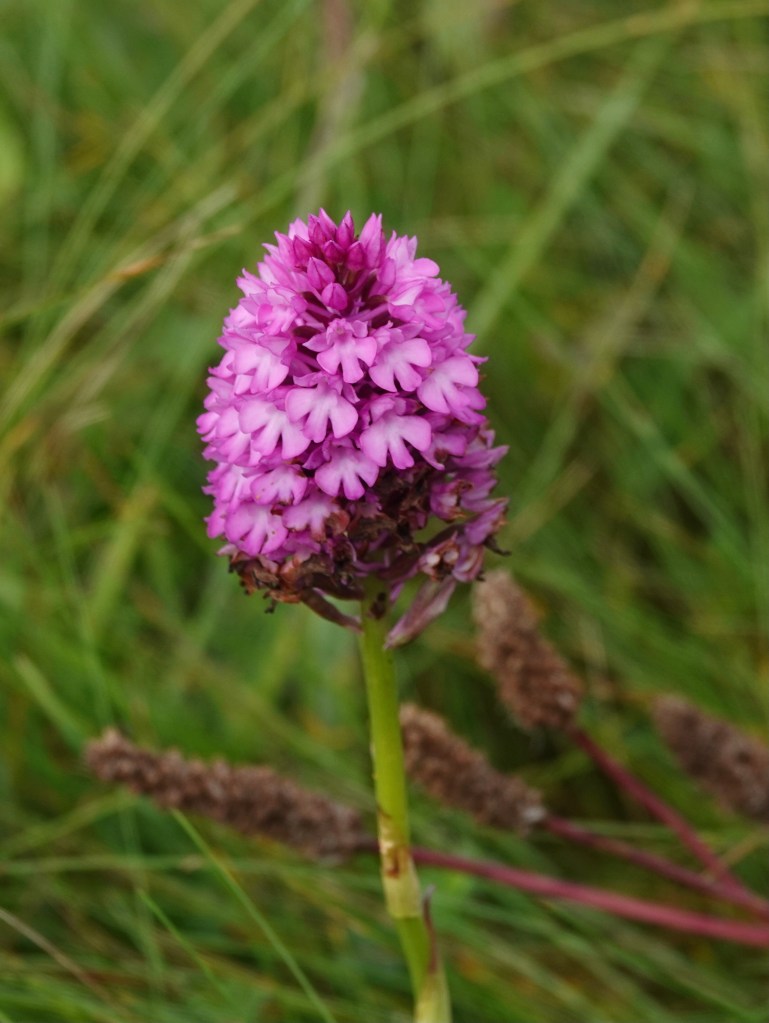
Pyramidal Orchid, Anacamptis pyramidalis, is widespread around the island, and the flower spikes stand out with their bright pink flowers. The colour can vary from magenta to white. They were just past their peak, but still conspicuous.
This small area of coastal habitat has a wealth of wildlife.
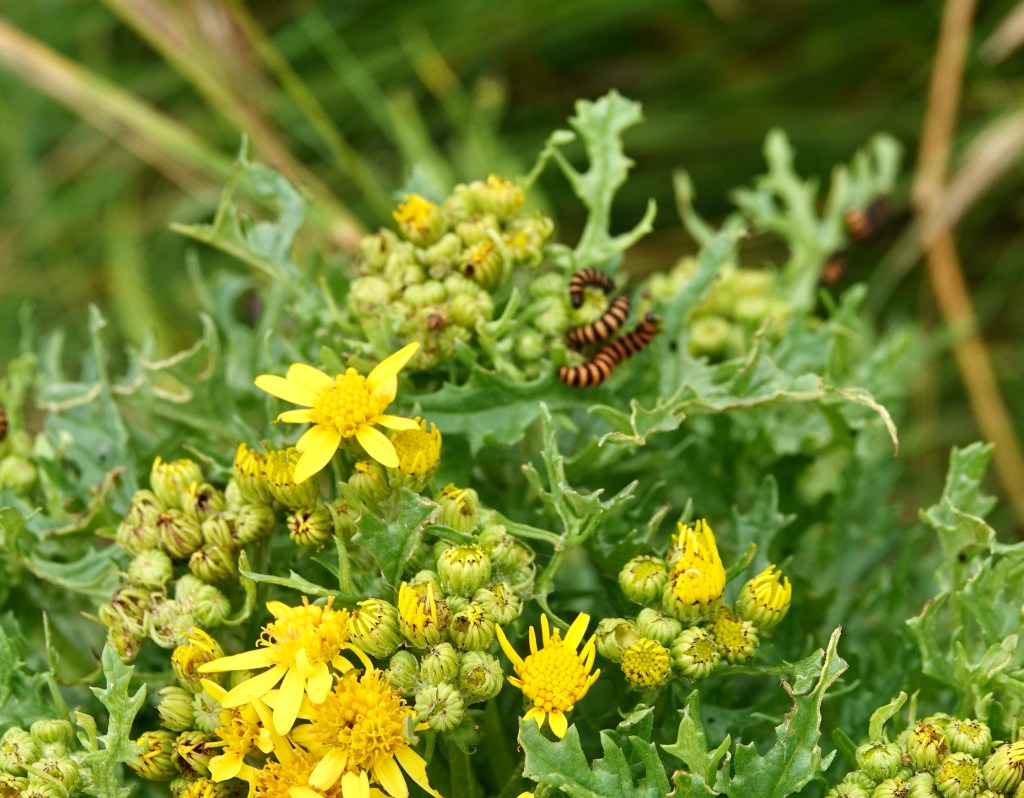
Cinnabar moth caterpillars on Ragwort took me straight back to my childhood. Ragwort has had a bad press and this sight is becoming very uncommon in Guernsey. I have seen plants pulled out and left to die on the cliff paths. Ragwort is toxic and it needs to be controlled where livestock feed, but in natural habitats it is a fantastic foodplant for insects. Over thirty different species are totally dependent on this plant and many others use its pollen as a food source. More to follow…
 Natural history of the Bailiwick of Guernsey