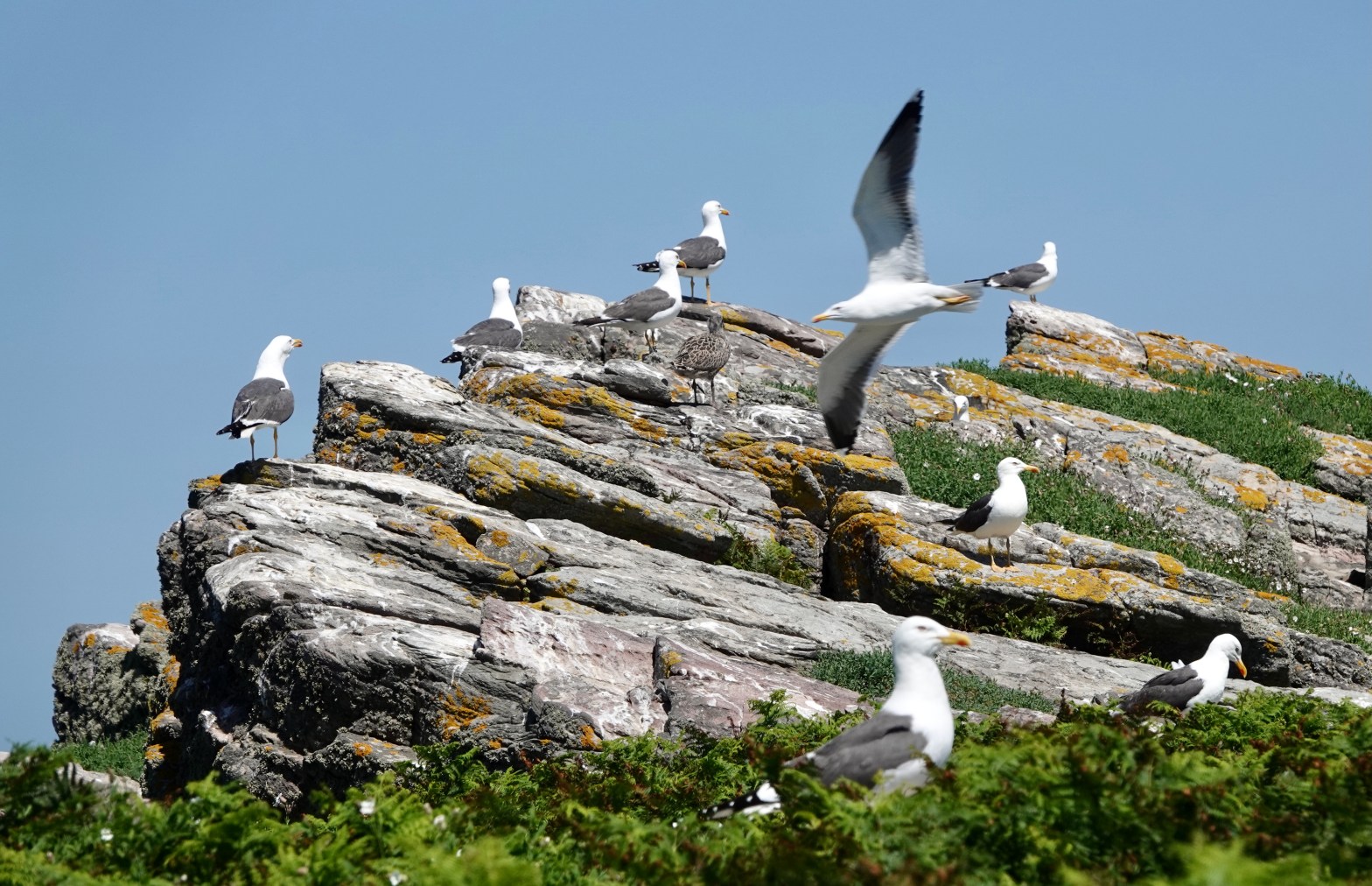
Burhou is an uninhabited island off the north-west coast of Alderney. It is part of Alderney’s Ramsar site and, in the breeding season, is home to a colony of Lesser Black-backed Gulls. Puffins also breed on the island and some of their burrows can be seen on http://www.teachingthroughnature.co.uk/webcams/colony-cam/ It is a relatively safe breeding area as there are no rats. There is a stone hut but with no electricity or water living conditions are basic. The island is off limits to people between March and the end of July in order to protect the breeding birds. An exception is a research team led by Alderney Bird Observatory comprising licensed bird ringers from the Channel Islands Bird Ringing Scheme, an organisation monitoring the birds of Burhou since the 1950s. They come over for a few days each year in oder to ring the gull chicks and Storm Petrels. The Puffins have their burrows next to the hut but they are not ringed currently. This year, I was one of a group of six to do the job.
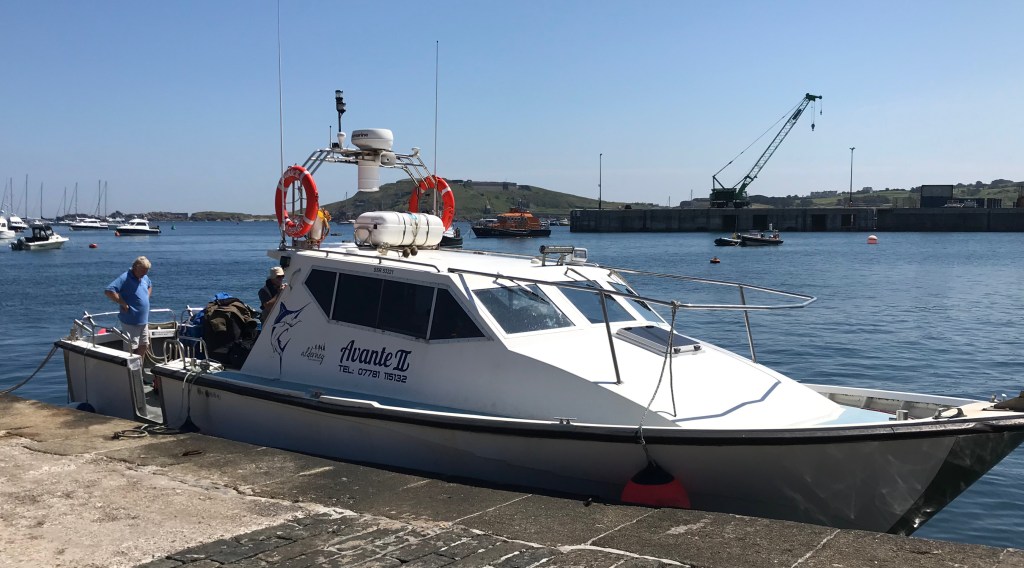
The Avante II, skippered by Dave Venn, took us and our gear across – it didn’t take long but the tides and currents are treacherous. When we arrived, the dingy had to take us into a gully where we climbed over rocks to get ashore.
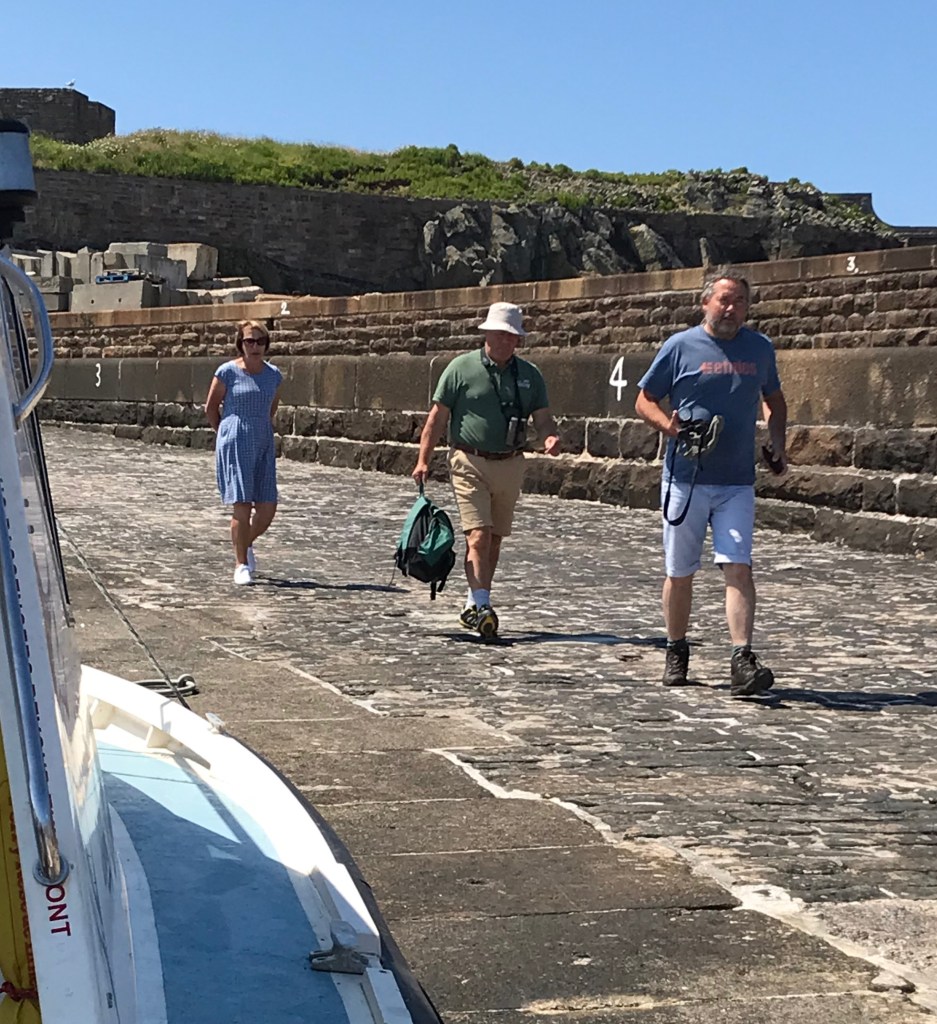
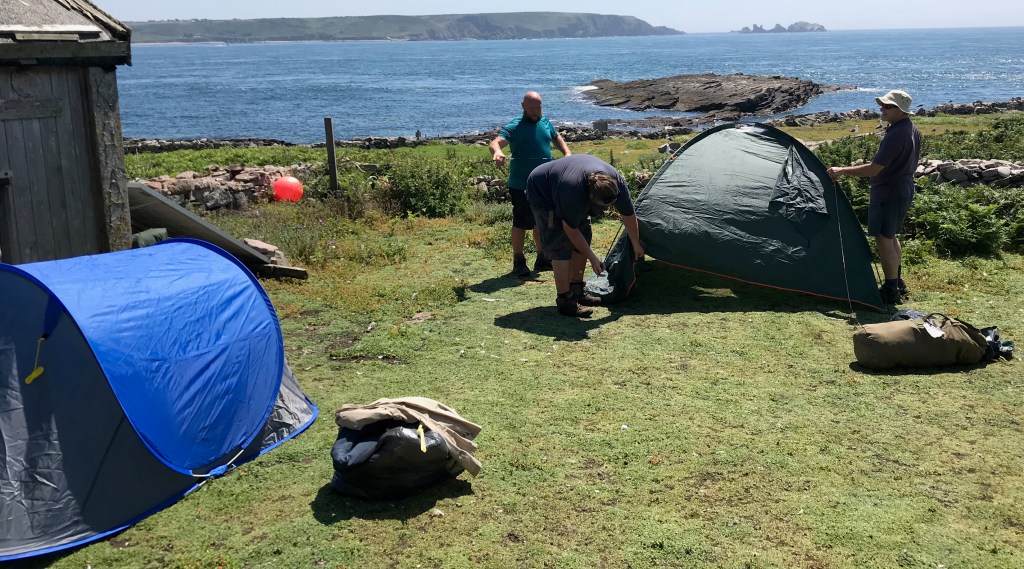
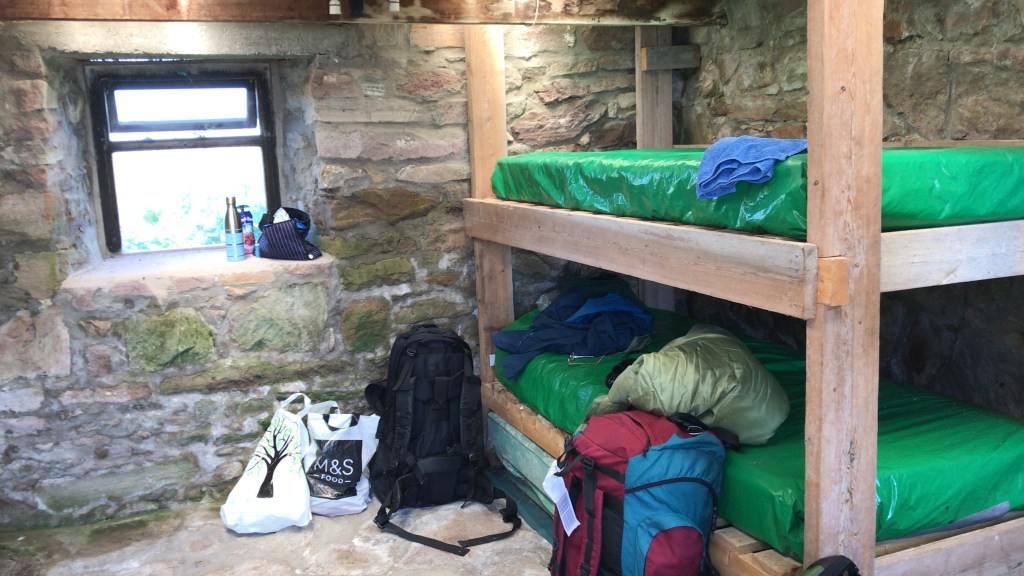

Over the three days, there was hardly a cloud in the sky so gull ringing was done in the morning or late in the afternoon. The island is very rocky – unlike the rest of the Channel Islands, it is sandstone rather than granite – with swathes of bracken and Sea Campion.
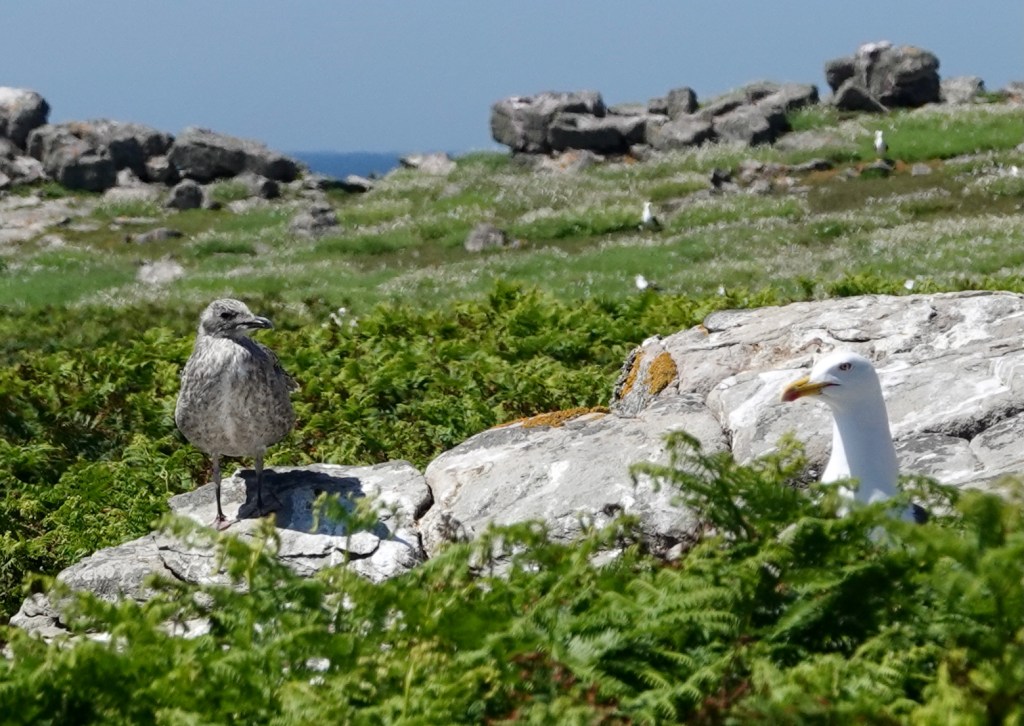
Once the chicks have left the nest, they rest up under the bracken where they are hidden from any predators, mainly the Great Black-backed Gulls. Mostly, they sit tight so our job was to inspect the bracken, collect any chicks, which by mid-July are mostly well on the way to being fully grown, tuck one under an arm with tail and leg pointing forwards. The ringers would then fit uniquely coded coloured and metal rings to the birds’ legs. This is done with great care and is not at all detrimental to the bird. The colour rings are easily visible and people can report sightings to http://birdrings.digimap.gg and see the history of individual gulls. The plastic rings may not last the life of the bird so they also have the metal ring which is sturdier. Ringing helps to gather important information about gull movements and longevity.
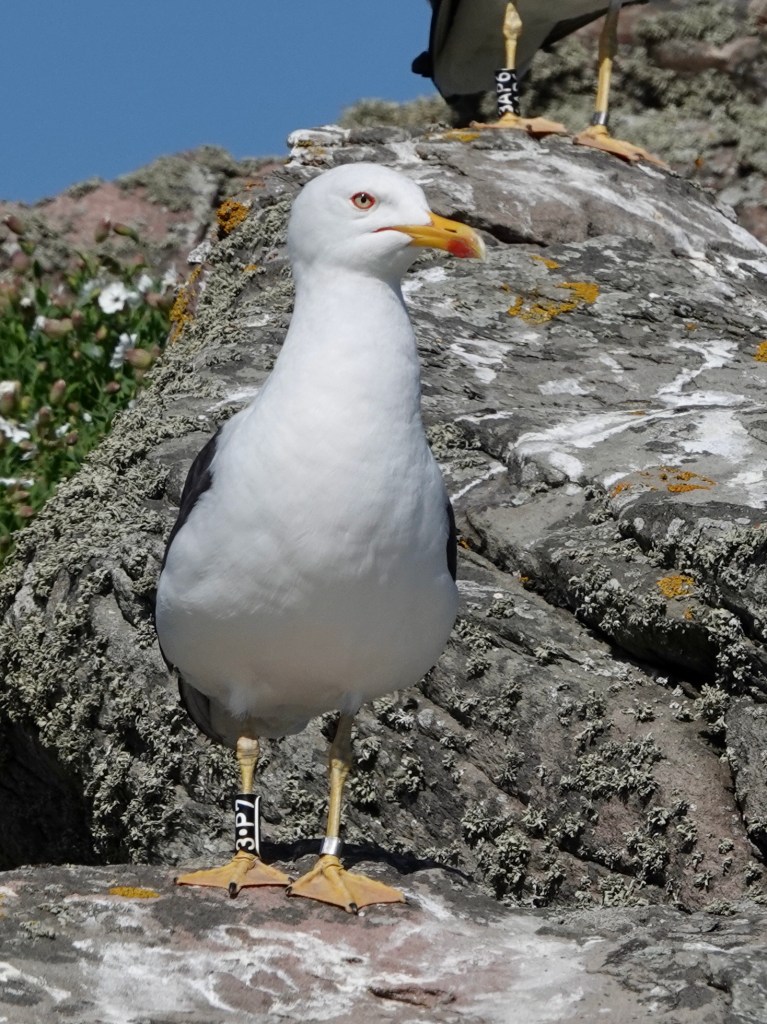
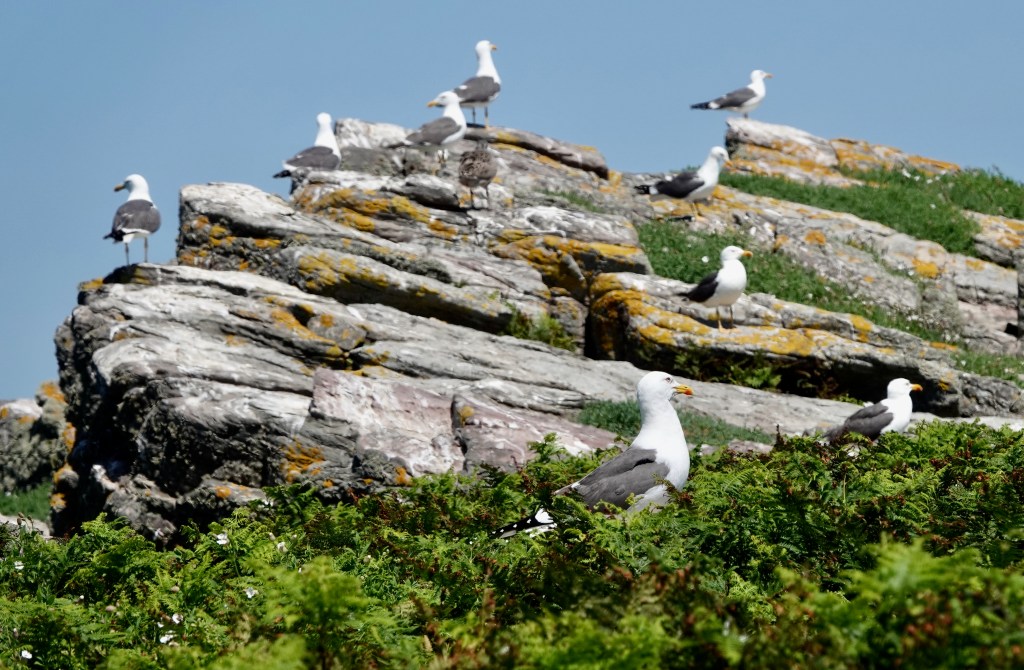
Some of the oder chicks could fly. If one ventured towards the sea, a whole group of adults would take off, alerting others with their cries, to head it back to land and safety. So the colony is not just a group of individualswho happen to be in a good nesting area, but exhibit social behaviour with the adults looking out for all the chicks.
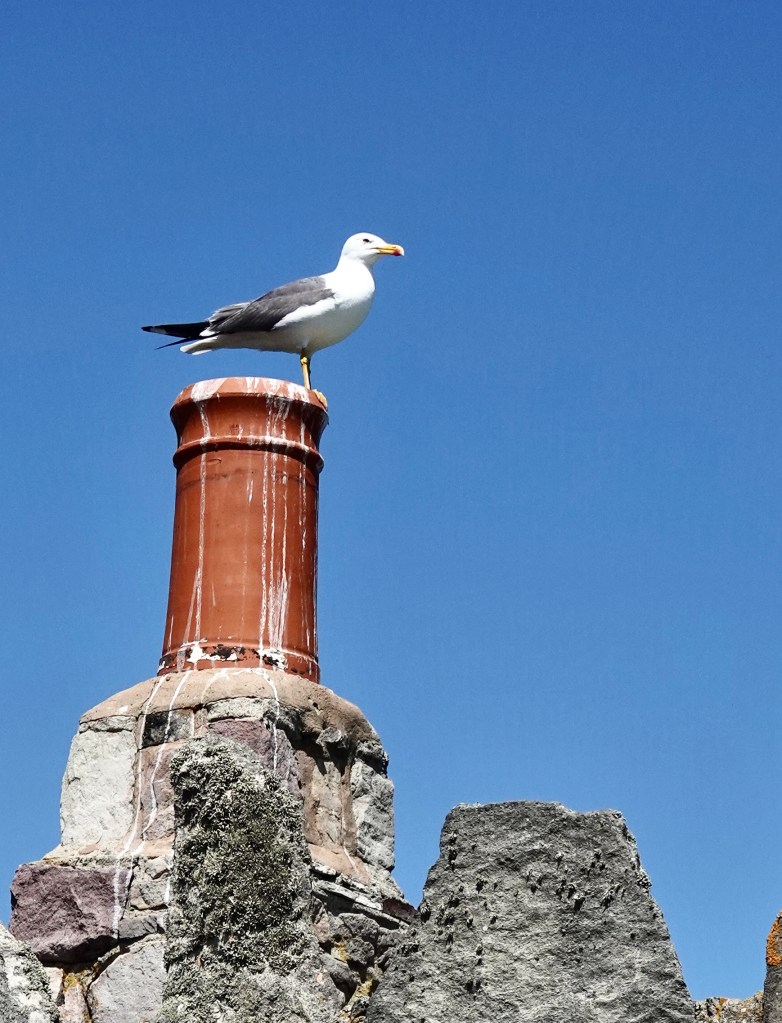
They are used to having the island to themselves and are very much at home around the hut. When they land on the roof, it really did sound like someone crashing open the door. Then they would walk up and down, calling out – not very welcome in the early morning!
Ringing Storm Petrels took place at night. Mist nets were put up to net the birds which started to come in from around 10.00 pm. Extracting them is very skilled work which takes a lot of experience. It is done by feel or by using headlamps with red filters for the benefit of the birds. Weather conditions were very good over the three nights. Once the moon went down, it was quite an experience to see the Milky Way and summer constellations so clearly – with the odd shooting star. Hundreds of birds come into Burhou during the night. They nest in burrows or rock crevices. Their legs are tiny and they are ungainly on land. Once they were ringed it was my job to release them from a sea-facing rock which they could use as a launch pad. We were busy for all three nights, each night in a different part of the island.
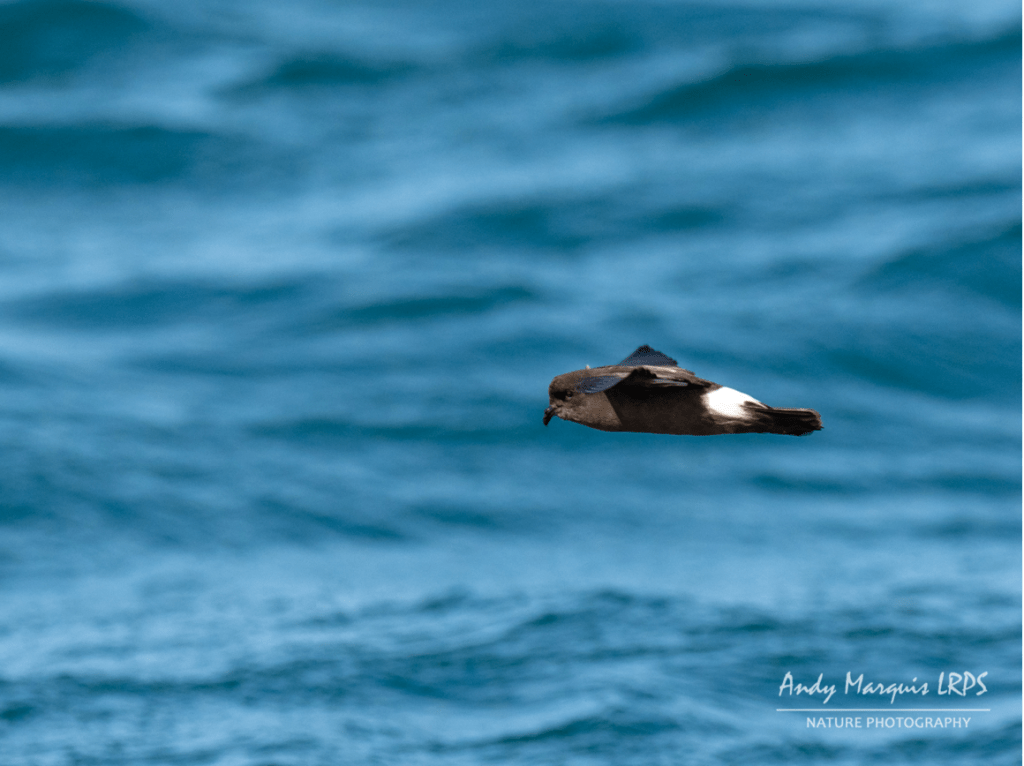
A good proportion of the birds had been ringed previously in the UK and France. The ring number of one bird showed that it was at least 29 – 30 years old. I find this quite astonishing as they are roughly swallow-sized and, apart from breeding, live out at sea. They belong to the tubenose family, like fulmars, and feed from the surface of the sea. The tube on top of the beak is used to excrete salt.

Sunday morning was pack up and tidy up time. Three days of hard work but I wouldn’t have missed a minute of it. John was the last to do the dingy trip back to the boat. I’m already making my list of stuff to bring for next year. What a fabulous experience.
 Natural history of the Bailiwick of Guernsey