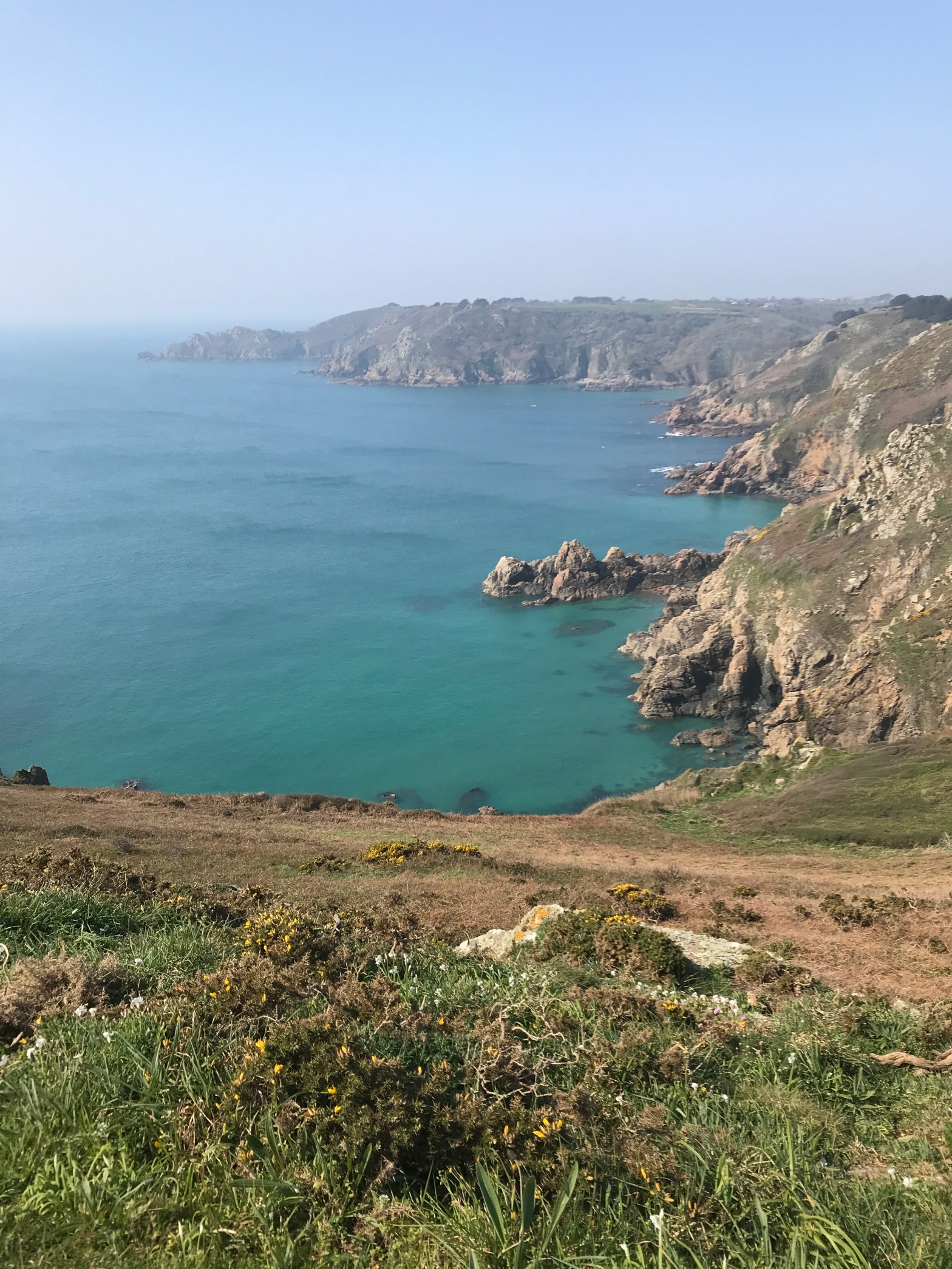
All the ant nests are flagged! This year I have used my first visit just to flag them. Measuring and note taking will come later in the spring when I have more time. As ever, a few nests have died out. I am concerned that no new nest have been seen so far. All the flagged nests seem to be doing well and the ants are making the most of a warm and mainly dry start to the spring – they are fairly well sheltered from the east wind.

While flagging the nests, I spend a lot of time with my eyes down, scanning the path – ant runs are a useful indication that a nest may be nearby. So I also see other wildlife and some of the smaller flowers.
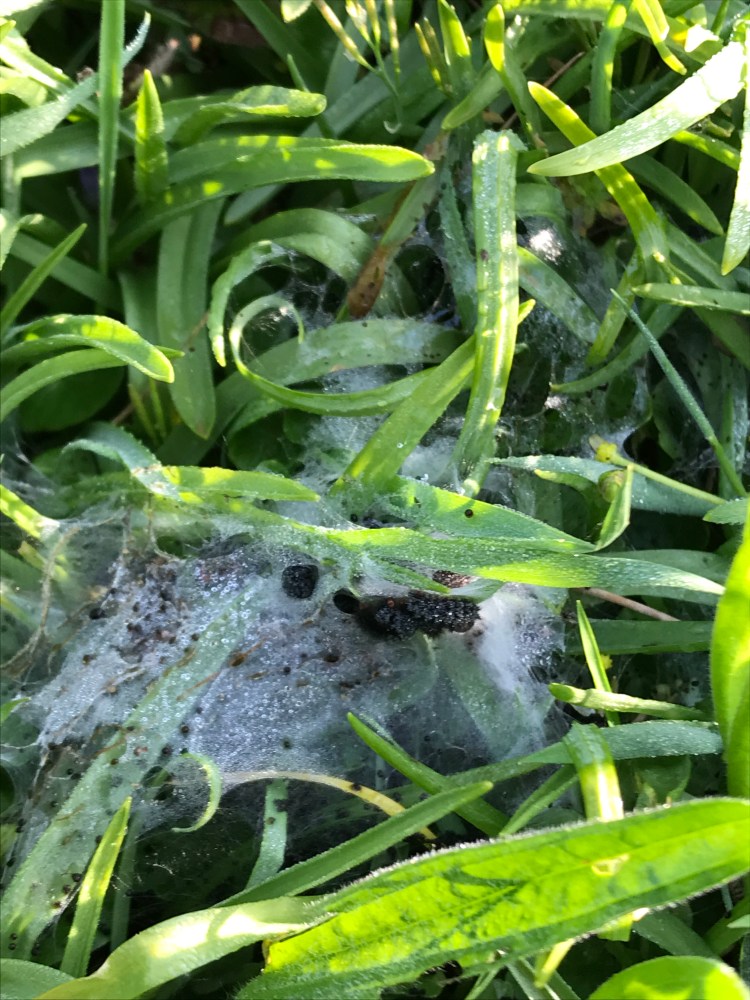
Most exciting, but not much to look at, was a larval web of the Glanville Fritillary butterfly. This was the first time I had seen one – and thanks to Andy Smith for confirming the ID. This will be added to the Glanville Fritillary page with some extra information.

At first, I thought it was a hoverfly then I saw the eyes and thought ‘Bee’. Then I posted it on ‘Insects of the Channel Islands’ – an excellent Facebook group. Tim Ransom identified it as a sawfly, very probably the Honeysuckle Sawfly, Abia lonicerae, although it’s very hard to distinguish it from the Scarce Honeysuckle Sawfly,Abia aenea. An unusual find.

24 Spot Ladybird, Subcoccinella vigintiquattuorpunctata. About 5-6mm in length, this was new to me. the sun was shining from the left and it picks out the fine hairs that cover the wing cases just before it goes into shadow. They show as a broad line of yellow dots.

It is hard to do justice to the Sand Crocus, Romulea columnae, in a photo. A close up makes it appear to be the size of a freesia. A photo of the area and they disappear. Look along the barren edges of the cliff paths and they are a joy on a sunny day at this time of the year. It is a plant with an interesting history and will have its own page shortly.
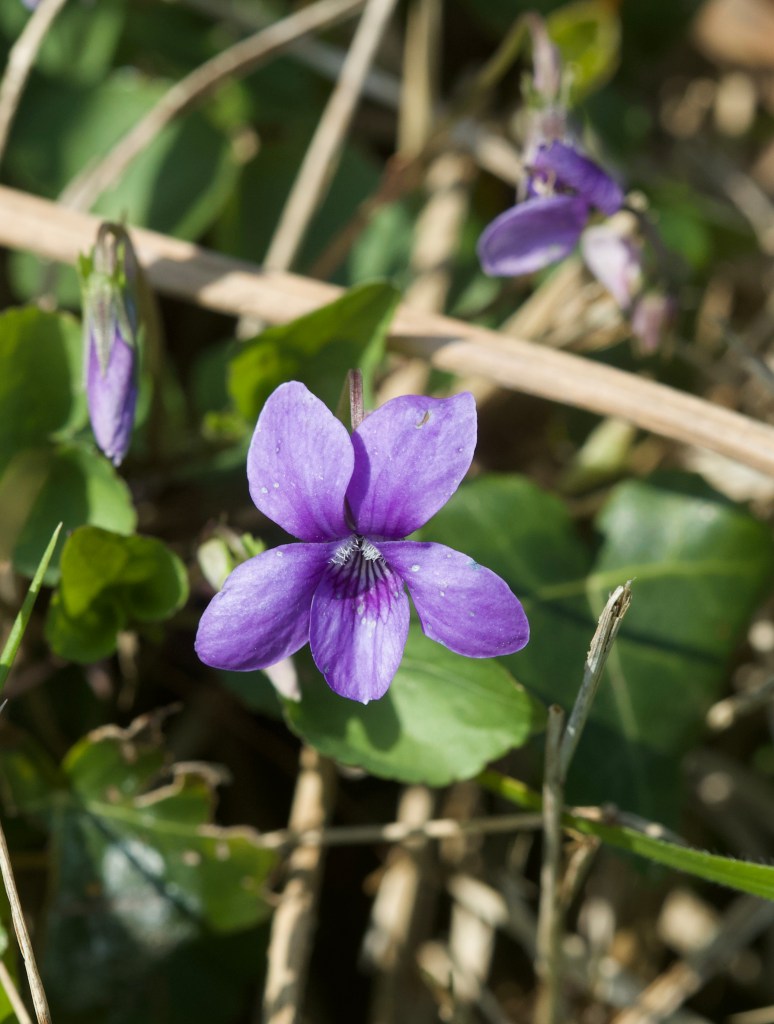
More common than the Sand Crocus, the Dog Violet complements the spring green of Guernsey banks.

One of the many Peacock butterflies, Aglais io, that have been seen around the island this month having come out of hibernation with the warmer spring weather.
 Natural history of the Bailiwick of Guernsey