The wind dropped and the sun was low in the sky. All was quiet at the Vale Pond – lovely to see three Greenshank but they were all a good distance away – so I walked along Grand Havre to see if anything was around.
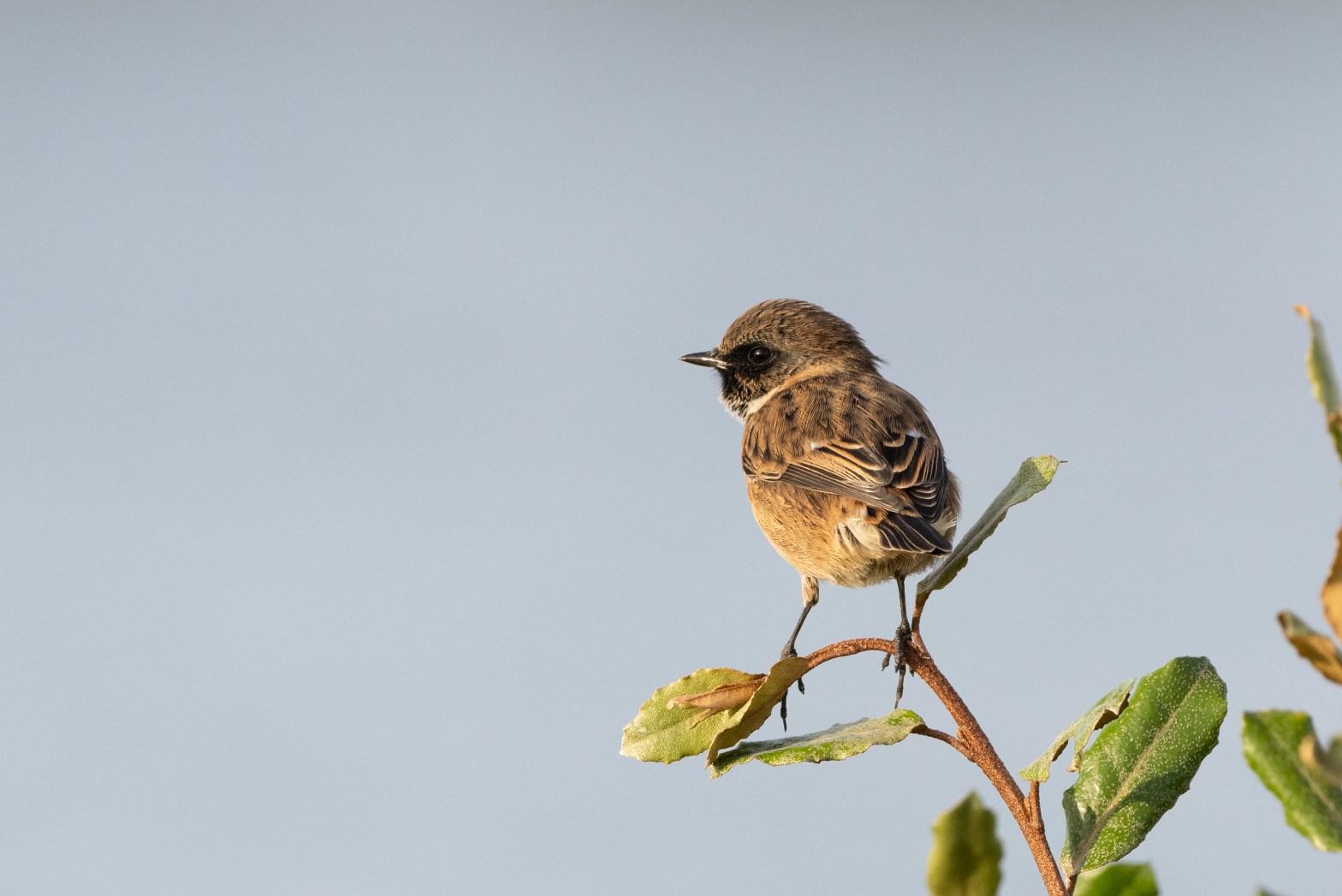
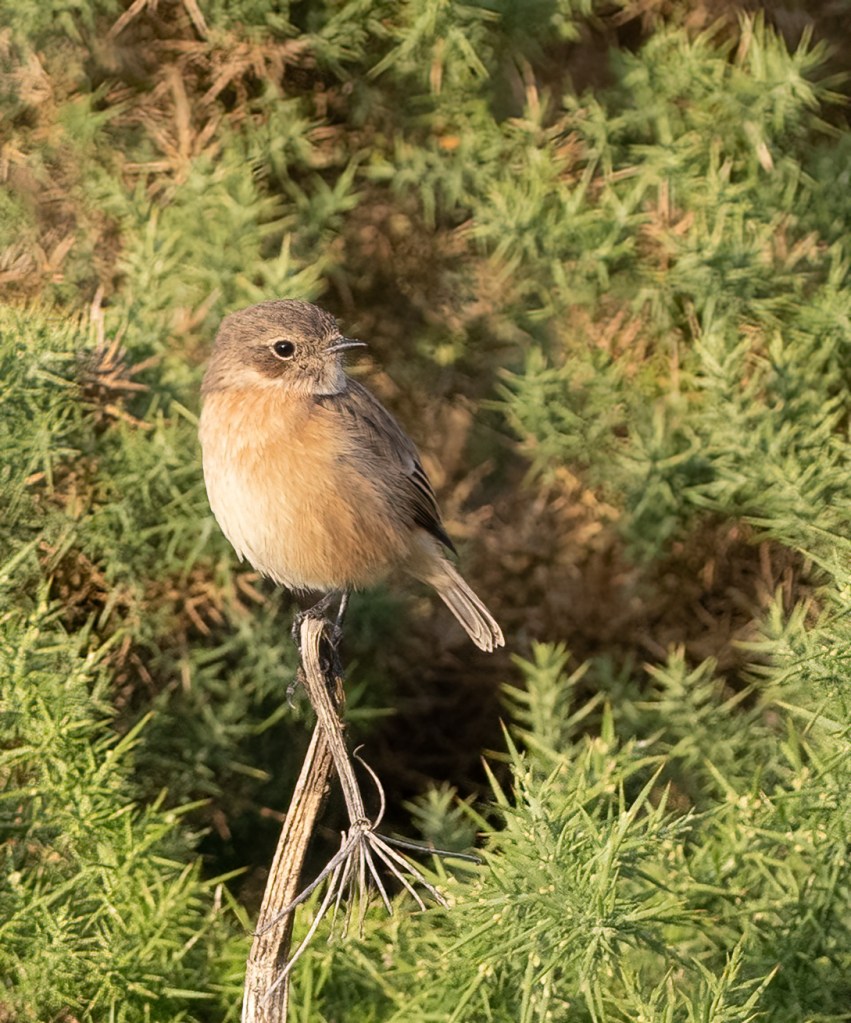
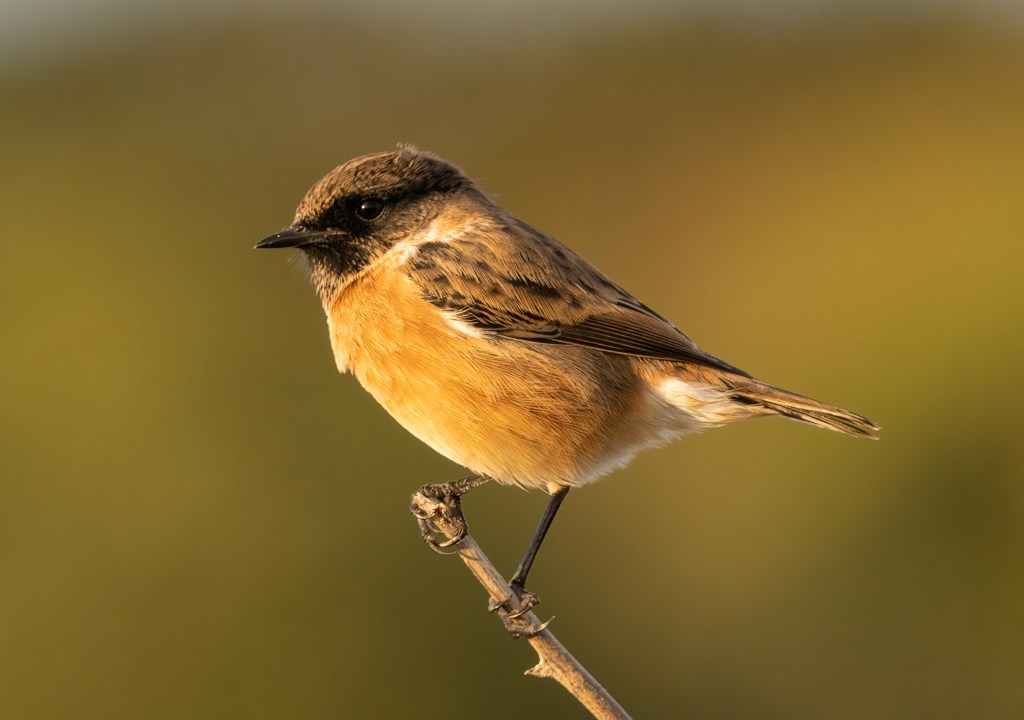
Not surprisingly, the first encounter was two Stonechats: a young male with its crown feathers showing brown speckling and no white neck patch to speak of, and a female with more subdued colouring. They both show a relatively large eye, like the Robin which is a relative and this does make them very appealing to people. Stonechats are often seen as a pair. They are relatively confiding and like to perch on top of gorse and other vegetation. I walked past them and then turned back so they were in the soft evening light. They are mainly seen around the coast.
A small flock of Black-headed Gulls were roosting on the far side of Grand Havre and were close in with the rising tide. These birds breed further north but at the end of summer move into the island where they overwinter. Back in July, some individuals were still showing their dark heads (brown rather than black) but by now they have lost their breeding plumage and their heads are white, except for dark ‘earphones’ which will remain over the winter.

They are small gulls and are elegant in flight with tern-like wings.
Young birds are distinguished by their darker wings and tail which they will keep until next year. Their beak and legs are red, but are not as brightly coloured as the adults.
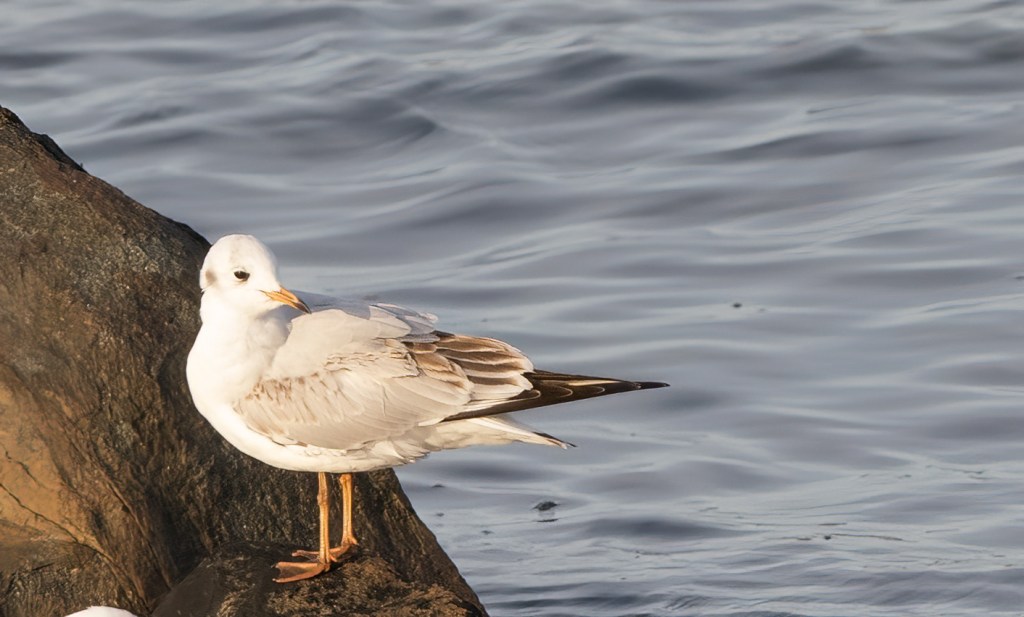
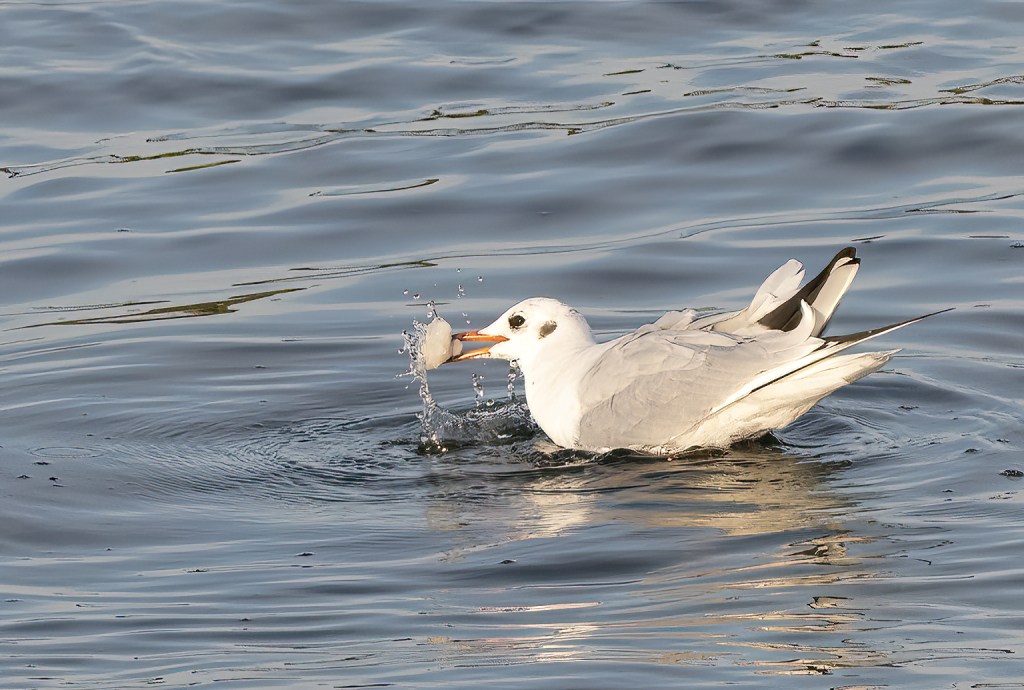
Gulls are scavengers so will eat amost anything. I couldn’t make out what the gull below was eating but it looked a good-sized snack.
I was surprised to see a solitary Curlew foraging in the dry sand well above the high tide line. It was digging down into the sand and finding stuff to eat. It wandered back down to the water’s edge, until it realised that there were people fishing from the shore further along.


It took off which gave me a chance to practise photographing ‘birds in flight’ – a work in progress. I managed to capture the v-shaped white rump.

 Natural history of the Bailiwick of Guernsey