
October is a good time to catch with with two members of the plover family in Guernsey as they come to our shores to overwinter after breeding further north.
The Grey Plovers are on Autumn migration and a small group can usually be found at Les Fontenelles bay, near Fort Doyle. They are attracted to Lihou Headland and the north end of Vazon, particularly on a wet day when they’re less likely to be disturbed. Out of breeding plumage they are inconspicuous on the granite outcrops where they like to be, close to the water.
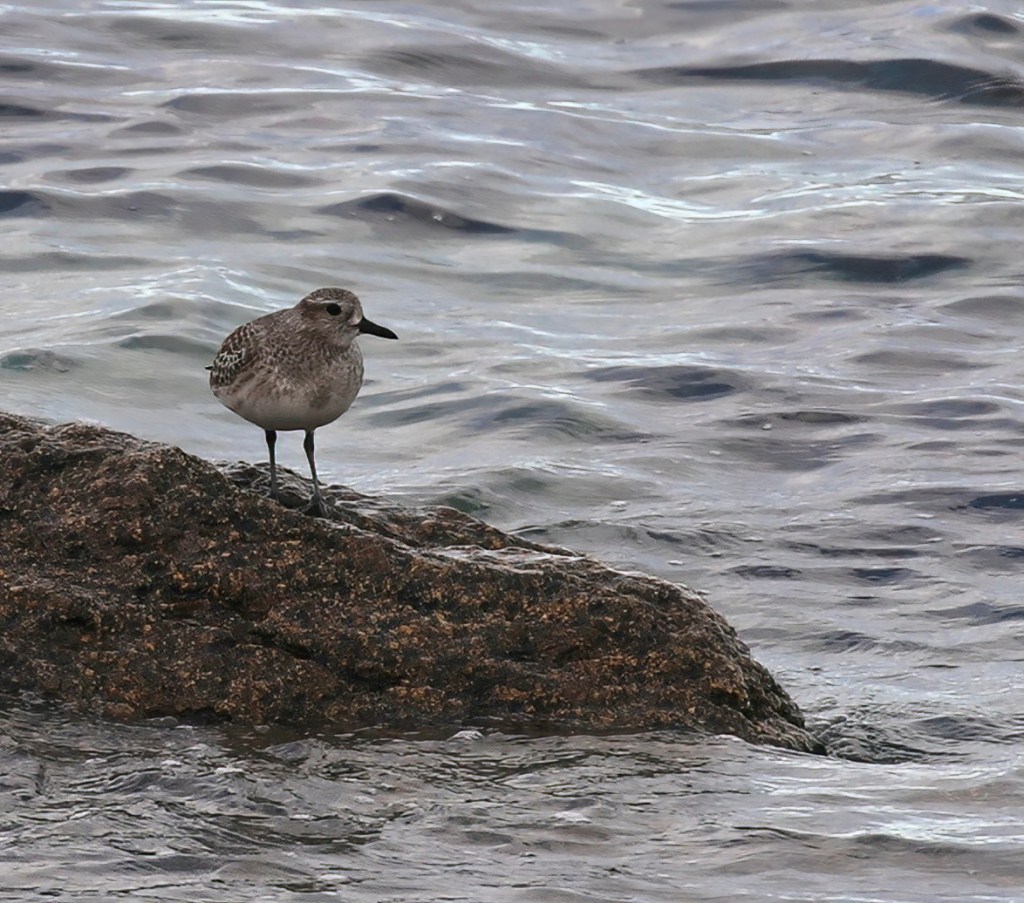

When you can get close enough, their grey, black and white plumage is very neat. The dark, shortish, stout bill and black legs complete the monochrome effect.
The Ringed Plover has a more stand-out appearance, especially the adults with their orange legs and dark-tipped orange bills. They have a white throat and breast, broken by a black breast band. You’d think they’d be an easy spot on the beach. In fact although they’re usually closer in than the Grey Plovers, on a pebbly beach they can be almost in front of you but blend in perfectly, only to be noticed when they move. Be patient and it’s surprising how many congregate in an area. Often you only get a good idea of the actual number when they take off and wheel around the shore. I find the Shingle Bank and Baie des Pecqueries are good places to spot them. I have also seen them on the east coast near the Red Lion and at Bordeaux. The one in the photo below was taken at the end of the summer and shows very worn plumage.
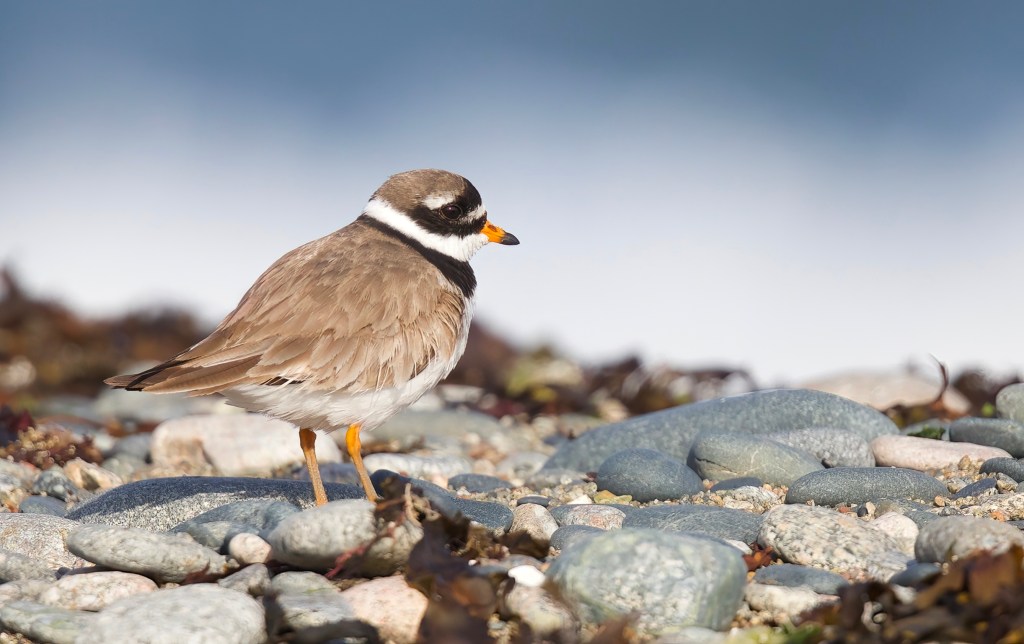
Very small numbers of Ringed Plover breed in Alderney and they bred regularly in Guernsey in the past. There have been recent attempts, but they are ground nesting birds and are very susceptible to disturbance. Unfortunately, their ‘nest’ is a simple scrape in pebbles or shingle and chicks are very well camouflaged. Guernsey has no protection zones and breeding attempts are not successful. They are rarely seen over the summer months these days, but are around our shores from late summer through to the following spring.
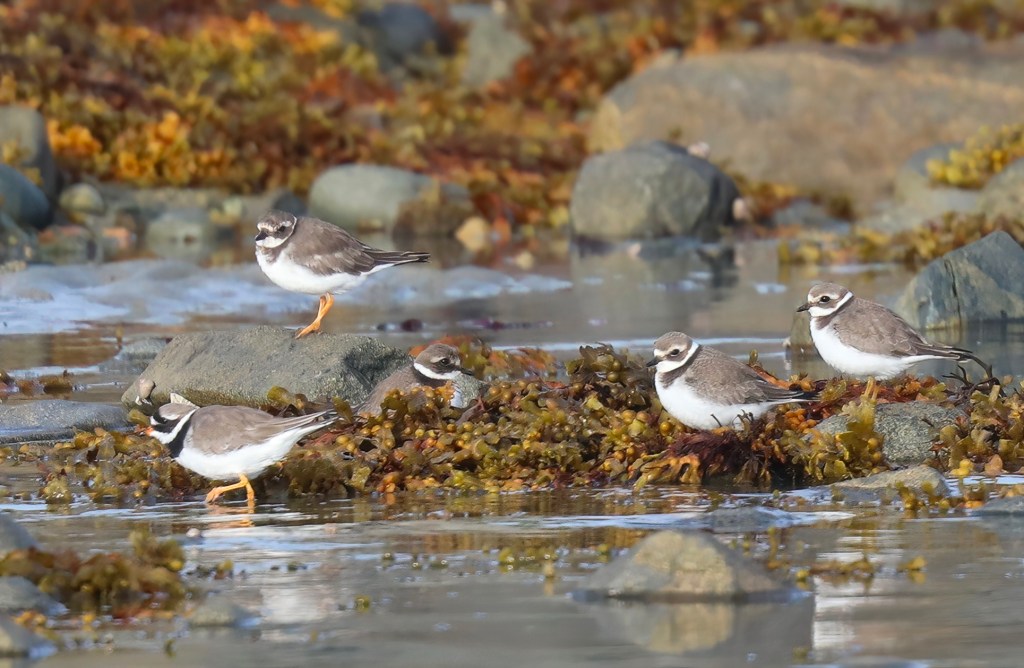
The final photo shows the difference between the adults, on the left, and the juveniles. The young birds have dark beaks and brown face markings and breast band. Thebrown plumage has scalloped paler fringes. Like their parents, they still have that beautiful dark eye which is typical of the group.
 Natural history of the Bailiwick of Guernsey