Featured

Monday 8 November

Up and about before daybreak today and had a Barn Owl fly right past me, the first in flight sighting this year, so the day was off to a great start.

We were ringing for a few hours, and it was fairly quiet. Six Chiffchaff and one had very dull colouring – possibly abietinus which breeds in Scandinavia. It also had a different call to the other birds.

Chiffchaff, Phlloscopus collybita

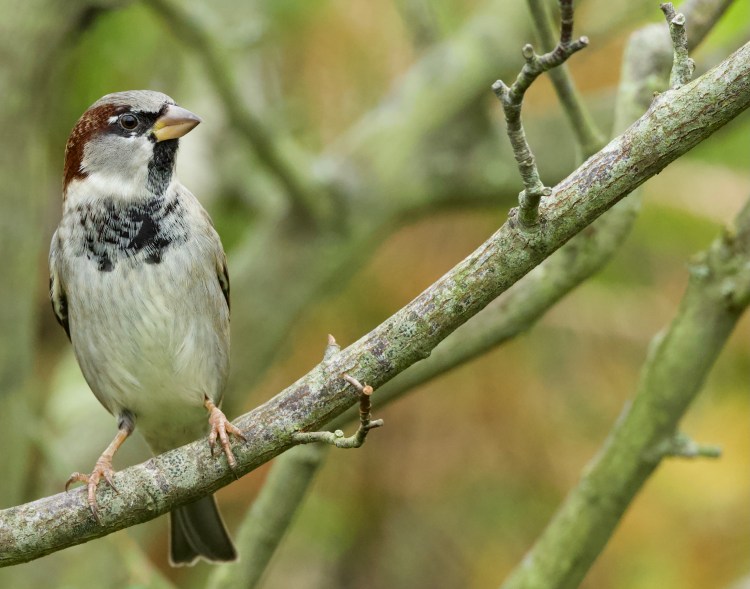
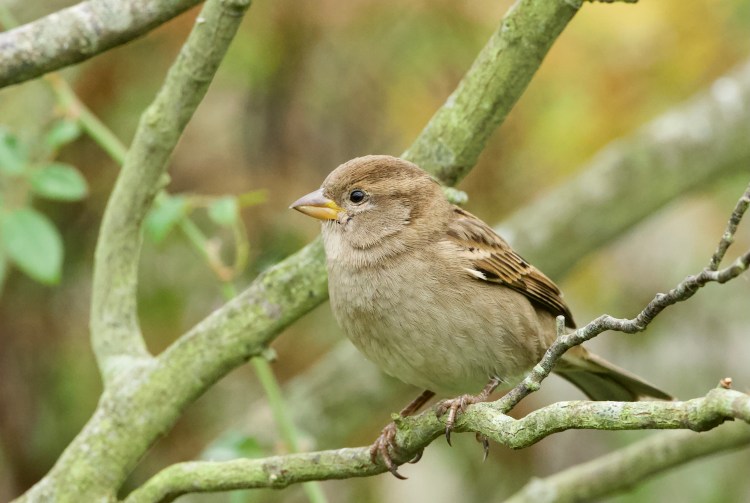
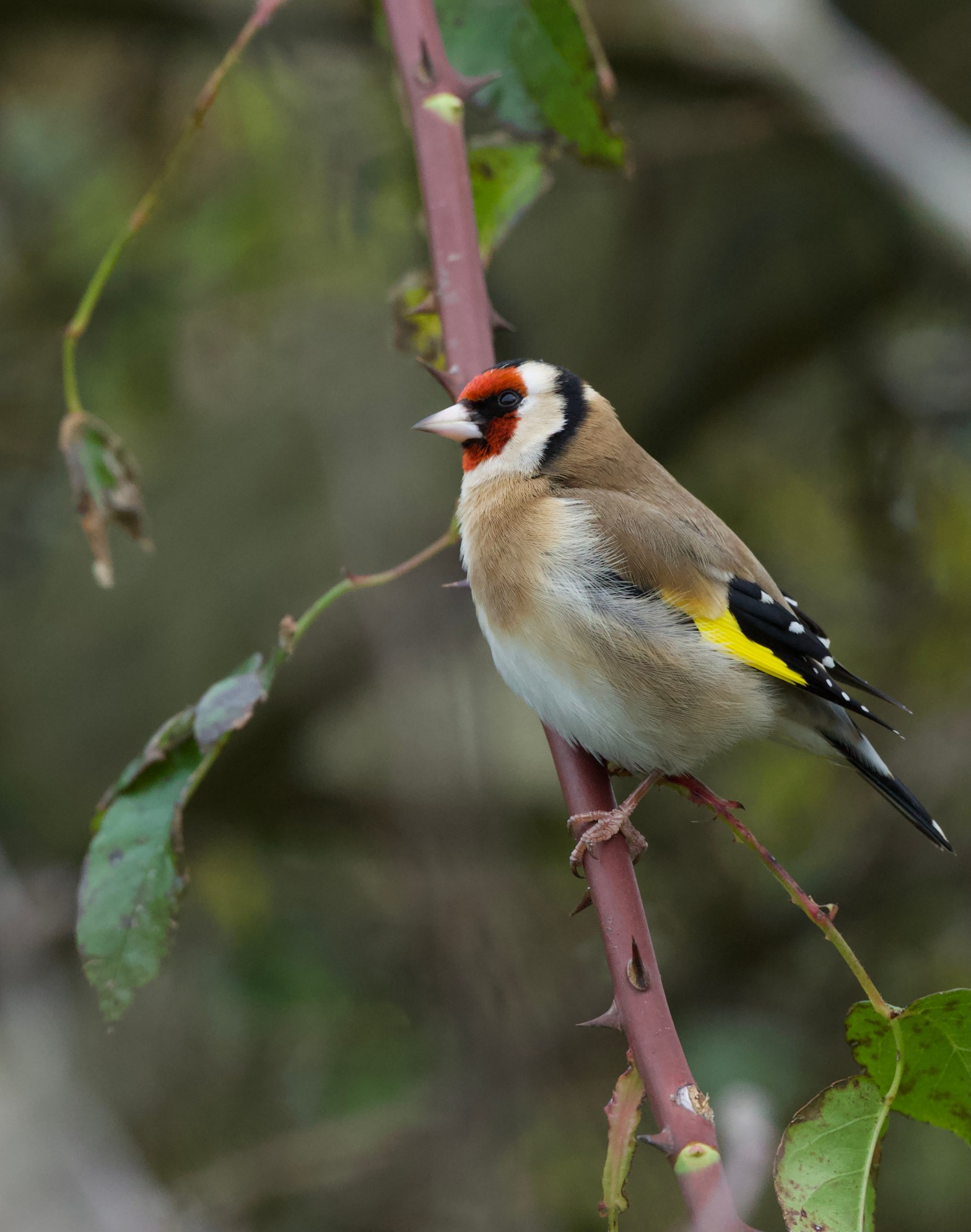
Rod Ferbrache recently posted that he had bought a new hide for the garden. This is something that has been at the back of my mind for a little while. I have a camouflage net which is effective. I have used it on the beach and had Rock Pipit right next to me. A pop-up hide would have more structure and, with a chair, would be more comfortable. So, I treated myself to one for my birthday. I put it up a few days ago using just my binoculars to see how it worked out. My verdict – very successful – much closer to the birds and they were more relaxed than when I look at them from the front door. I even had a Robin perch on top and sing!

At lunchtime today I tried it out with my camera and tripod and I’m really pleased with the results, as the light levels were lowl. Aside from the birds, I love the soft Autumn greens. November is a beautiful month.

I spent some time this afternoon starting work on containing the German Ivy, Senecio mikanioides, on part of the northern boundary of Le Grand Pré Nature Reserve. This is an invasive non-native plant which is a real menace as it spreads so quickly. A week of hard frosts would knock it back but winters are less cold now.

It’s been a long time … 25th March 2025

Hmmm – a break of around 2 years on the website. Not due to lack of interest, rather lack of time, and a preference for binoculars rather than a camera. Today was special – a life tick with a new bird. A Purple Heron (Ardea purpurea) was found yesterday at Le Grand Pré, a reserve local to me and managed by La Société Guernesiaise – an organisation to which I happily give a lot of time. I didn’t manage a visit then, but was up early this morning and down to the hide, hoping it would still be there. 45 minutes later, and pleased to see a late-staying Snipe, I thought I was out of luck. Then a Coot flushed it out from the reeds at the far end of the pond.

Coot flushing a Purple Heron.

It stayed in front of the reeds for a minute or so and then disappeared – very elusive. It reappeared a while later and this time it was visible for a good five minutes as it hunted a frog.

Purple Heron at Le Grand Pré

It is an adult bird with a strongly coloured blue-grey crown with no sign of brown. Also indicative are the black lines on its face and neck. The uniform dark red-brown plumage at the carpal bend ‘elbow’ makes it a probable male. It has ‘overshot’ on its spring migration, further north than its breeding grounds on the continent.

Several species in the Heron Family are extending their range noerthwards and westwards. Little Egret has done spectacularly well in Guernsey since the 1980s and there is a breeding colony in the Bailiwick. Cattle Egret are seen year round and in increasingly numbers. Great White Egret, still classed as a vagrant, has been seen every year for the past eleven years. Purple Heron would be very welcome as a more regular visitor and there is every likelihood that this will happen with generally milder winters.

Eelgrass, Wednesday 12th April

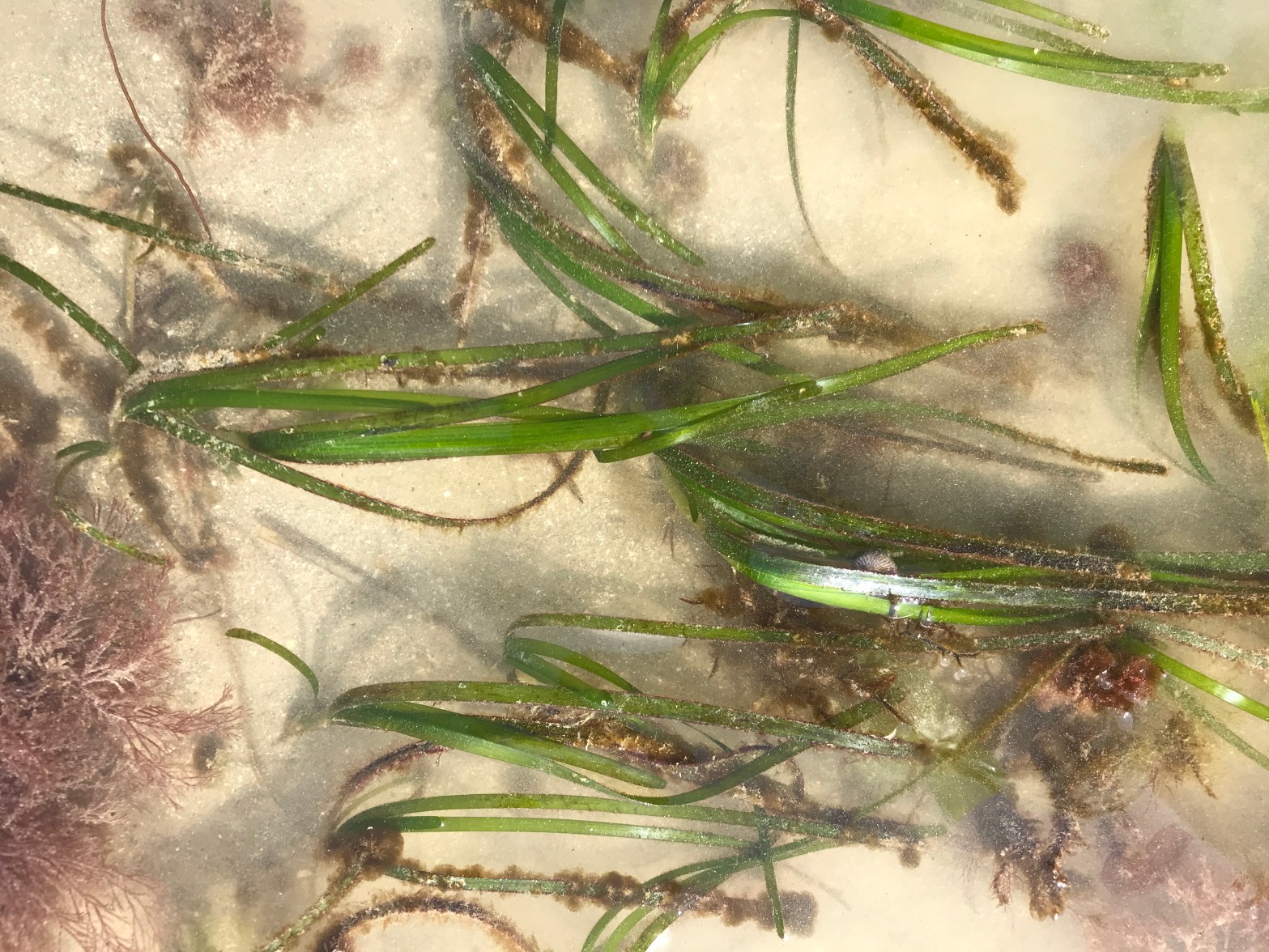
Last Saturday, Nature Guernsey organised a rock pooling afternoon at Cow Bay, the harbour side of Castle Cornet in St Peter Port. The spring tide was low enough to uncover a good patch of Eel Grass. There are two species in Bailwick waters, Common Eelgrass, Zostera marina, and Dwarf Eelgrass, Zostera noltei. I think this patch is Common Eelgrass.

Eelgrass at Cow Bay, Guernsey, 8.4.2023

It is a flowering plant so pollinating insects aren’t going to help them to produce seed for the next generation. Instead, these plants release long strands of male pollen which the tide disperses. Some of them will become entangled in the female stigma which are hook-shaped. The fertilised seeds are then carried by currents and spread far and wide. They grow in shallow seawater, well-lit from above as they need to photosynthesise.

BEEP – Bailiwick Eelgrass Exploration Project is our very own conservation organisation whose aim is to increase awareness of Eelgrass in local waters. You can follow BEEP on social media. They organise Eelgrass walkovers and snorkelling as they are committed to citizen science. I haven’t been to one yet, but plan to go on the next walkover. I think I even have a snorkel and mask from years ago when I did a little diving! https://www.facebook.com/beepresearch https://twitter.com/beepresearch https://www.instagram.com/beepresearch/

It looks ordinary but it packs a punch. Seagrass ‘meadows’ create a perfect habitat for young fish and small sea creatures to thrive. Overwintering Brent Geese feed on it. It absorbs and stores carbon dioxide (and methane) in its roots so is a valuable ally in combatting climate change.

Brent Geese overwinter around Guernsey’s areas of shallow seawater, such as here at Bordeaux, where they feed on Eelgrass and weed.

Spring Migrants are arriving

I spent a few hours ringing with trainer Trevor Bourgaize this morning and we had our first Reed Warbler of the year. Lots more will be following on. They are unassuming birds to look at, warm brown with pale underparts, you are more likely to hear them than see them as their song is a non-stop chatter.

As their name suggest, they are mostly found in reed beds, often on reed stems close to the water. This habitat was common in Guernsey along stretches of the west coast and in the north. Today, the best areas are in La Société’s reserves at La Claire Mare and Le Grand Pré, but they can be found elsewhere. I have also heard them in the orchid fields at Le Gélé, land also managed by La Société.