Talk on Wedenesday 29 September. Ian is very knowledgeable and a talented photographer. He was the one who told me where to find Dartfords as we crossed over at the Nunnery. He had some excellent sightings – one was quite amazing, so this is in my diary.
Monday 13 September – A Few Firsts
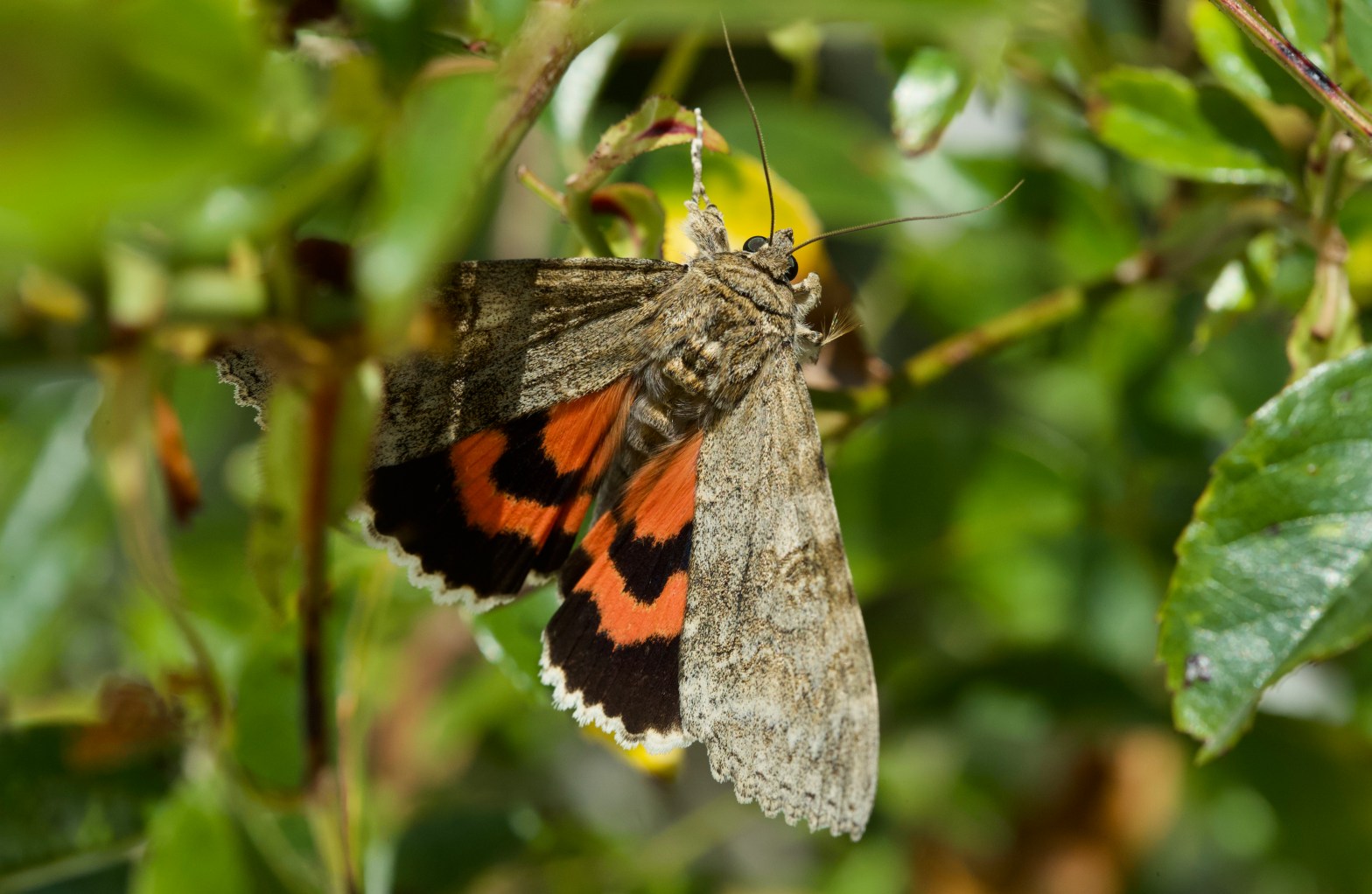
The Red Underwing moth in the top photo was a New For Garden today. It wasn’t in the trap, but lurking nearby. Luckily, I was nimbler with this moth than I was with the closely related Clifden Nonpareil and was able to get a reasonable shot of it it the climbing rose, showing part of the red underwing. It’s a large moth and only just fitted in my biggest pot.
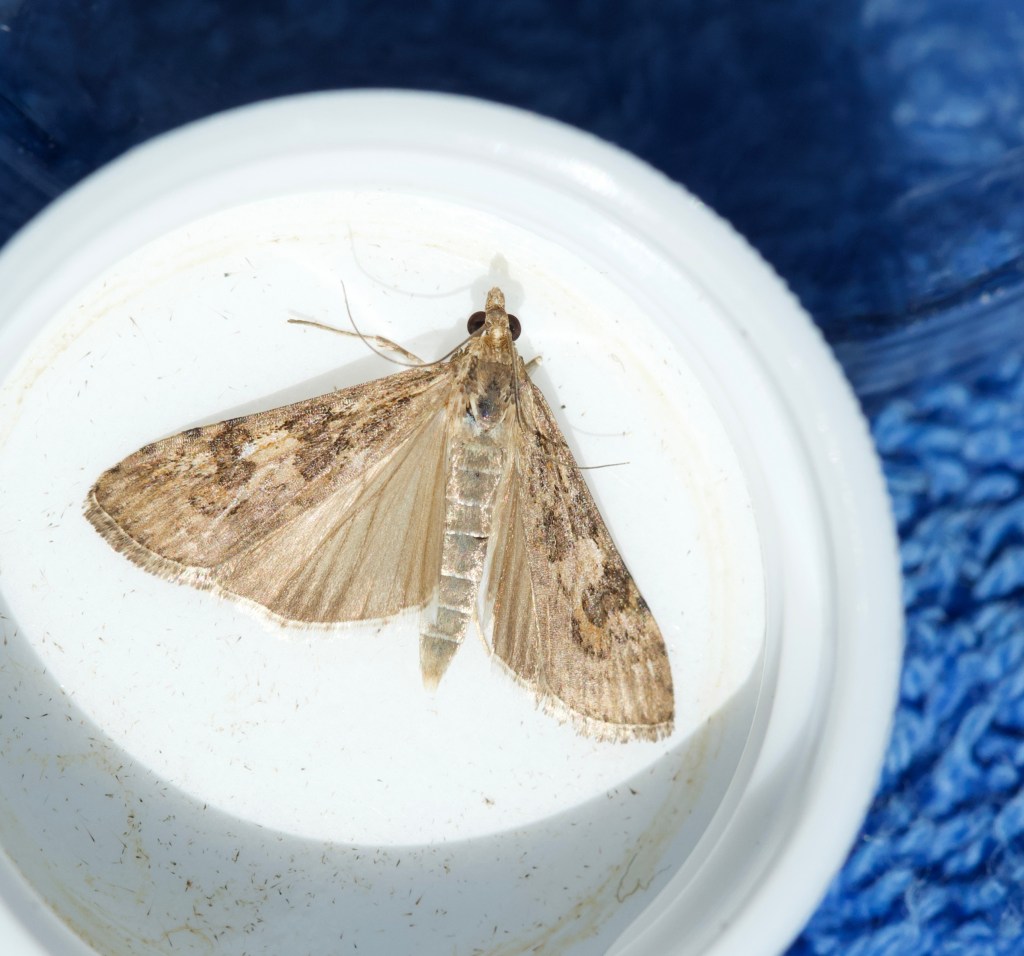
Also New For Garden was a Rush Veneer. It has the unique distinction of being the last moth in my field guide for micro moths.
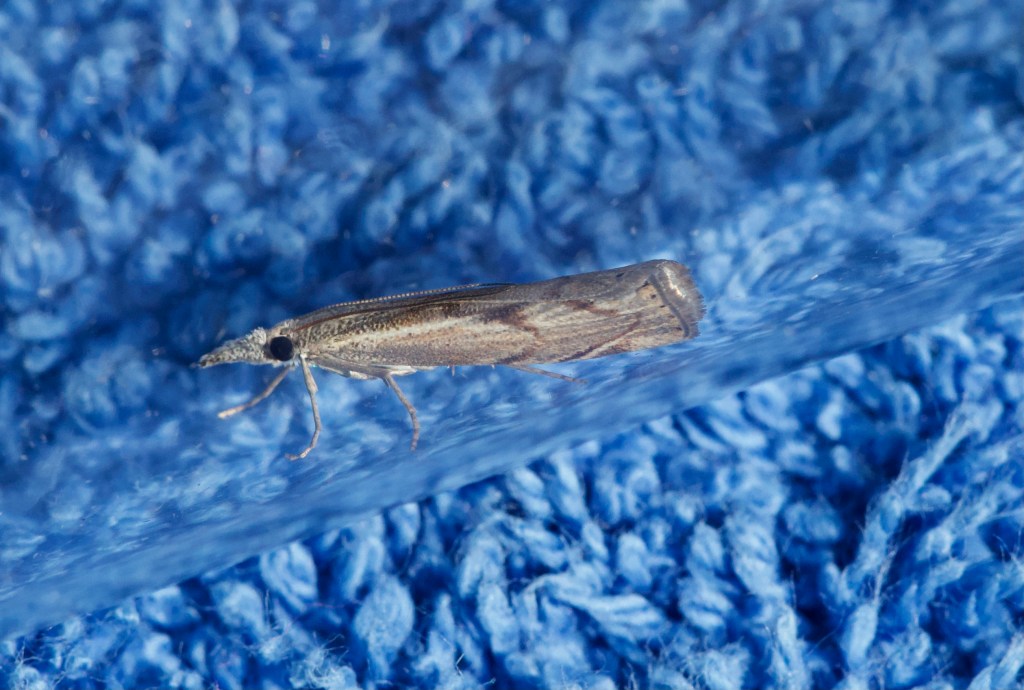
Other New For Garden moths included Double-striped Pug, Pandemis heparana – Dark Fruit-tree Moth, Eupocelia angustana, Celypha lacunana, White-shouldered House-moth – Endrosis sarcitrella and Agriphila geniculea. See photo below – reminiscent of The Clangers. Needless to say, with this list of mostly micro moths, Trevor was on hand to ID them. We were bird ringing this morning and I put the contents of the trap in a holding cage and took them with me. Most micros are a step too far for me. This is only my second year of recording, so the New For Garden records do not mean that the moth is unusual, just that they have not been recorded from my garden before now.
I also had a first with bird ringing – a juvenile Whitethroat. I will admit that I struggled to ID the first bird (I was lucky enough to ring two this morning). In the ringer’s grip, I had my hand around its throat so couldn’t see how white it was and the pale eyering is not as marked in juveniles. Its neck feathers were a bit ruffled from where I had held it but it was a smart bird with gingery-brown edges to some of the wing feathers.

Wednesday 8 September
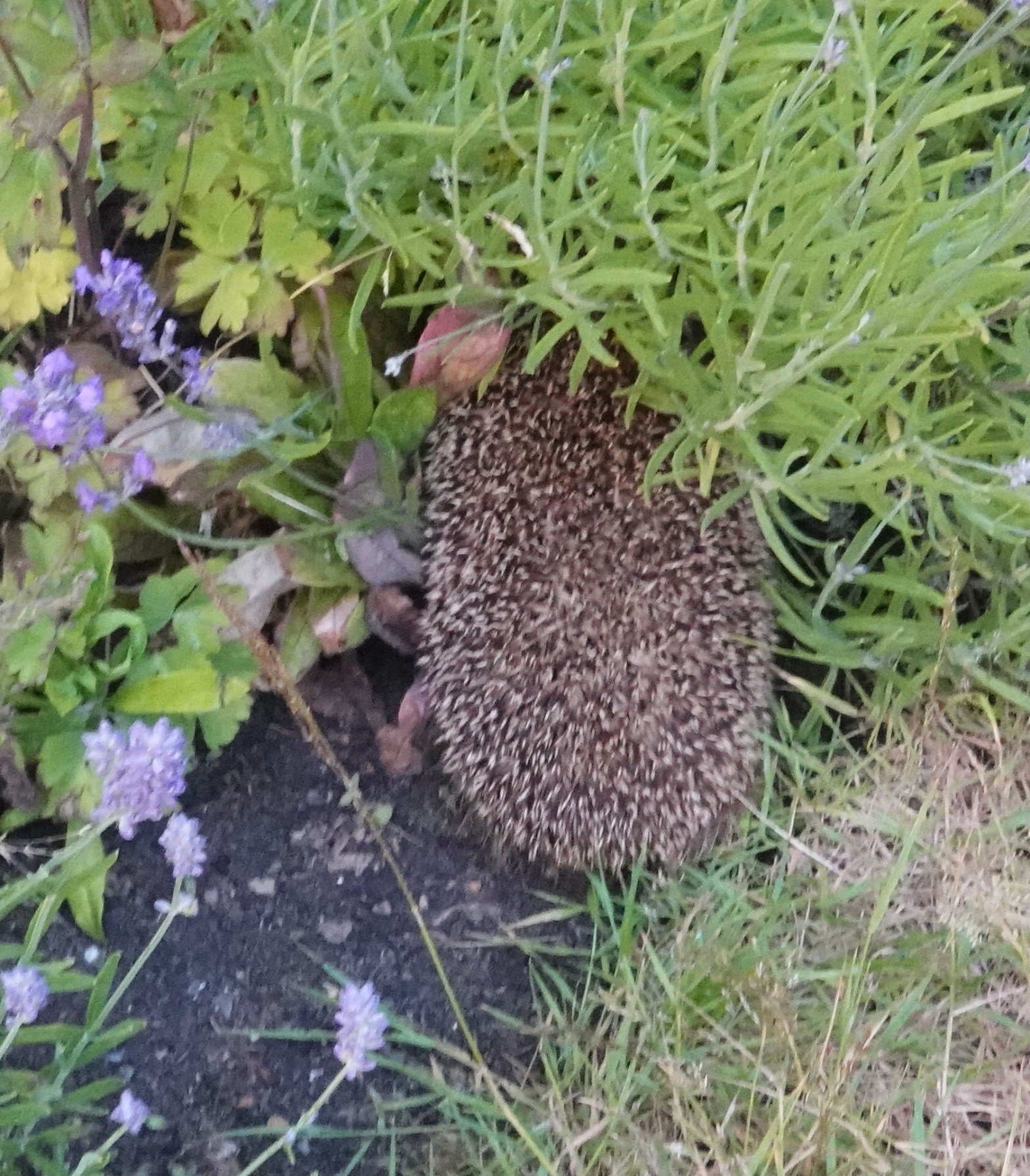
My hedgehogs are shy and don’t usually come into the garden until well after dark. The top photo was taken in June 2020 – he thought if he hid in the lavender, I wouldn’t see him.
I have a hedgehog house and during the season, put a little food in there to help them on their way together with a bowl of water outside. With a trail cam set up, I could see that earlier this year, at least six hedgehogs were visiting the garden. Then things settled down and I had one regular visitor with others dropping by from time to time.
This summer, for the first time, I had a rat on video. For a few days it didn’t go into the house but eventually it plucked up courage: went in, came out with a single biscuit, ate it, went in … and so on, repeating this manoeuvre about fifteen times. This is very different behaviour to the hedgehogs who simply go in and scoff.
I have no wish to encourage rats. I know they have been on the island for a very long time but the Brown Rat is not a native species. It is invasive and has devastated some local wildlife. Feeding stopped immediately and I just left the water bowl (cleaned regularly and topped up daily) as hedgehogs easily become dehydrated.
After a gap of several weeks, I put out a tiny handful of food as the hedgehogs will be looking to put on fat in readiness for the winter hibernation – fingers crossed that he uses the house-. My regular hedgehog is back and so far no sign of rats, but I am checking the trail cam every day. Naturally, he shows a total disregard for his water source.
If you come across a hedgehog that is poorly (many seem to develop mange because they are in poor condition) the GSPCA will take them in, treat them and return them to the wild when they are back to full health. http://www.gspca.org.gg/home
 Natural history of the Bailiwick of Guernsey