Monday 30 August

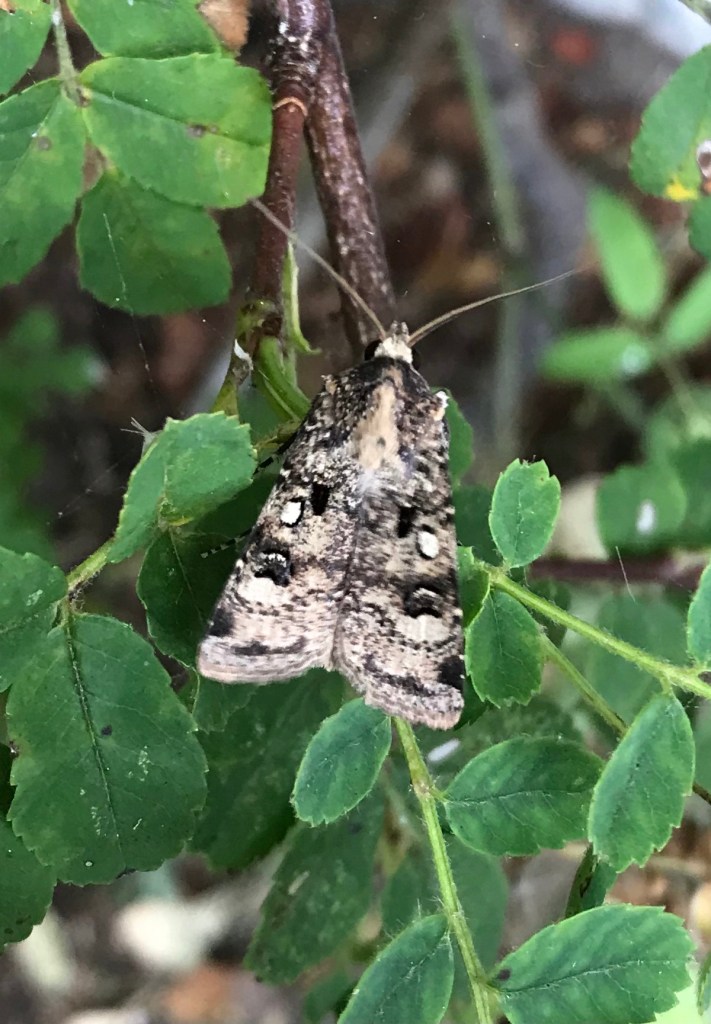
Bank holiday Monday and a big change in the weather – cold and cloudy. Typical. I put out the moth trap last night, not many moths but some different ones. In the top photo is Old Lady which was good to see – the last one recorded here was back in 2019. It’s a seriously big moth, aside from some of the Hawk-moths. The forewing can measure up to 65mm.

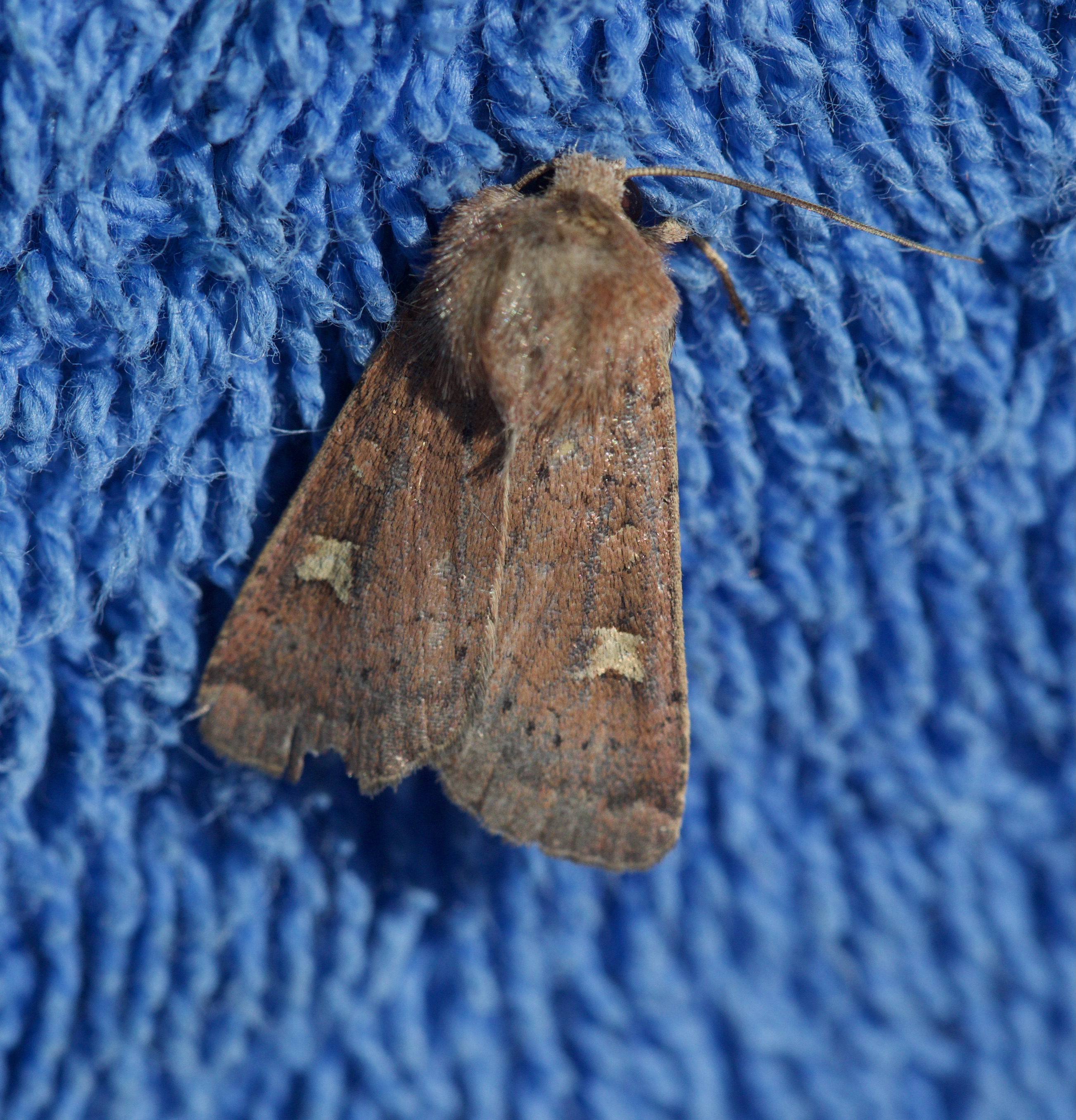
There were several Straw Underwings, the first ones for this year and a Crescent Dart, which is a new species for my garden. Mind you, one seems rather poor when I heard that the moth traps for Nature Guernsey at Plainmont had around two hundred on Saturday night!

Also some of the other seventeen species present were Bright-line Brown-eye, two Burnished Brass, Oak Hook-tip, three White Point and a Yellow Belle. The light is very poor so only a couple of photos taken with my phone.

With luck, I’ll be back bird ringing tomorrow. The Nature Guernsey event had a Wryneck in the net which was ringed. I wasn’t there and that bird is high on my list of ones I’d like to see!
Saturday 28 August

At last, after a gap of nearly four weeks, I put out the moth trap last night. The numbers weren’t huge this morning – what could I expect when I forgot to put the eggboxes in? – but at least I was able to do some recording, and enjoy the variety of species with different colourings and patterns.

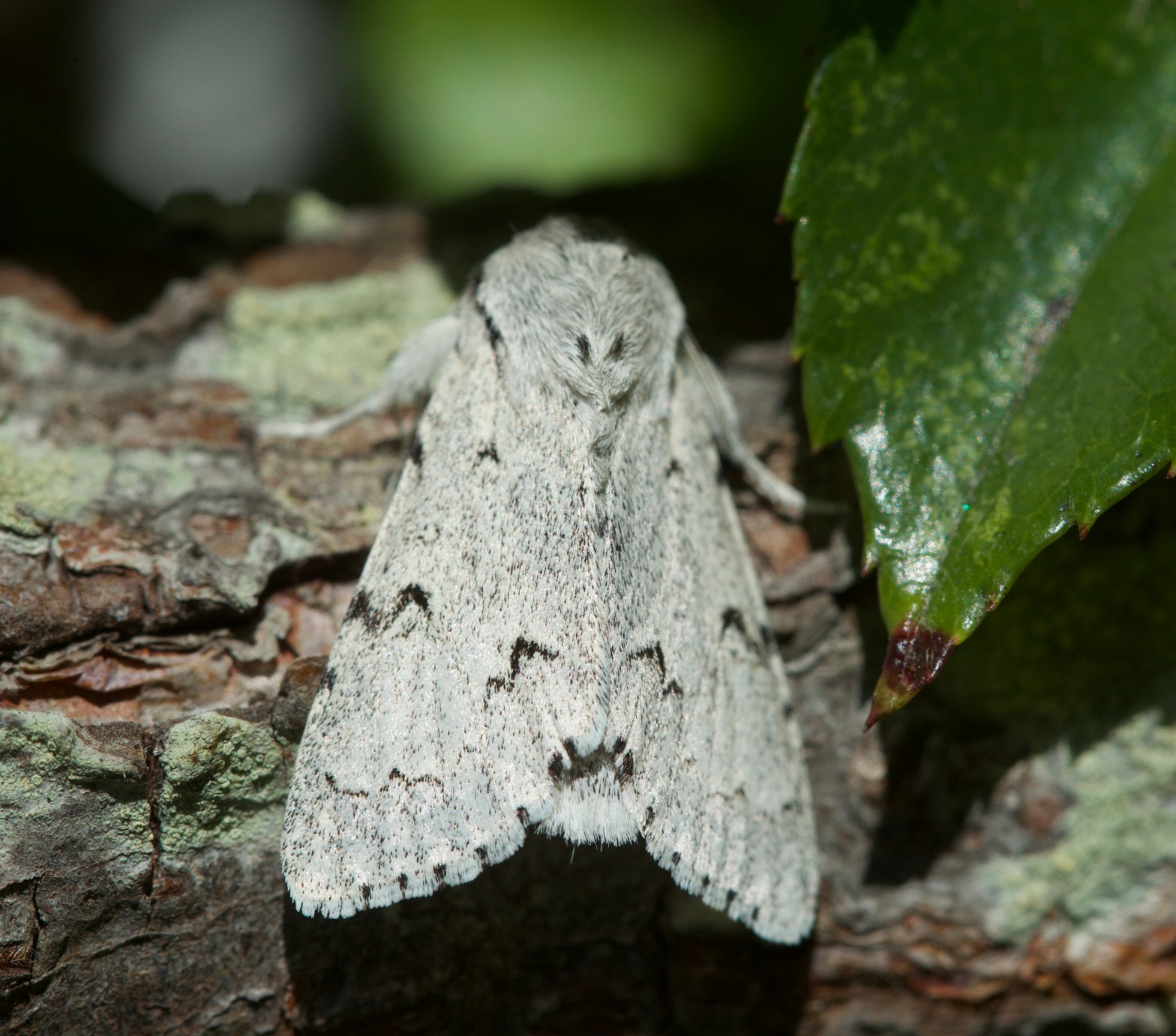
The Miller, Acronicta leporina, in the top photo, was my first of the year. It isn’t frequent here but the flight season is roughly from May to early August, so I would have expected to have had one in the garden before now. It was very obliging, so I was able to place it in a more natural setting than my go-to blue towel.

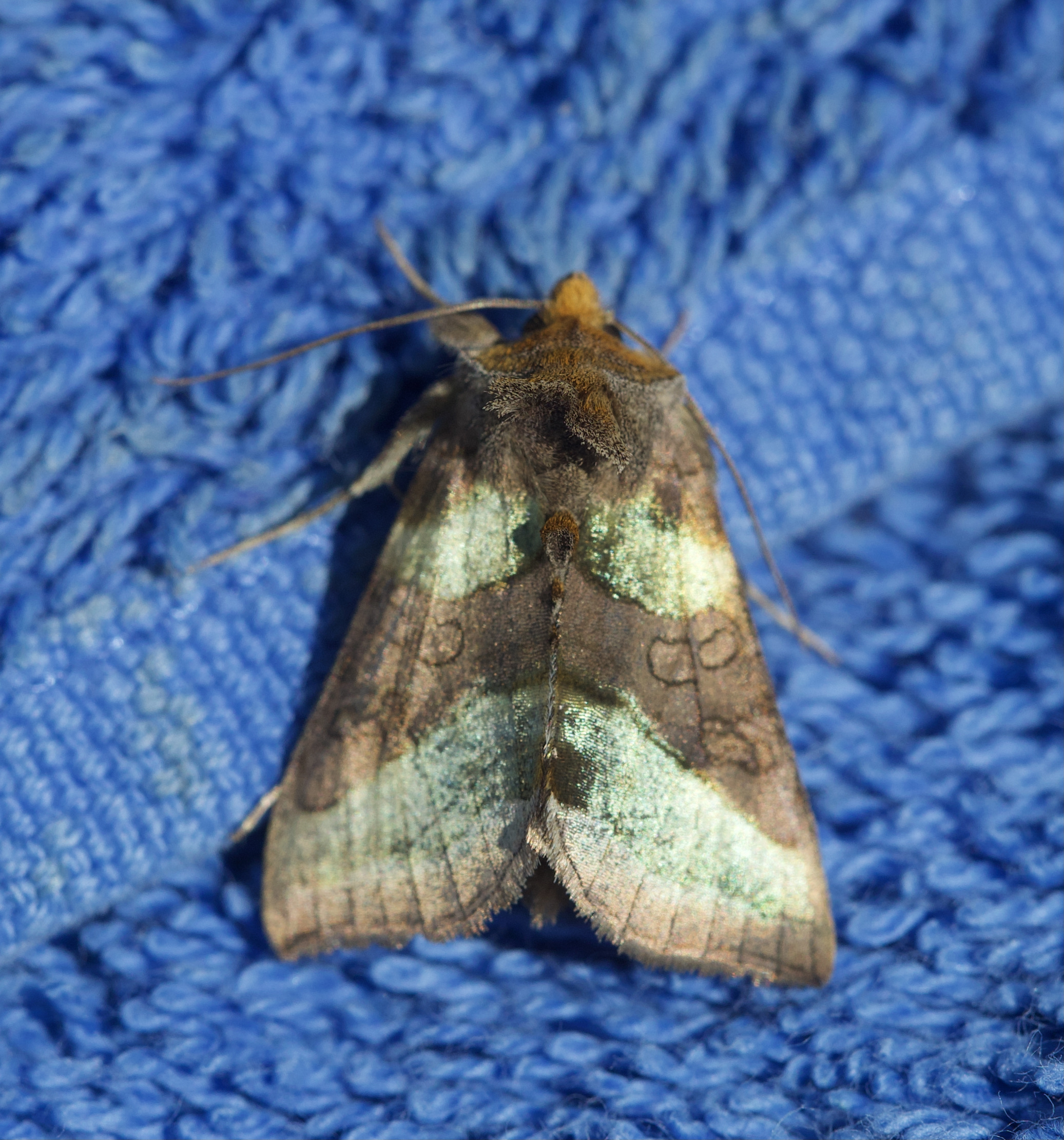
I haven’t labellled the individual photos as I think the names speak for themselves. It was good to have a Burnished Brass and it showed up really well in the late summer sunshine. It’s amazing how those scales glitter green and gold.

A Square-spot Rustic showed its reddish brown background colouring well, together with the noticeably pale kidney mark that gives this species its name.

The Light Emerald was very flighty and I was only able to take a photo through the plastic pot – it escaped very shortly afterwards.

The Oak Hook-tip was easier to handle although it only had one of its hooked tips, the other having been nibbled or worn away.

The last photo is a White-point.

Nothing rare or exotic but it’s good to be mothing again. I will add separate pages with more information on these species over the next few days.

Saturday 21 August – last year!

Other people are enjoying the autumn migration: Icterine Warbler ringed by the Alderney Bird Observatory https://alderneybirdobservatory.org Melodious Warbler at Fort Hommet, Hoopoe at Pleinmont … I am at home with back trouble. So I’m going back to 2020 in order to add something to the blog. A Black-tailed Godwit on its way to its wintering grounds further south. I suspect this may have been a juvenile with a plain buffy-orange neck, anchor-like dark markings on the upper body, edged with light brown and very dark tertials with gold-brown edging. Light can be challenging at the Vale Pond, but views are often closer than the Colin Best Reserve which is also favoured by these passage migrants. They are elegant, long legged waders and seen far less frequently than Bar-tailed Godwits. September and October are good months to catch a sighting, so I hope I’ll be out and about again soon.