Wednesday 4 August, A Bird Day

The 4.30 am. alarm this morning was optimistic as it was raining. The early start was for a bird ringing morning and it can’t be done in the rain as the birds quickly become chilled in the nets.

Trevor, my trainer, was sure the weather would improve so after a short extra ziz I had a message at 5.45 am that bird ringing was on. We aim to be at the sight putting up the nets at daybreak so this was a late start but the rain passed over and we were able to get cracking.

The autumn migration is now underway and we have been busy over the past couple of days ringing warblers such as Blackcap, Willow Warbler, Chiffchaff, Reed and Sedge Warbler as well as some resident birds. Today as it turned out, was surprisingly quiet, with only a handful of birds ringed.

The star of the show was a Garden Warbler, not as common in Guernsey as they used to be. The Garden Warbler is one of those ‘Little Brown Jobs’ and its plumage is quite plain. This is only the second one I’ve seen. The first was about four years ago on Bird Race Day when Rob Lihou was pointing to a very hard-to-see nondescript bird lurking in the middle of a bush. So today, it was lovely to have one in the hand to have a really good look. If you look closely, there is a tick over one eye. They are part of nature and we do not touch them as this could injure the bird. It will fall off of its own accord eventually.

Garden Warbler, Sylvia borin

The image at the top of today’s blog is La Claire Mare. This reserve, owned and managed by La Société, is opposite Le Catiorocq on the west coast. I enjoy going there in the evening as you never know what may turn up and the light can be soft and golden with the reeds that are reflected in the water – a tranquil way to round off the day. This evening there were three Green Sandpipers and a Greenshank – a treat as waders are my favourite birds. There was scarcely a ripple on the water which was great for reflections and the birds were scooting around, especially the Greenshank which was running to and for, feeding on small invertebrates. These birds are also on migration and Guernsey is a pit-stop for them as they fly down from their northerly breeding grounds, taking time to re-fuel before continuing to fly south to Spain or North Africa for the winter. Some Green Sandpiper overwinter in the UK, as it is milder than the taiga in Russia where they breed. They are about the same size as a thrush, the Greenshank is bigger and longer legged.

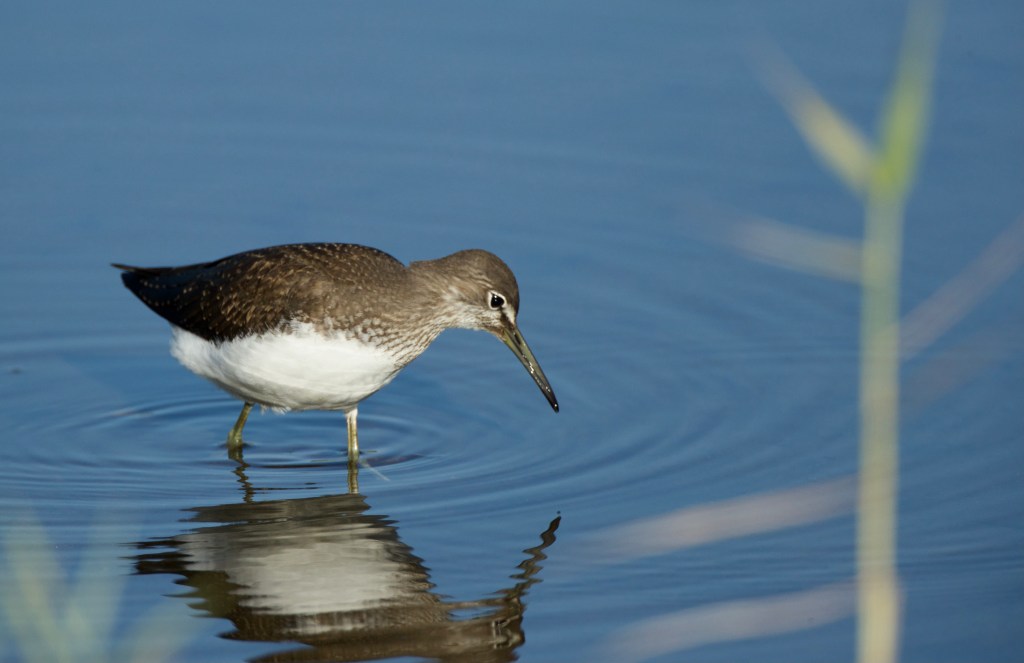
Green Sandpiper, Tringa ochropus
Greenshank, Tringa nebularia

26 July

My 900th bird ringed – a juvenile Goldfinch. Goldfinch numbers have increased locally in recent years as they have taken advantage of feeders and moved into people’s gardens. They are particularly fond of niger seed. I regularly have a small flock of around nine birds when my feeders are out.

Aside from the bright adult plumage (it will take this youngster until next year to grow all its adult feathers) these birds are easily recognised from their constant chattering song. Follow the link to a sound recording made by Lee Alder. https://www.xeno-canto.org/627920

As their scientific name indicates, they are very fond of thistle seeds. Teasel in a natural garden will also ecourage their presence. It’s also a great plant for insects when in flower, but needs a little space as it does self-seed.

This one was quickly ringed, photographed and released and was soon off to join its family flock. The ringing location is full of thistles in flower so they will be in for a feast over the coming weeks.

Burhou 15 – 18 July

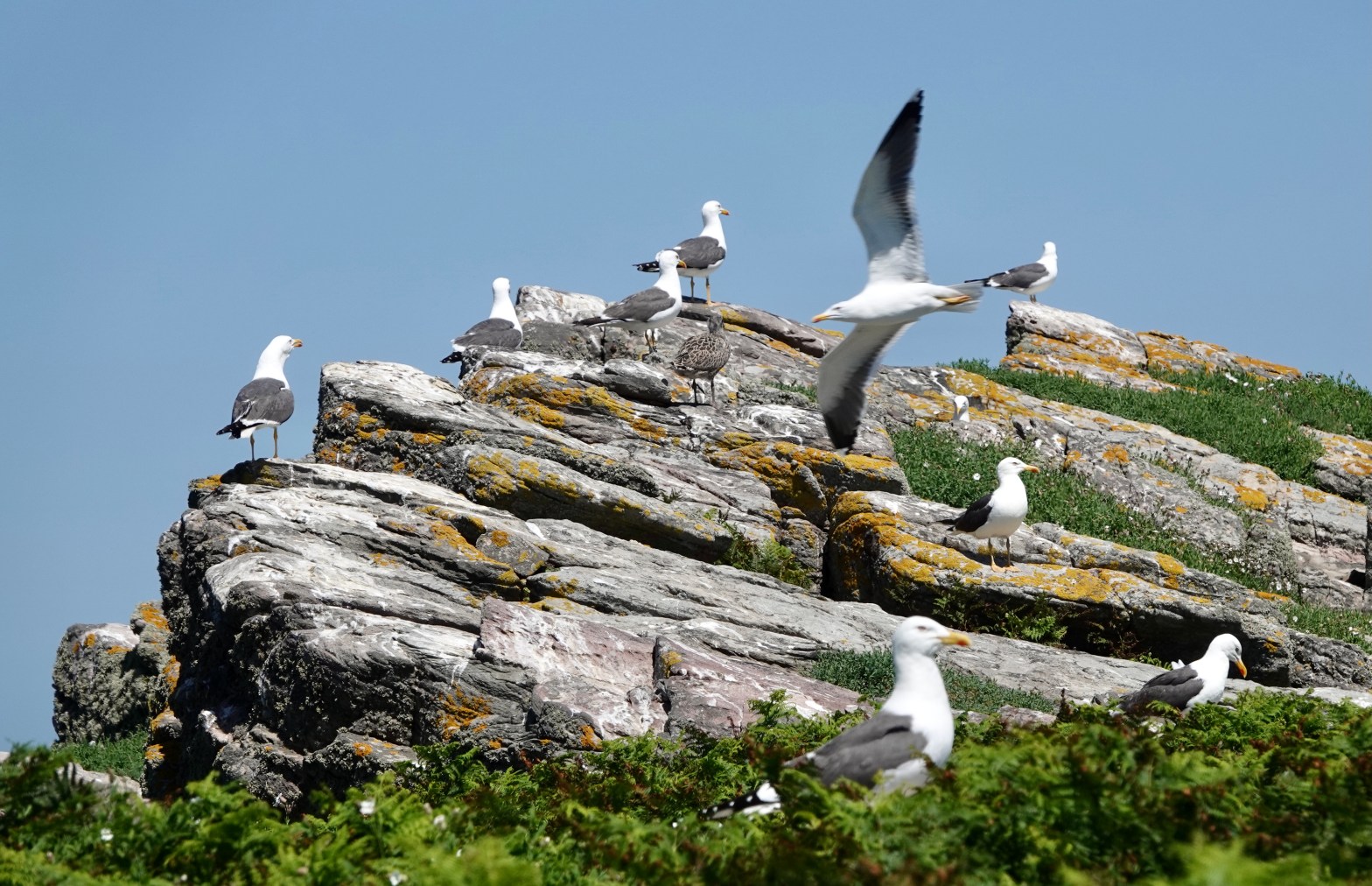
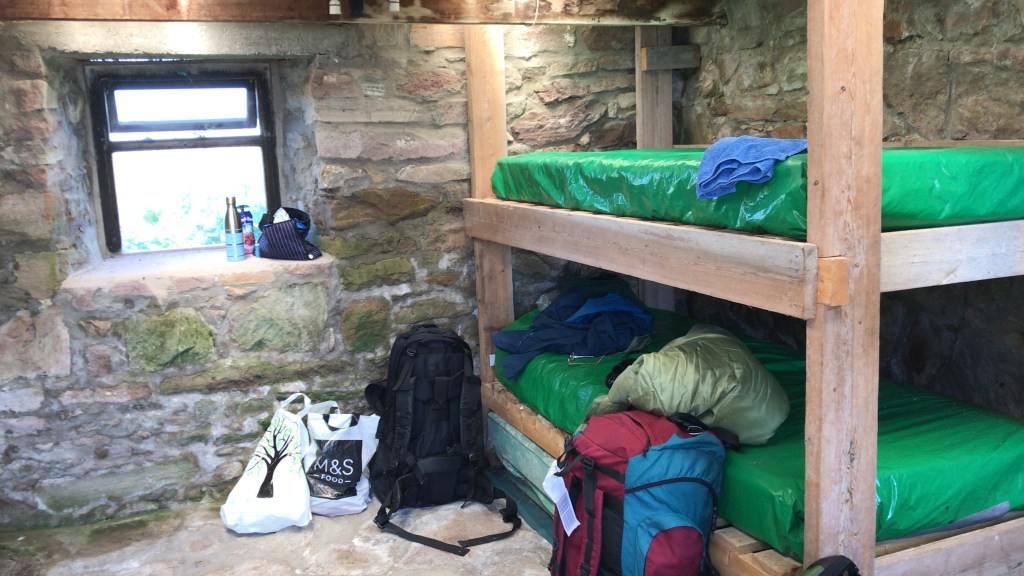
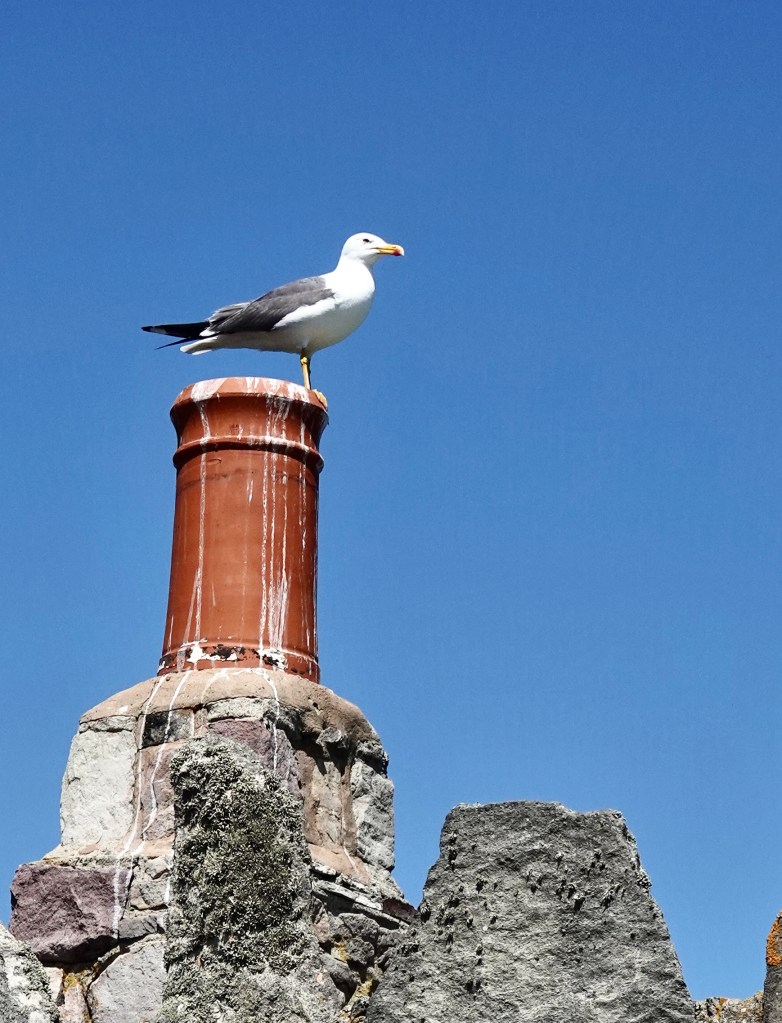
Burhou is an uninhabited island off the north-west coast of Alderney. It is part of Alderney’s Ramsar site and, in the breeding season, is home to a colony of Lesser Black-backed Gulls. Puffins also breed on the island and some of their burrows can be seen on http://www.teachingthroughnature.co.uk/webcams/colony-cam/ It is a relatively safe breeding area as there are no rats. There is a stone hut but with no electricity or water living conditions are basic. The island is off limits to people between March and the end of July in order to protect the breeding birds. An exception is a research team led by Alderney Bird Observatory comprising licensed bird ringers from the Channel Islands Bird Ringing Scheme, an organisation monitoring the birds of Burhou since the 1950s. They come over for a few days each year in oder to ring the gull chicks and Storm Petrels. The Puffins have their burrows next to the hut but they are not ringed currently. This year, I was one of a group of six to do the job.

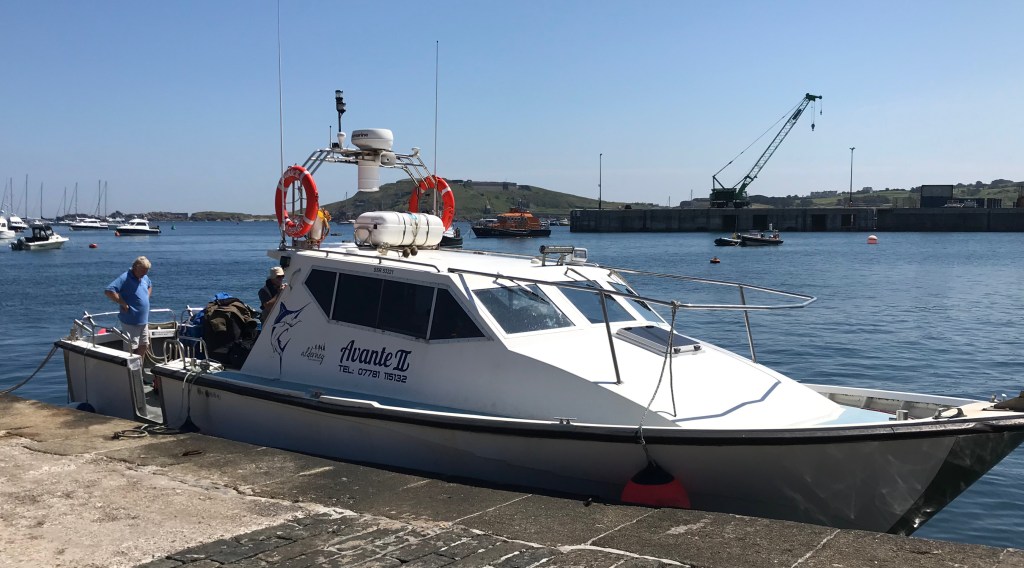
Avante II

The Avante II, skippered by Dave Venn, took us and our gear across – it didn’t take long but the tides and currents are treacherous. When we arrived, the dingy had to take us into a gully where we climbed over rocks to get ashore.

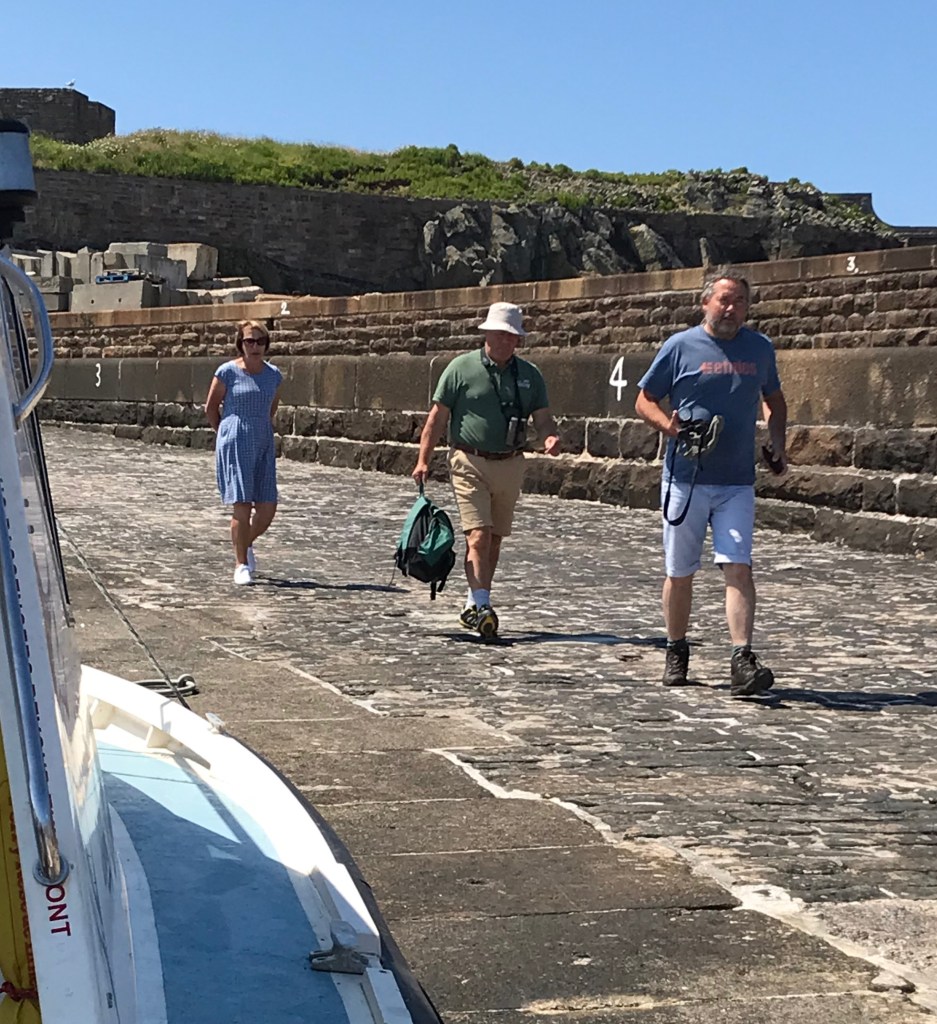
John and Trevor eager to get going and Lesley, Trevor’s wife, coming down to see us off.
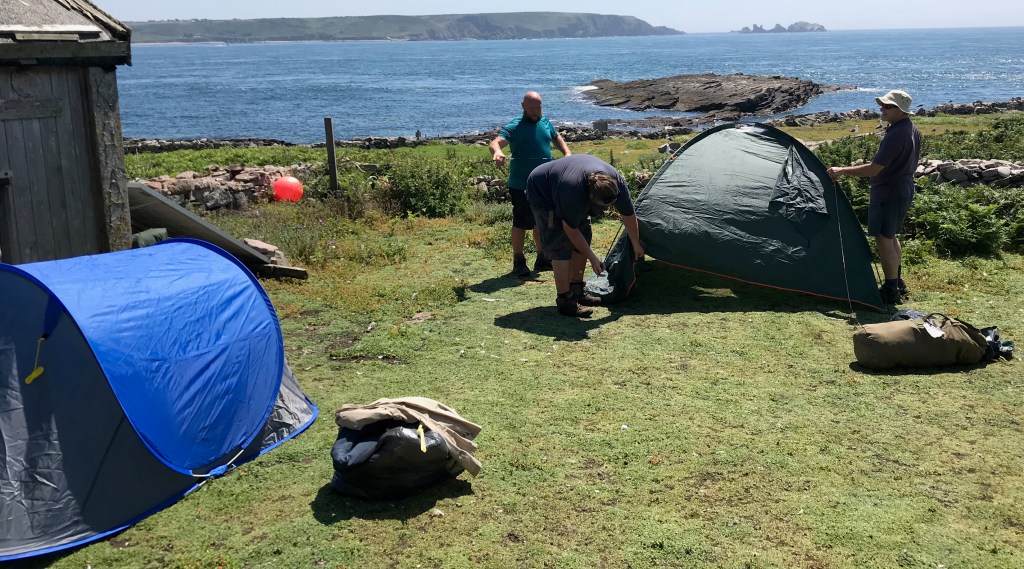
Some of the men chose to camp in the enclosure.
I got to sleep in the hut.
View from the hut.

Over the three days, there was hardly a cloud in the sky so gull ringing was done in the morning or late in the afternoon. The island is very rocky – unlike the rest of the Channel Islands, it is sandstone rather than granite – with swathes of bracken and Sea Campion.

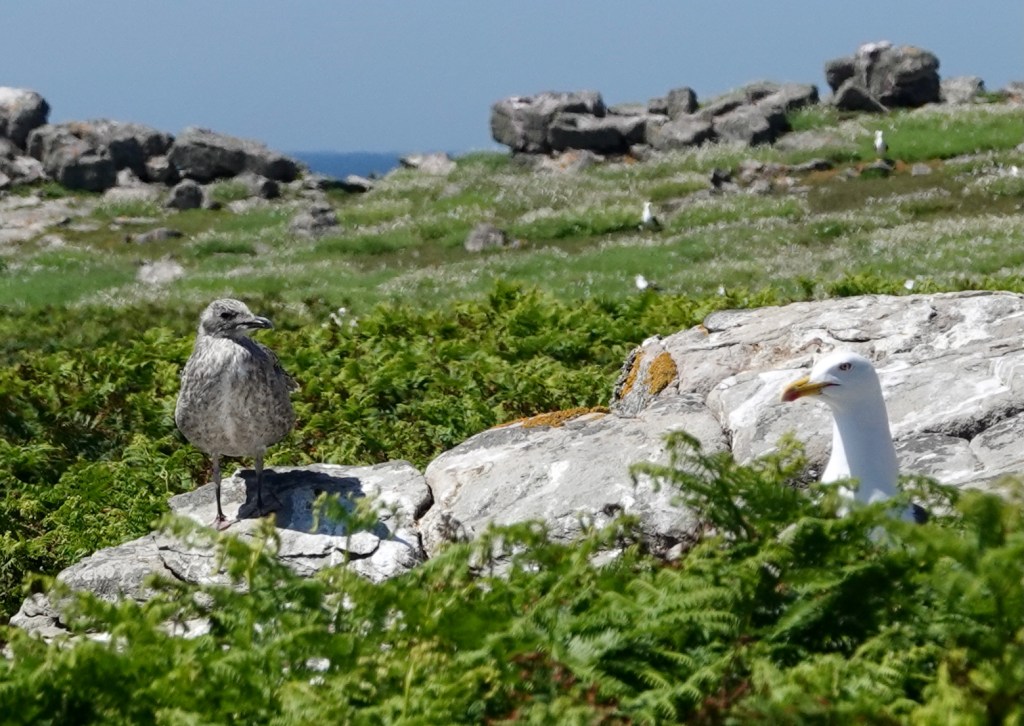
Lesser Black-backed Gull adult and chick

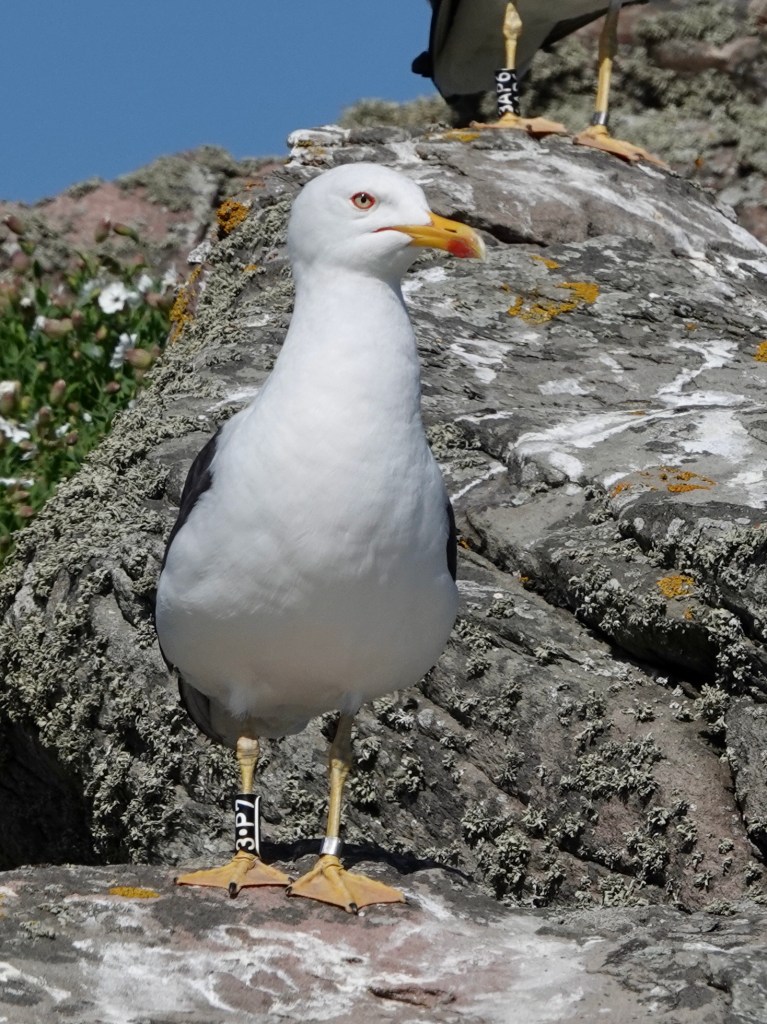
Once the chicks have left the nest, they rest up under the bracken where they are hidden from any predators, mainly the Great Black-backed Gulls. Mostly, they sit tight so our job was to inspect the bracken, collect any chicks, which by mid-July are mostly well on the way to being fully grown, tuck one under an arm with tail and leg pointing forwards. The ringers would then fit uniquely coded coloured and metal rings to the birds’ legs. This is done with great care and is not at all detrimental to the bird. The colour rings are easily visible and people can report sightings to http://birdrings.digimap.gg and see the history of individual gulls. The plastic rings may not last the life of the bird so they also have the metal ring which is sturdier. Ringing helps to gather important information about gull movements and longevity.

Adult ringed Lesser Black-backed Gull
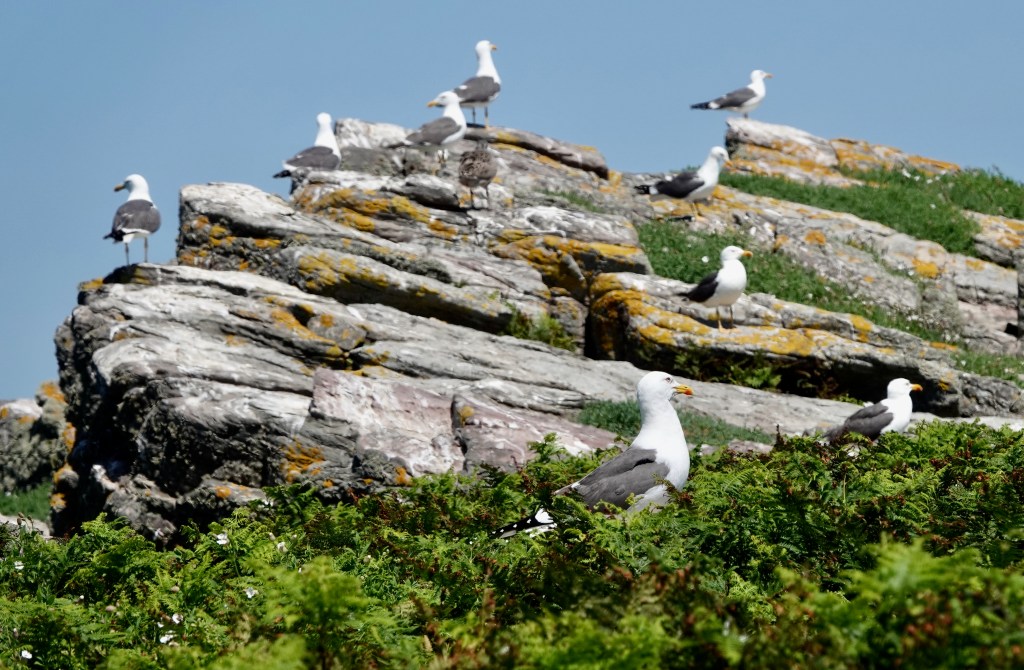
Lesser Black-backed Gulls on the look-out

Some of the oder chicks could fly. If one ventured towards the sea, a whole group of adults would take off, alerting others with their cries, to head it back to land and safety. So the colony is not just a group of individualswho happen to be in a good nesting area, but exhibit social behaviour with the adults looking out for all the chicks.

They are used to having the island to themselves and are very much at home around the hut. When they land on the roof, it really did sound like someone crashing open the door. Then they would walk up and down, calling out – not very welcome in the early morning!

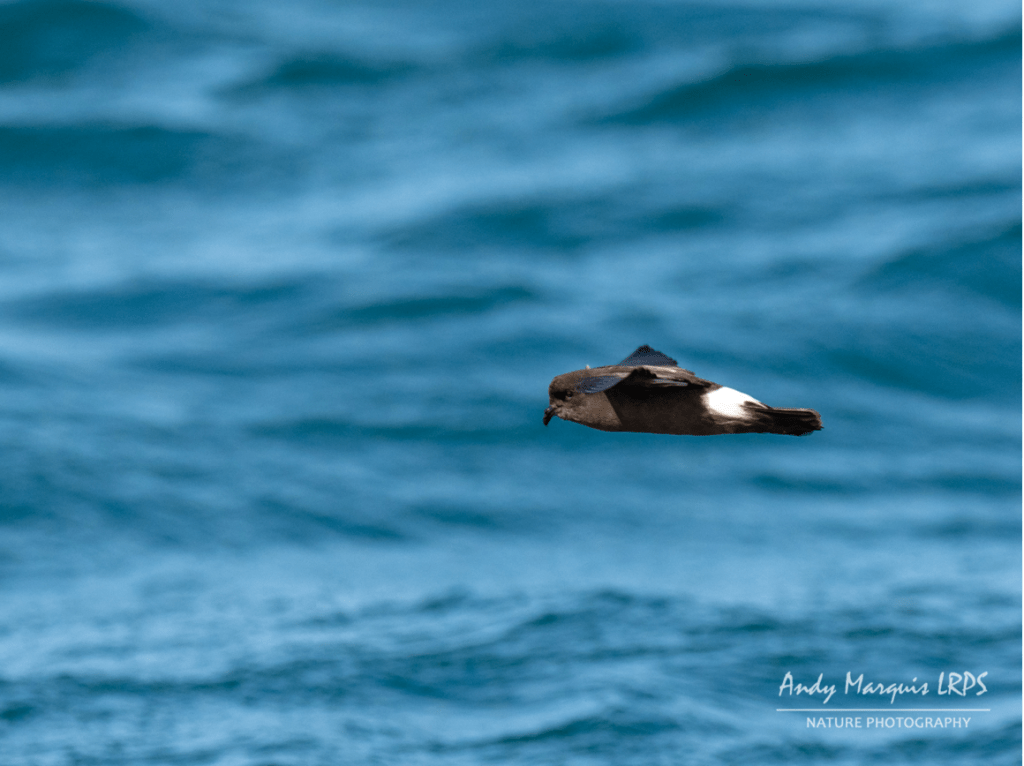
Ringing Storm Petrels took place at night. Mist nets were put up to net the birds which started to come in from around 10.00 pm. Extracting them is very skilled work which takes a lot of experience. It is done by feel or by using headlamps with red filters for the benefit of the birds. Weather conditions were very good over the three nights. Once the moon went down, it was quite an experience to see the Milky Way and summer constellations so clearly – with the odd shooting star. Hundreds of birds come into Burhou during the night. They nest in burrows or rock crevices. Their legs are tiny and they are ungainly on land. Once they were ringed it was my job to release them from a sea-facing rock which they could use as a launch pad. We were busy for all three nights, each night in a different part of the island.

Storm Petrel in flight by Andy Marquis, taken during a pelagic trip from Guernsey in 2018.

A good proportion of the birds had been ringed previously in the UK and France. The ring number of one bird showed that it was at least 29 – 30 years old. I find this quite astonishing as they are roughly swallow-sized and, apart from breeding, live out at sea. They belong to the tubenose family, like fulmars, and feed from the surface of the sea. The tube on top of the beak is used to excrete salt.

Sunday morning was pack up and tidy up time. Three days of hard work but I wouldn’t have missed a minute of it. John was the last to do the dingy trip back to the boat. I’m already making my list of stuff to bring for next year. What a fabulous experience.