Alderney 11 – 14 July continued

Still at Houmet Herbé, I was delighted to find several Foresters, a day flying moth in the same family as Burnet and Cinnabar. It’s interesting to note in my field guide that they are frequent and increasing on Alderney since 2003. Otherwise they are local in the Channel Islands and it has been probably four years since I have seen one in Guernsey.

The Forester. Adscita statices

On a second visit to the site I found at lest two Brown Argus butterflies. They can be hard to distinguish from female Common Blue. The main difference when looking at the open wings is the absence of blue scales on the Brown Argus and the orange markings, properly called lunules (as I’ve just discovered) extend to the edge of the wing. When the wings are closed, the Brown Argus has a figure of eight marking, but I did not get a view of the underside. It is good to know that they are found at several locations in Guernsey and have become more established in the past few years.

Brown Argus, Aricia agestis
Common Blue (male), Polyommatus icarus

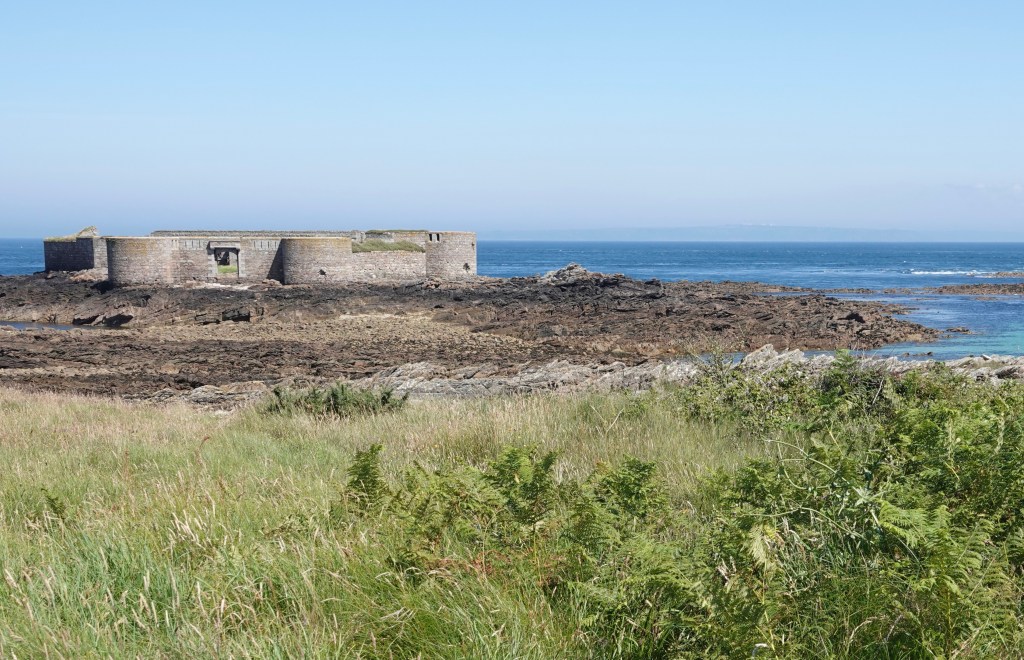
There is an old Victorian fort on a tidal islet about two hundred metres out to sea which has quite a few pairs of breeding Common Tern. There was a very handy seat under some pine trees where I was able to relax and enjoy their harsh cries and see them bring fish back to the nest. I relaxed a bit too much and forgot to pick up my glasses. Luckily, they were still on the seat when we went back to search for them in the evening. The coast of France is just visible in the photo.
Another walk along the south-east coast gave us good views of another butterfly: Glanville Fritillary, one of two, sunning itself on the path out of the wind. I was hoping for a Fritillary species that we don’t get in Guernsey, but I hadn’t managed to see any of the Glanvilles at home, so it was good to catch up with them here.

Glanville Fritillary, Melitaea cinxia
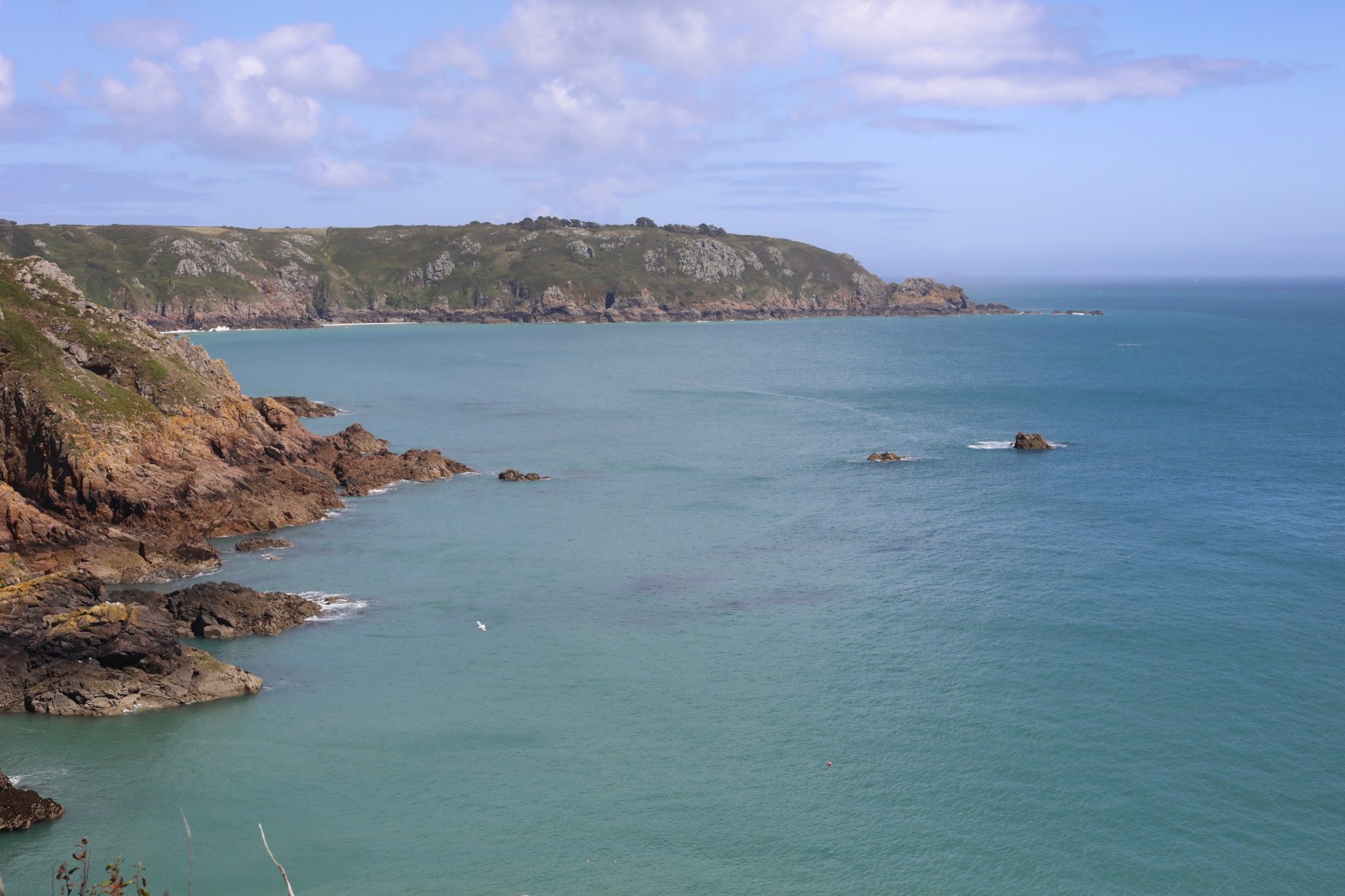
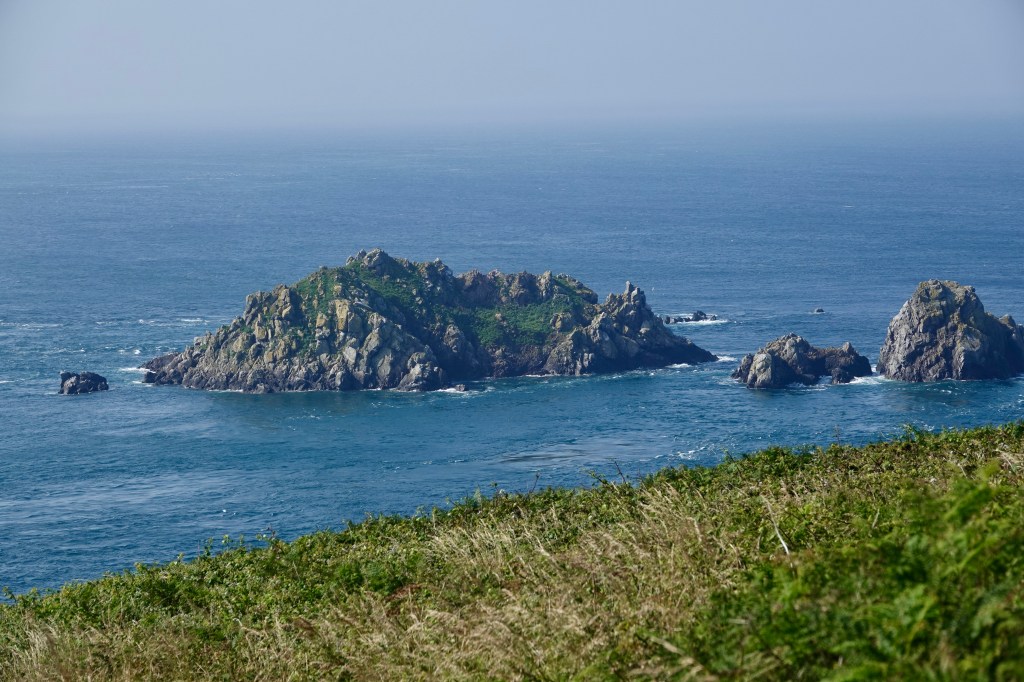
Looking towards Fourquie from the south-east cost of Alderney.

Alderney has some amazing natural habitats where disturbance is minimal. We were astonished at the number of butterflies across the island, particularly along the hedgerows which seemed awash with Meadow Brown and Gatekeeper. Also there is an amazing variety of flowers along the coast and inland. It was like nature up close, and being such a small island, nowhere is very far. The four days passed very quickly and Thursday morning arrived when it was time to pack up and head off to Burhou for three days with the other bird ringers. More to follow…

Alderney 11 – 14 July

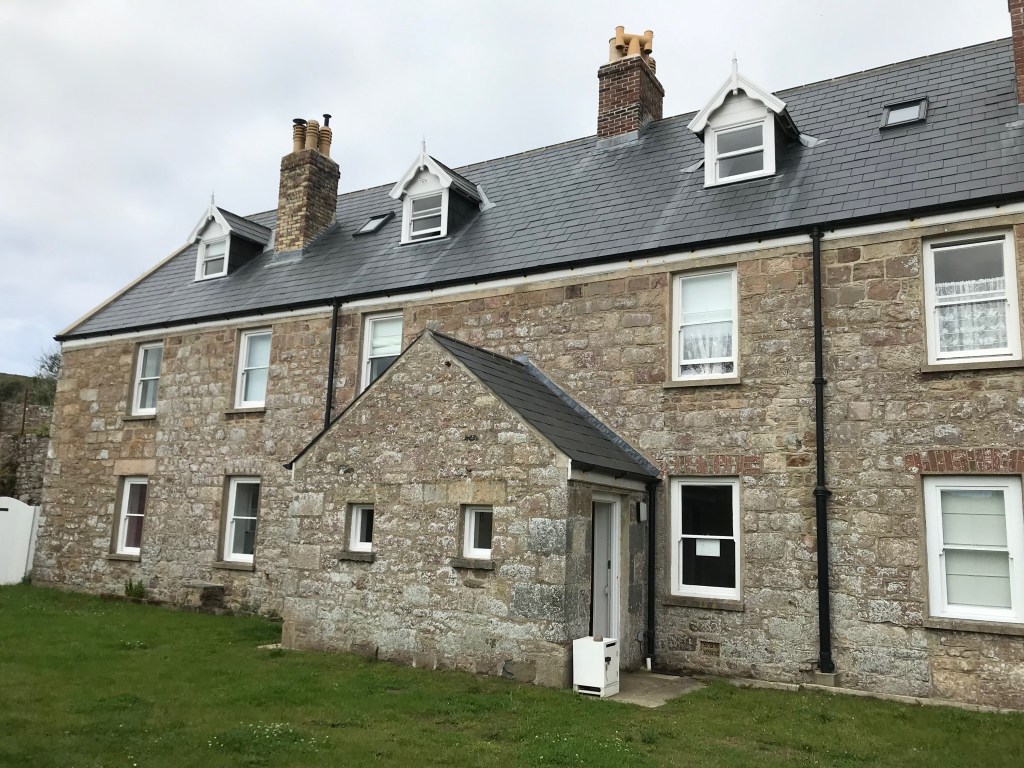
A summer trip to Alderney for a few days and, sadly, my last stay at the Nunnery in the beautiful location of Longis Bay, as the Alderney Bird Observatory will no longer be able to use it as hostel accommodation from the end of August.

The Nunnery, Longis, Alderney

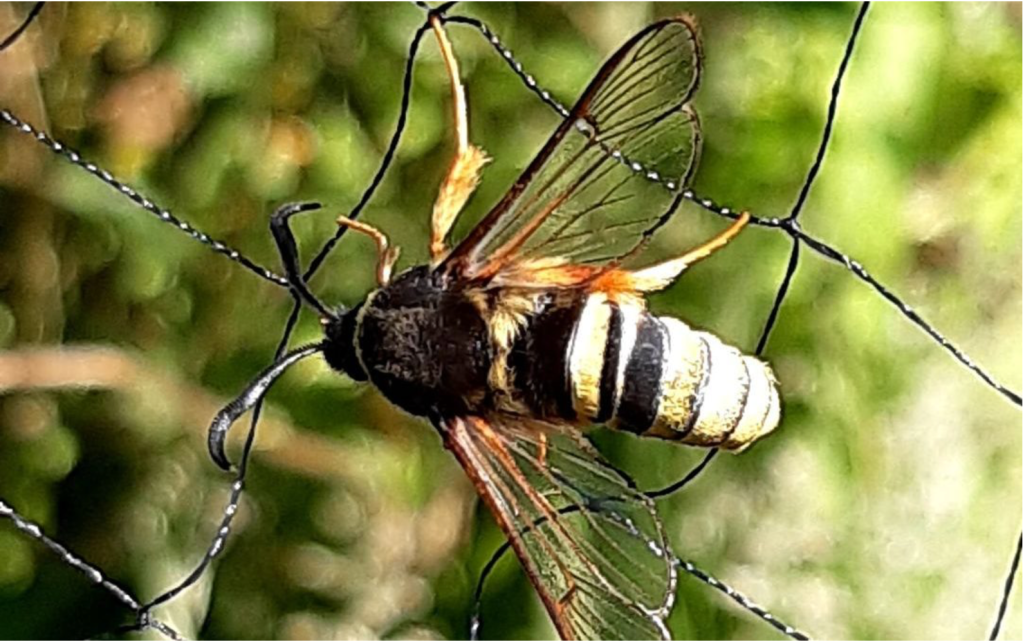
We did some ringing one morning, but the star of the show was a Lunar Hornet Moth. I had never seen one before. According to my field guide, this species of clearwing moth is local in the Channel Islands, but rarely seen and then usually in the morning when they have just hatched. I suspect that many people, like myself, glance at it and think ‘Wasp’. It spends two years as a larva, its favourite habitat is mature willows or poplar in damp ground. This is the case where the nets are at Longis where a stream runs down to the sea – I tried to jump it and didn’t make the opposite bank so Trevor had to haul me out with the furling pole! It flew off just moments after Trevor photographed it.

Lunar Hornet Moth, Sesia bembeciformis, photo by Trevor Bourgaize

A short walk along the coast from Longis Bay bring you to Houmet Herbé which has had many bird sightings over the years. Common Terns are breeding in the old fort which is just offshore. It is close enough to see the adults bringing in fish to feed to their chicks. There is a wide variety of plants which in turn attract many insects.

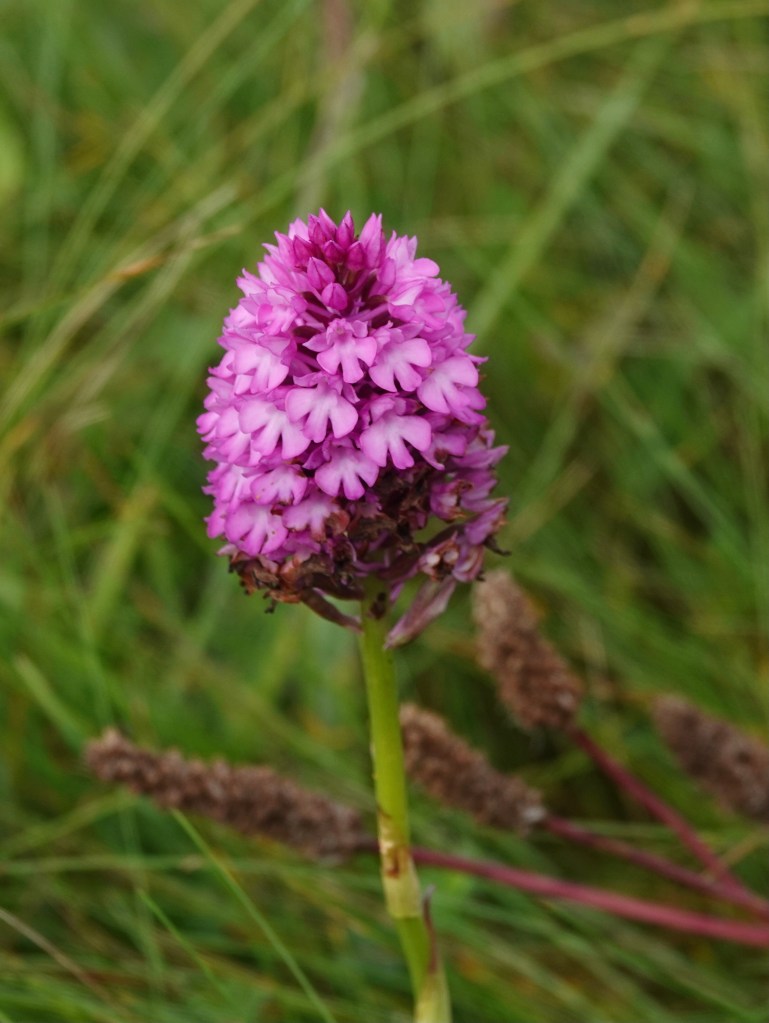
Pyramidal Orchid, Anacamptis pyramidalis, is widespread around the island, and the flower spikes stand out with their bright pink flowers. The colour can vary from magenta to white. They were just past their peak, but still conspicuous.

Pyramidal Orchid, Anacampsis pyramidal

This small area of coastal habitat has a wealth of wildlife.

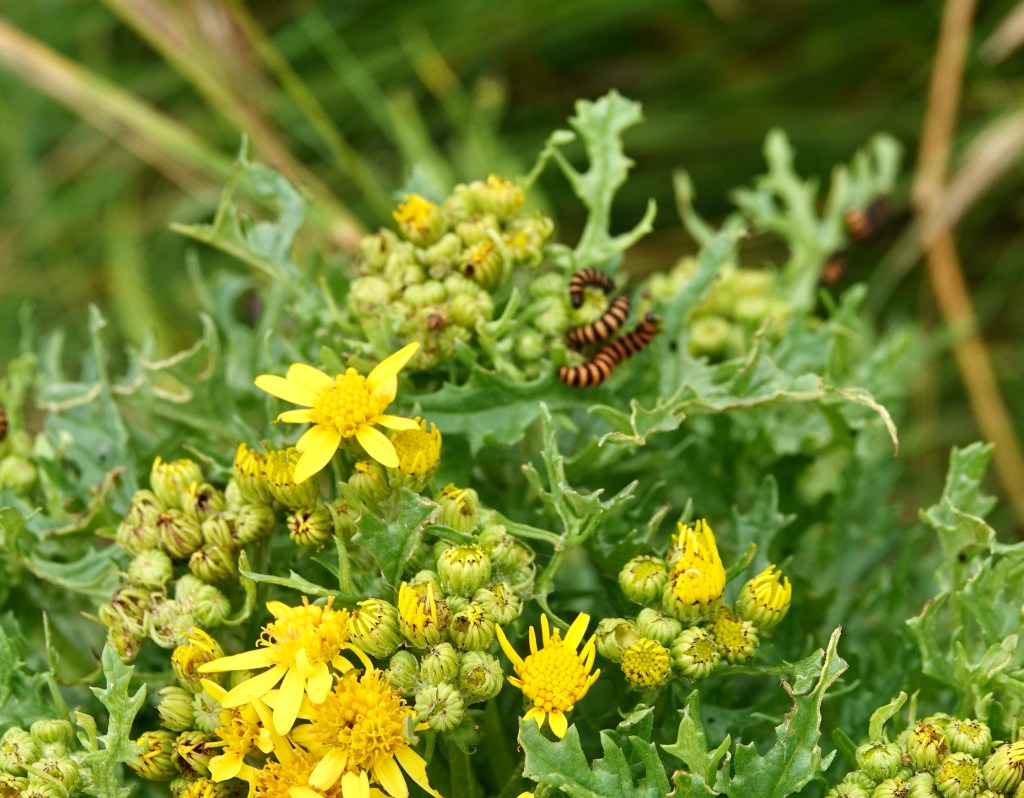
Cinnabar moth caterpillars on Ragwort took me straight back to my childhood. Ragwort has had a bad press and this sight is becoming very uncommon in Guernsey. I have seen plants pulled out and left to die on the cliff paths. Ragwort is toxic and it needs to be controlled where livestock feed, but in natural habitats it is a fantastic foodplant for insects. Over thirty different species are totally dependent on this plant and many others use its pollen as a food source. More to follow…

Caterpillars of the Cinnabar Moth, Tyria jacobaeae on Ragwort, Senecio jacobsen

Sunday 27 June

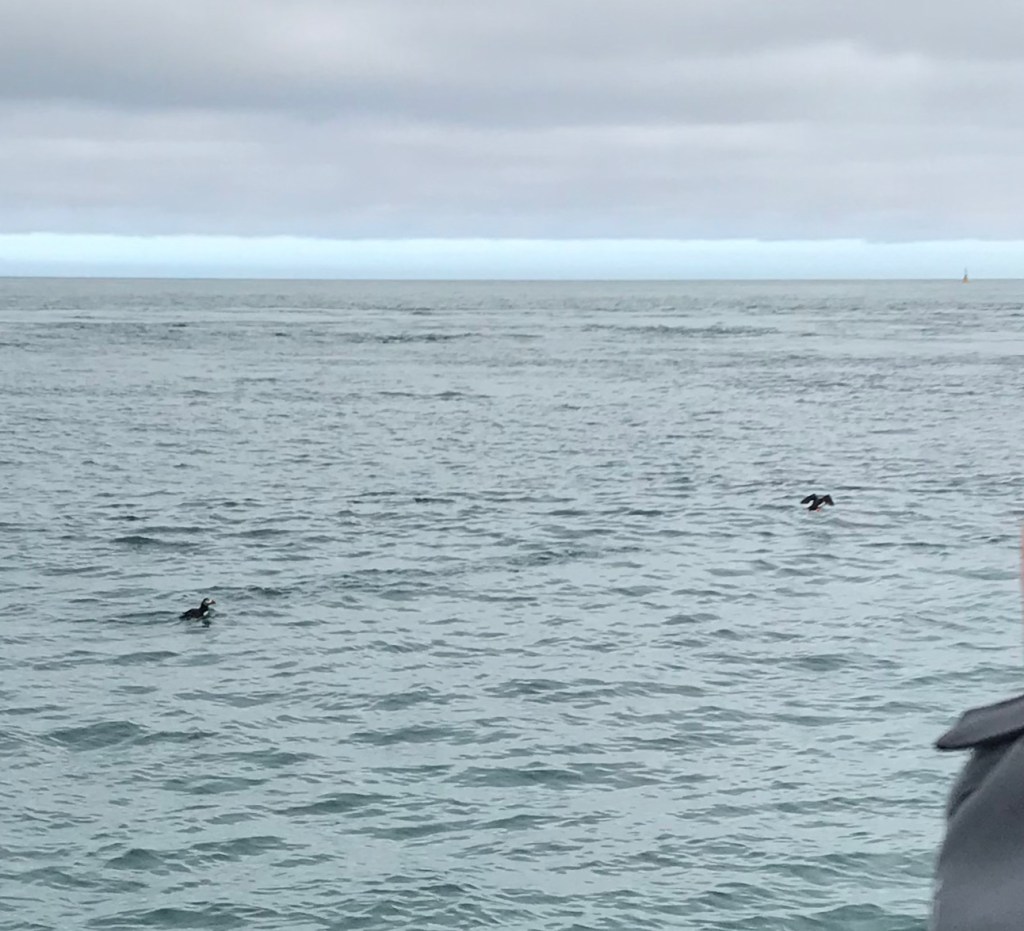
A long overdue blog and I have no photos of the really interesting things I’ve been doing over the past couple of days. Sigh – it can be very hard to do stuff and remember to take photos. On Thursday evening I had a great boat trip around the back of Jethou and Herm and out to the Humps: good numbers of Puffin, Guillemot and Razorbill and great views, especially the Puffins who were happy to be quite close to Out The Blue. No dolphins but seven Grey Seal in the water was good to see.

Honestly – they are Puffins!

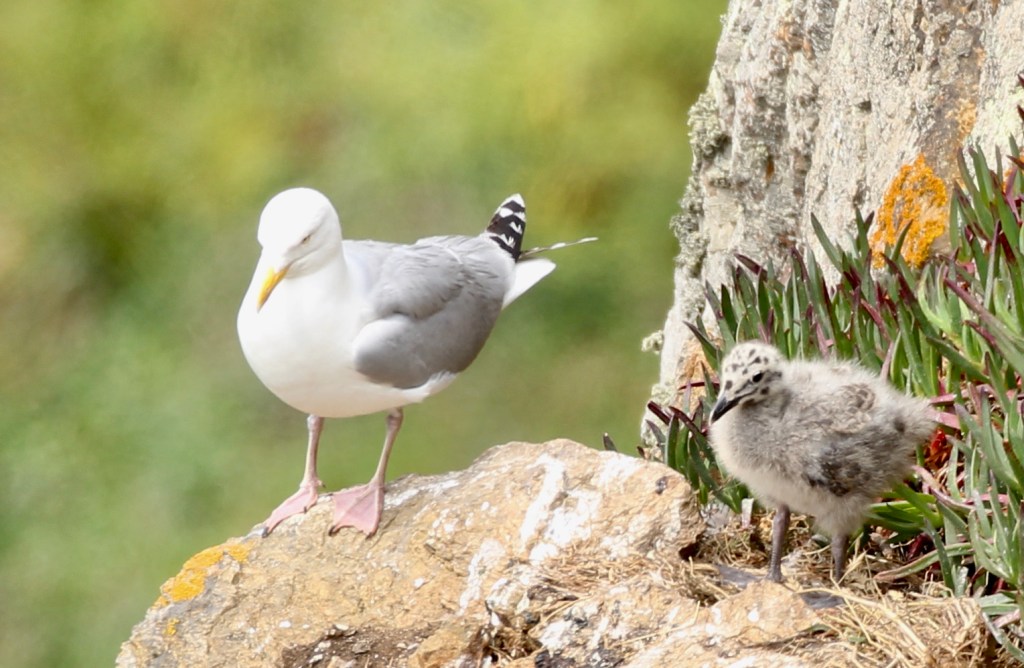
On Saturday afternoon I was invited to help with ringing gull chicks on Lihou and I don’t have a single photo of this. I did get my camera out but then put it away as I was busy scribing for the ringers or looking for the young gulls. They naturally hide under the vegetation, no surprise as they would be an easy meal for a Great Black-backed Gull. When I found one, I just had to hold my hand over it and it would stay put until one of the licensed ringers could process it. The photo below is one of a Herring Gull chick which I took a couple of years ago on the cliffs. It shows their mottled grey colouring which helps to camouflage them from predators. It was interesting to listen to Trevor, Chris and John Horton (over from Alderney) discussing which species of gull chick they had cradled in their arms. It’s not easy to distinguish them and we had chicks of all three species: Herring, Lesser and Great Black-backed. They aren’t everyone’s cup of tea, but I do like gulls.

Herring Gull and chick

Today, I finally got back to the cliffs to continue the annual job of flagging the nests of the Black-backed Meadow Ant. It was misty and damp to start with when I set out from Petit Bôt so the nests were not showing a lot of activity, but then the sun came through and the ants were very busy. The area around Le Gouffre was as beautiful as ever.

The Moorings at Le Gouffre

Last year, Jamie Hooper found a new ant nest on the path down to the Moorings. This year, it is still doing well and has a neighbour – a new ant nest just a little further up the path. Le Gouffre is a dynamic area for the ants and is an important area in Guernsey for this near-threatened species. (More information about them in the Insect Pages of this site.)

A new and very active ant nest at Le Gouffre

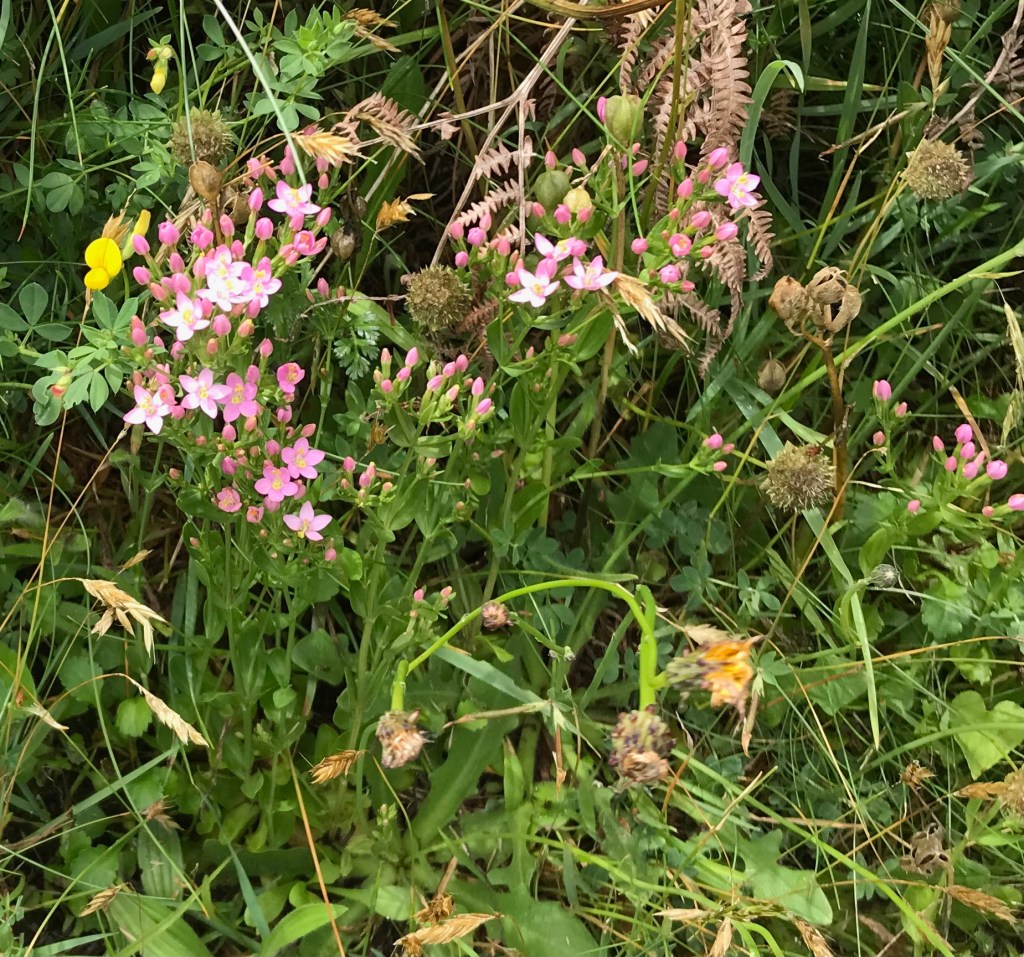
Also on the path was a large patch of Centaury, (Centaurium erythraea). There is a species of Guernsey Centaury, but my botany knowledge does not extend that far. I rather think this must be Common Centaury.

Centaury

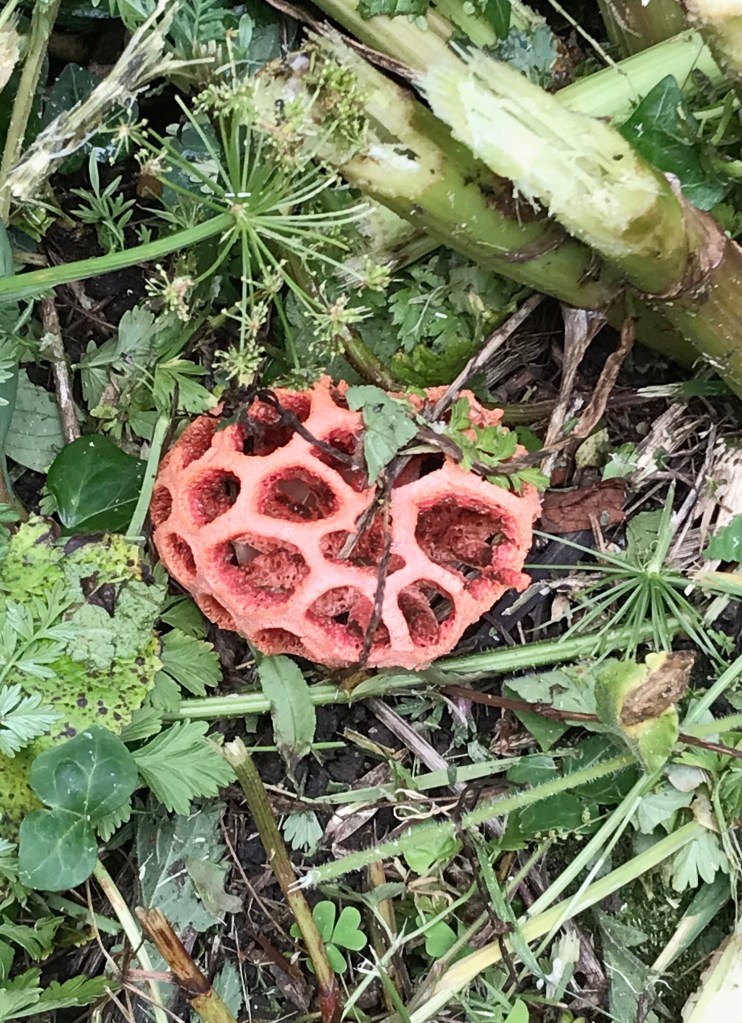
As I walked back to the car down the wooded valley of Petit Bôt, I was surprised to see two Red Cage Fungi in the recently cut back bank at the side of the road. I have seen photos on the Guernsey Wildlife Facebook page but have never seen one in real life. Smaller than a tennis ball, it belongs to the family of Stinkhorns. I didn’t get down on all fours to smell it, but it does give off the smell of rotting flesh which attracts flies presumably because they help to disperse the spores. Youtube has a couple of time lapse videos and it seems that the fruiting body only lasts for a day or two. It is one of the very few fungi that I am confident to identify.

Red Cage fungus, Clathra rubra