Saturday 12 June

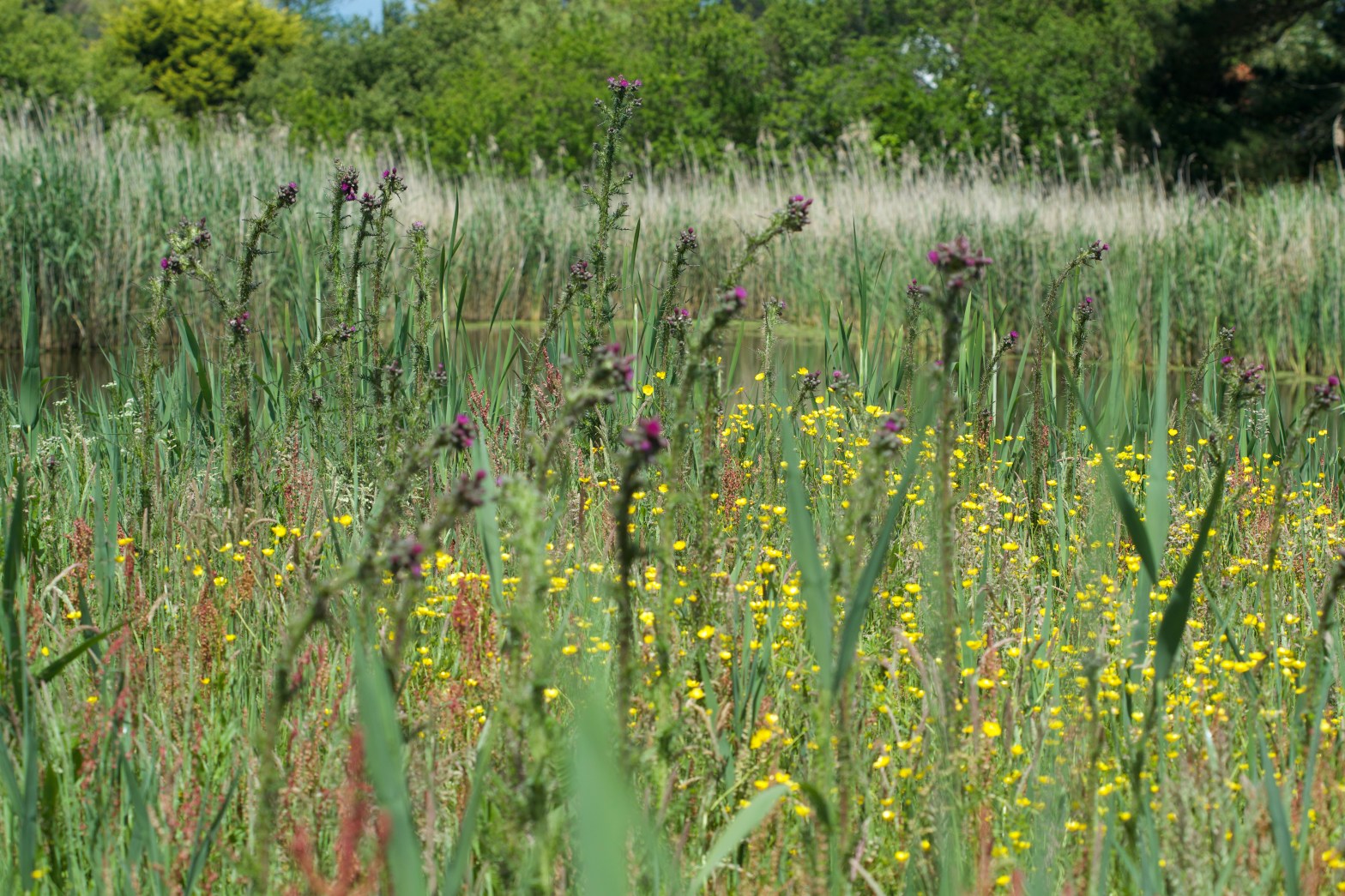
As we head towards midsummer, Le Grand Pré Nature Reserve is looking very different. The pond is only just visible through Slender Thistle and Meadow Buttercup. Birds are quite secretive as they are in full breeding mode and together with the flourishing vegetation they can be difficult to see.

This is the time of year when my interest turns to insects, particularly Hoverflies, of which there are over 280 species in the British Isles. Some are easily identified, others are a nightmare and most do not have a common name. First up is Heliophilus pendulus, cleaning its front feet. This very elegant hoverfly, with its striped thorax, is often seen near water.
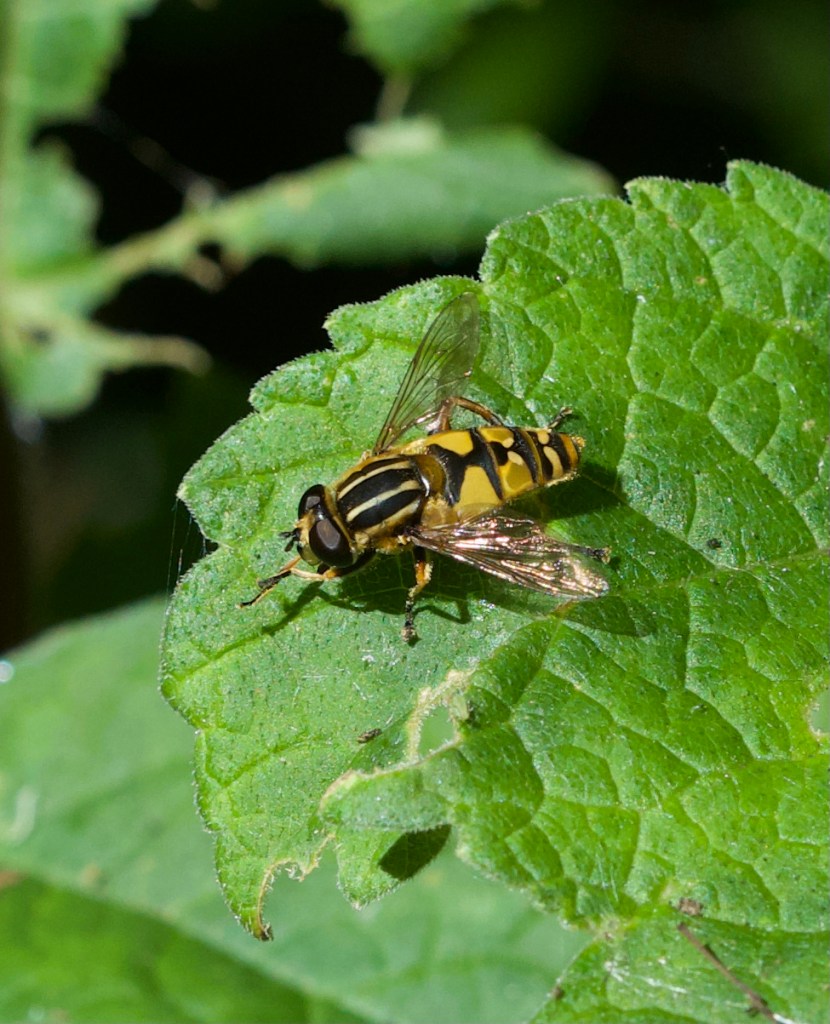
Heliophilus pendulus

Next is the Hornet mimic, Volucella zonaria. It is a very convincing mimic with photos apearing on social media asking if it’s an Asian Hornet. It is the largest of the British Hoverflies, with a wing length up to nearly 20mm. Especially striking are the tawny yellow wings.
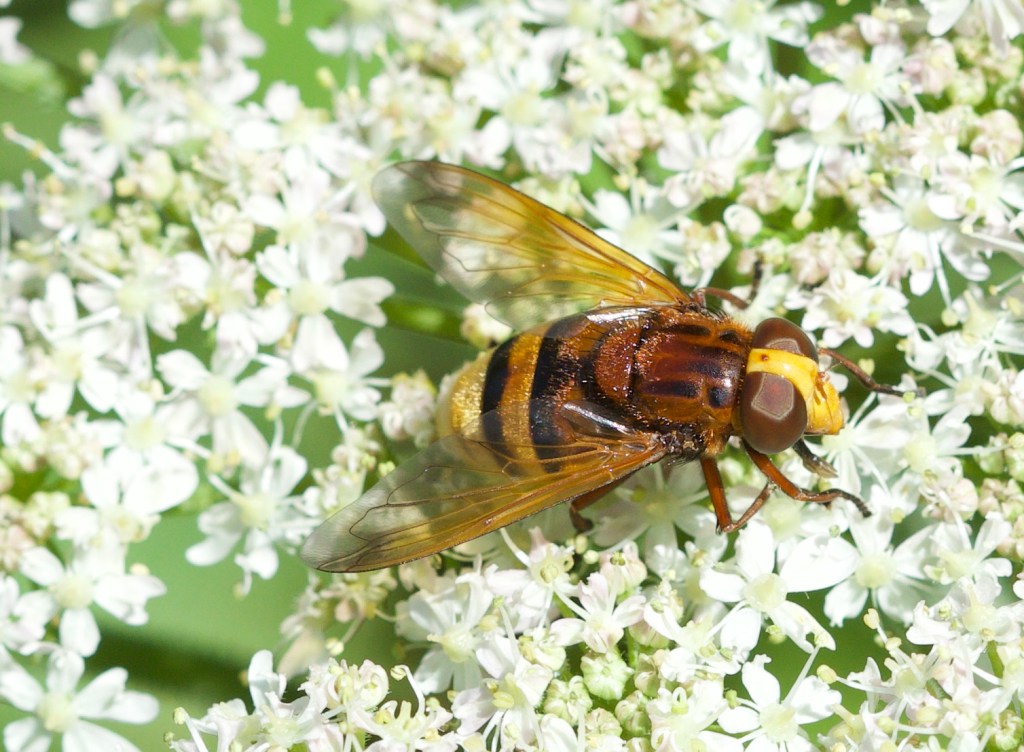
Volucvella zonaria

All Hoverflies are completely harmless, they do not sting or bite. Their survival strategy is to look like insects that do sting or bite. Many copy the yellow and black coloration of wasps, hornets and some bees which warn off potential predators. There are more Hoverfly photos from today which I hope to add if I can get an ID for them. As can be seen from the photos, the Hogweed and Hemlock Water-dropwort are very attractive to insects as the masses of tiny flowers on the umbels provide plenty of food. Hemlock Water-dropwort has a reputation for being poisonous – and indeed the roots are poisonous to livestock. It grows profusely in damp or wet areas of Guernsey. Work is undertaken to keep it under control, but it is a valuable food plant for insects and insectivores. It has finely cut leaves, unlike Hogweed, and when bruised smells like celery.

One of the daintiest group of insects to be found near water are the Damsel Flies. This was a male Blue Damsel Fly from this morning, enjoying the sunshine.
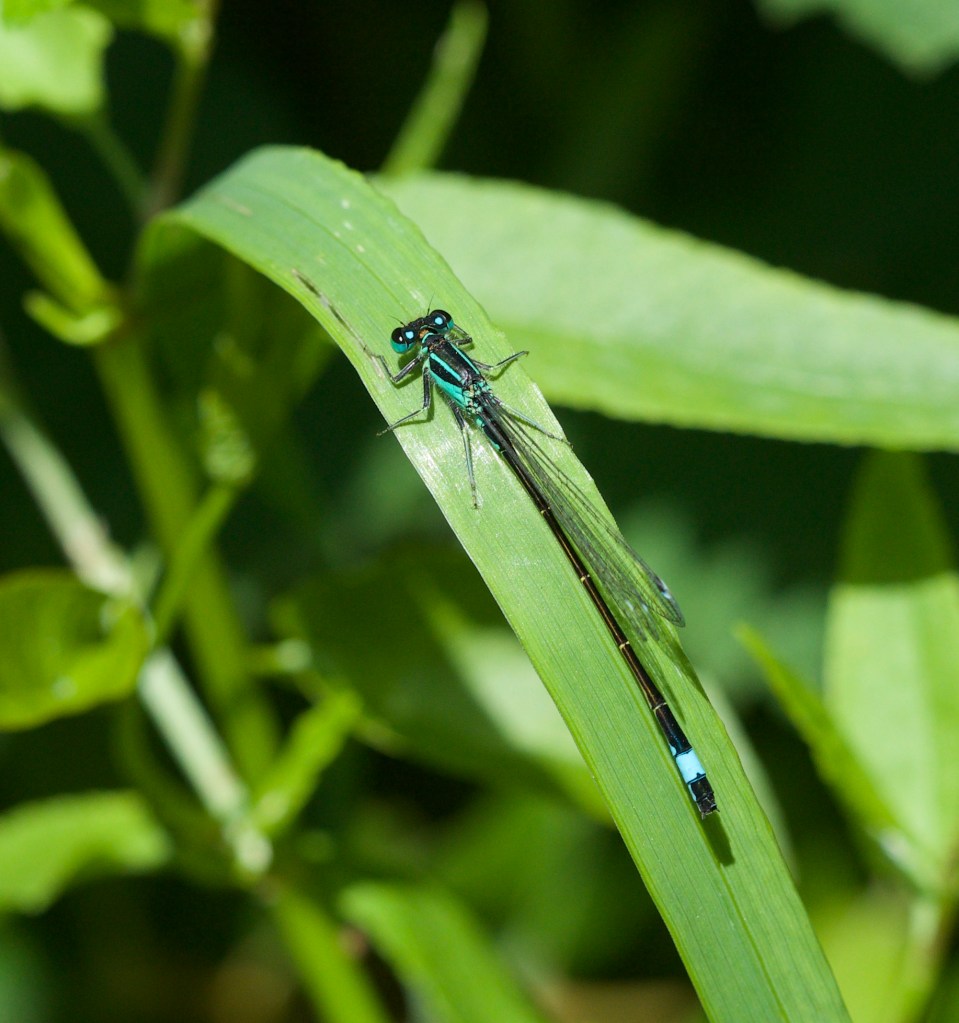
Male Blue Damsel Fly

Coming soon will be a post on my new moth trap – several new species have been added to my garden record this week.

I also had a couple of bird-ringing days with Trevor – mainly Goldfinch and a few Great Tits and Sparrows, and the odd moth or two.

A very fresh Poplar Hawk-moth.
Male House-Sparrow
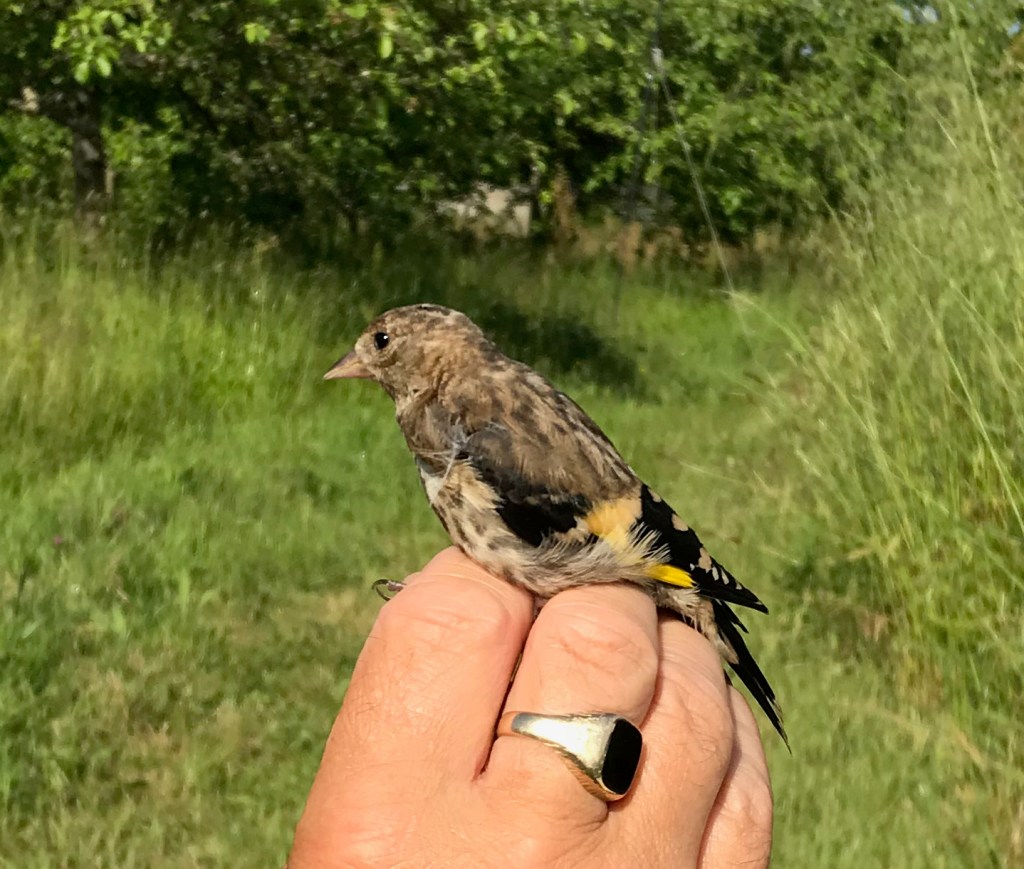
Juvenile Goldfinch

Saturday 5 June Jethou

For one day every year, La Société Guernesiaise may organise trips over to the privately-owned island of Jethou. Yesterday I made my second ever trip, helping to lead two of the groups for ornithology and natural history, with Trevor Bourgaize. It is one of the smallest islands in the Bailiwick , a green gem rising out of the sea south-west of Herm. It benefits from being relatively undisturbed and is a good place to get close (some would say too close) to breeding gulls.

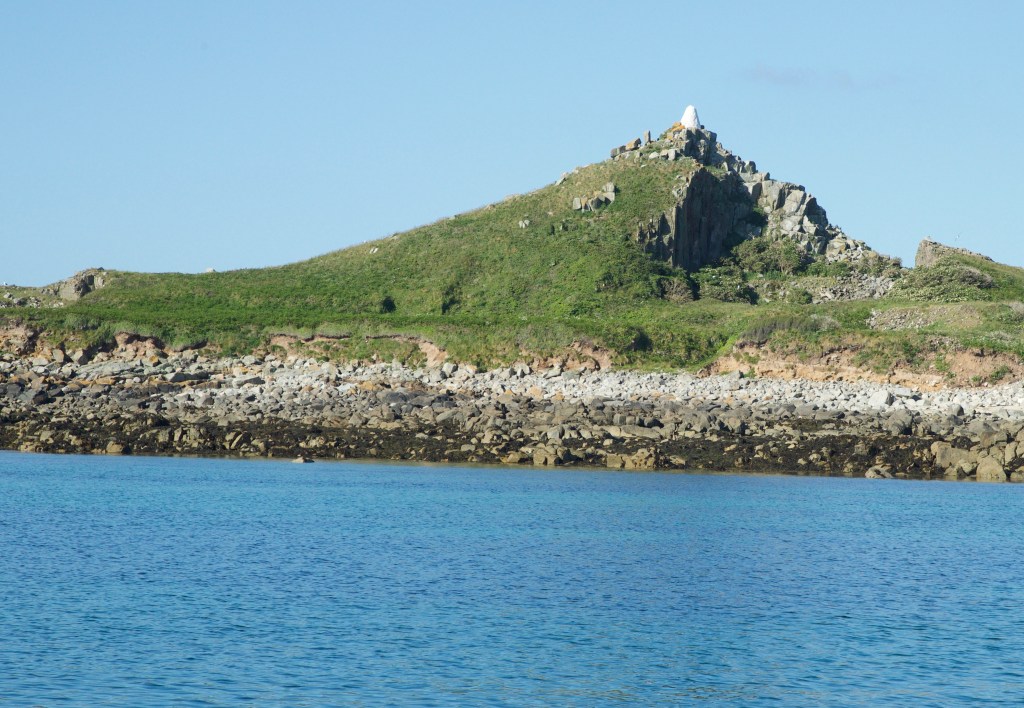
Le Crevichon

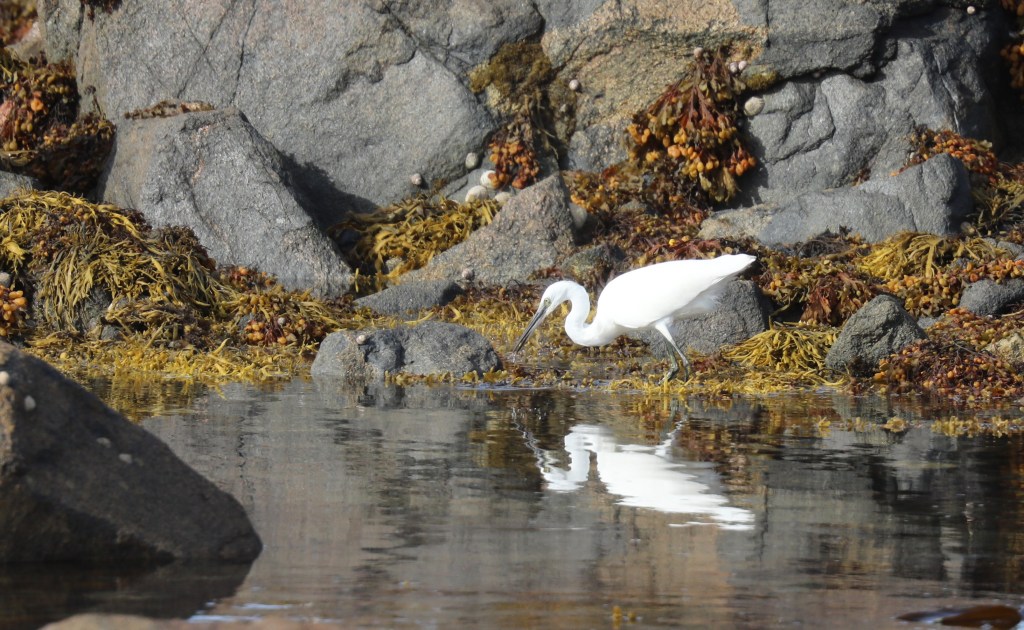
Coming into the tiny jetty, we had good views of Le Crevichon and could clearly see where granite has been quarried in the past. According to Prof. John Le Patourel, in ‘The Building of Castle Cornet’, a record dating from 1566 mentions iron and hammers being taken to ‘Le Creavissham’ to quarry the granite for Castle Cornet. Back then, the castle had to be partially reconstructed to accommodate the increasing use of gunpowder and canon. This quarry, more peaceful now than it was in the mid-sixteenth century, is a known spot for breeding Little Egret, Egretta garzetta, and we did see a few birds in the area, down on the shoreline.

In 1988, this showy bird was recorded just five times and was a ‘vagrant’ which meant that it turned up on Guernsey form time to time. In March this year, twenty-five were seen at the Reservoir on one day and they are now a common sight in reserves with reed beds and along the shore.

Little Egret

Each tour lasts about 90 minutes which is plenty of time to walk around the island, but as we were stopping to take in the wildlife it was rather a rush at the end.

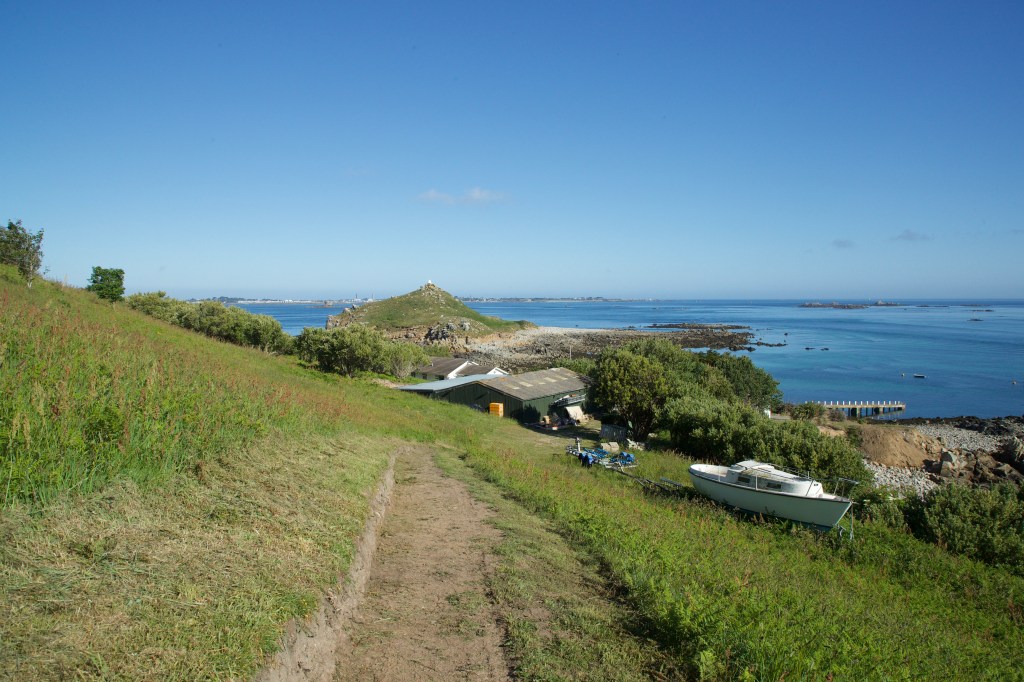
Looking back to the jetty with Le Crevichon in the background.

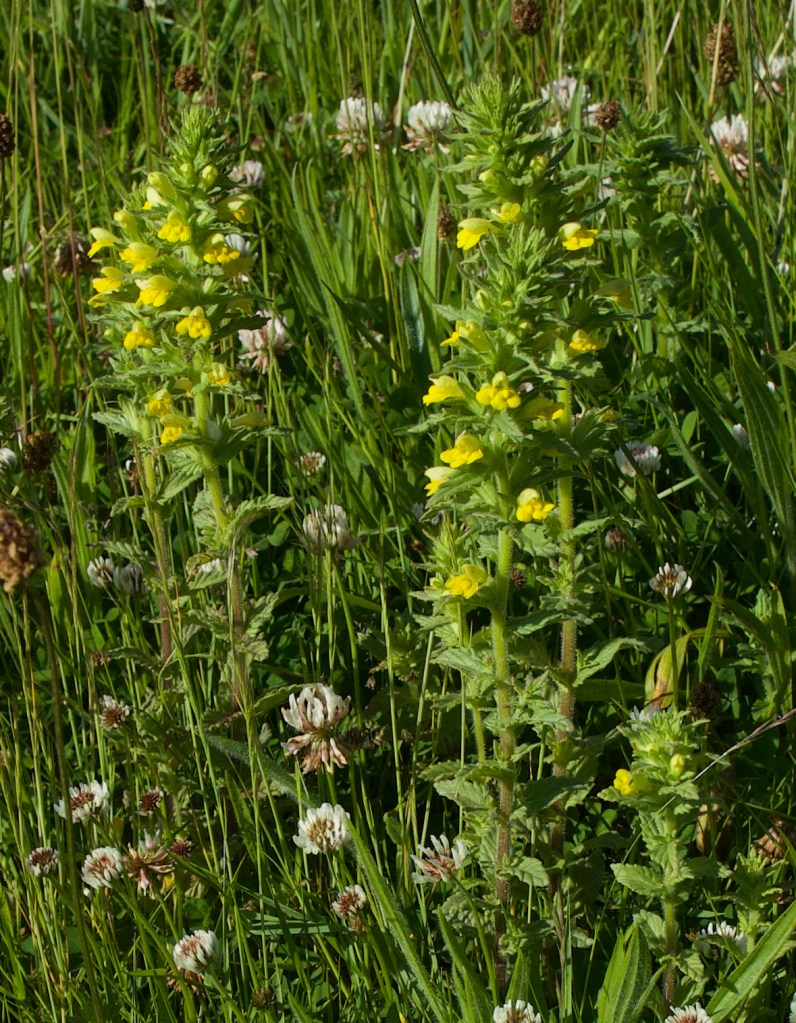
From the jetty, we walked a clockwise route and soon had our first stop to admire a patch of Yellow Bartsia, Parentucellia viscosa. Viscosa because this annual is sticky. It is a semi-parasitic plant, absorbing water and minerals from other plants using root-like structures. It also makes its own food through photosynthesis – evident in the green leaves.

Yellow Bartsia

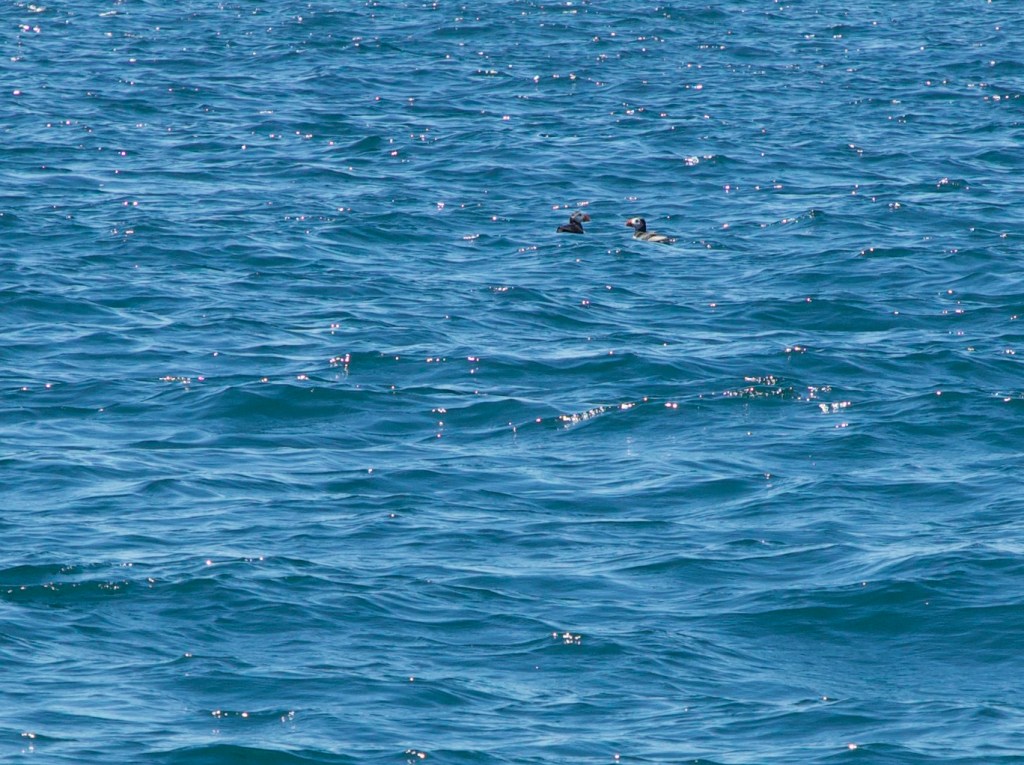
A little further along, on the cliffs that look back to Herm, Puffin and Fulmar are currently breeding and this is where they are most likely to be seen. The first group had good views of the Fulamr typically flying out from the cliffs and circling back on stiff, outstretched wings. They nest on the cliff ledges, Puffin nest in burrows under the grassy slopes. They will be gone by the end of July when the pufflings – what a lovely word – have fledged. They will stay out at sea through the autumn and winter until next spring when they return to land only to breed.

A distant view of Puffins

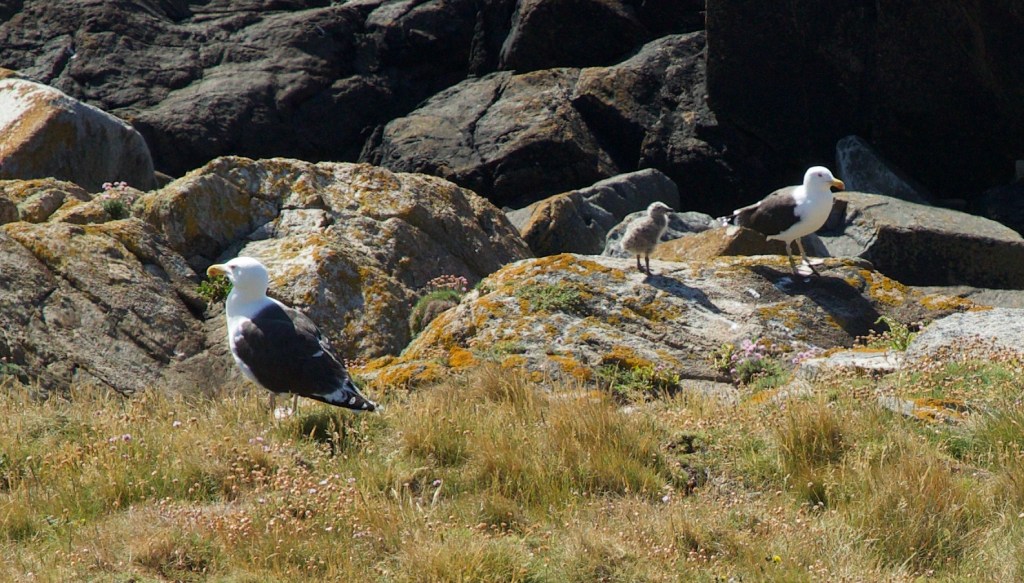
Further on is the gulls main breeding area. This is used by Herring Gull, Lesser Black-backed Gull and Great Black-backed Gull. The path passes very close to some of the nests which now have chicks and some gulls took to the air and made quite a commotion. Although not a real threat to people who just pass by, they can be intimidating and certainly there is the feeling that it is their territory. The Great Black-backed Gull is the largest of all gull species and will predate eggs, chicks and some adult birds of other species. Last year, I saw one with a spider crab which would have made a very tasty supper for me. It picked up the crab out of the shallow water, took it to the water’s edge, snapped off the claws and legs and just punched a hole into the underside of its body – all over and done with in five minutes. What a bird.

Great Black-backed Gulls with chick.

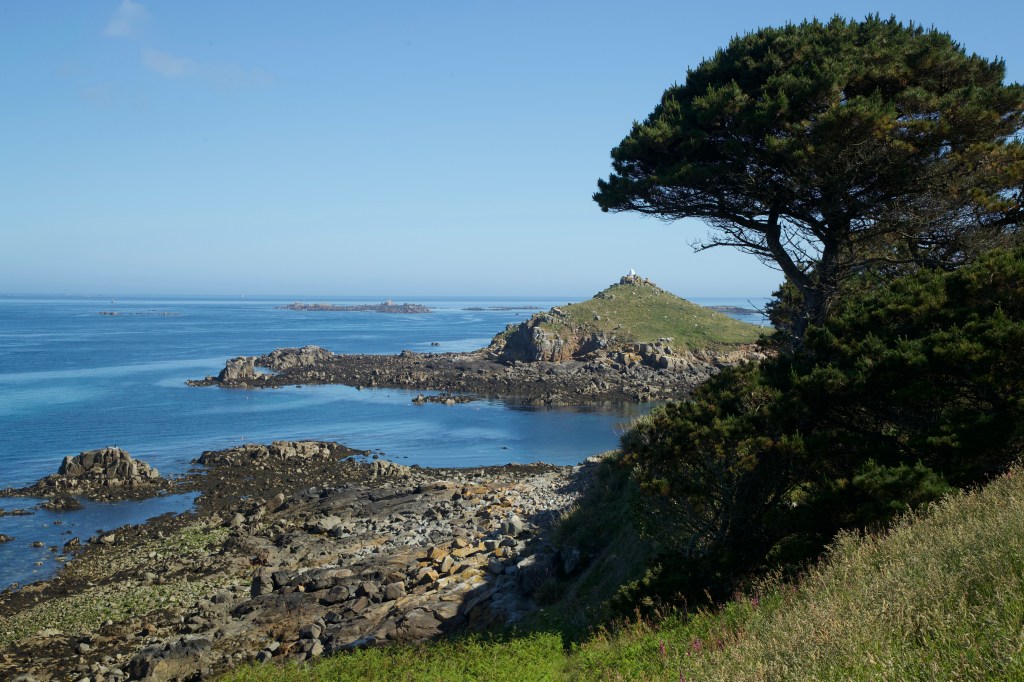
Jethou is a unique experience as each group had the island to itself and meant we could enjoy its tranquility, if only for a short time. The author, Compton Mackenzie was the tenant of Jethou from 1920 until 1934. There is a writing hut which he used on the other side of the pine trees in the last photo.

Tuesday, 1 June

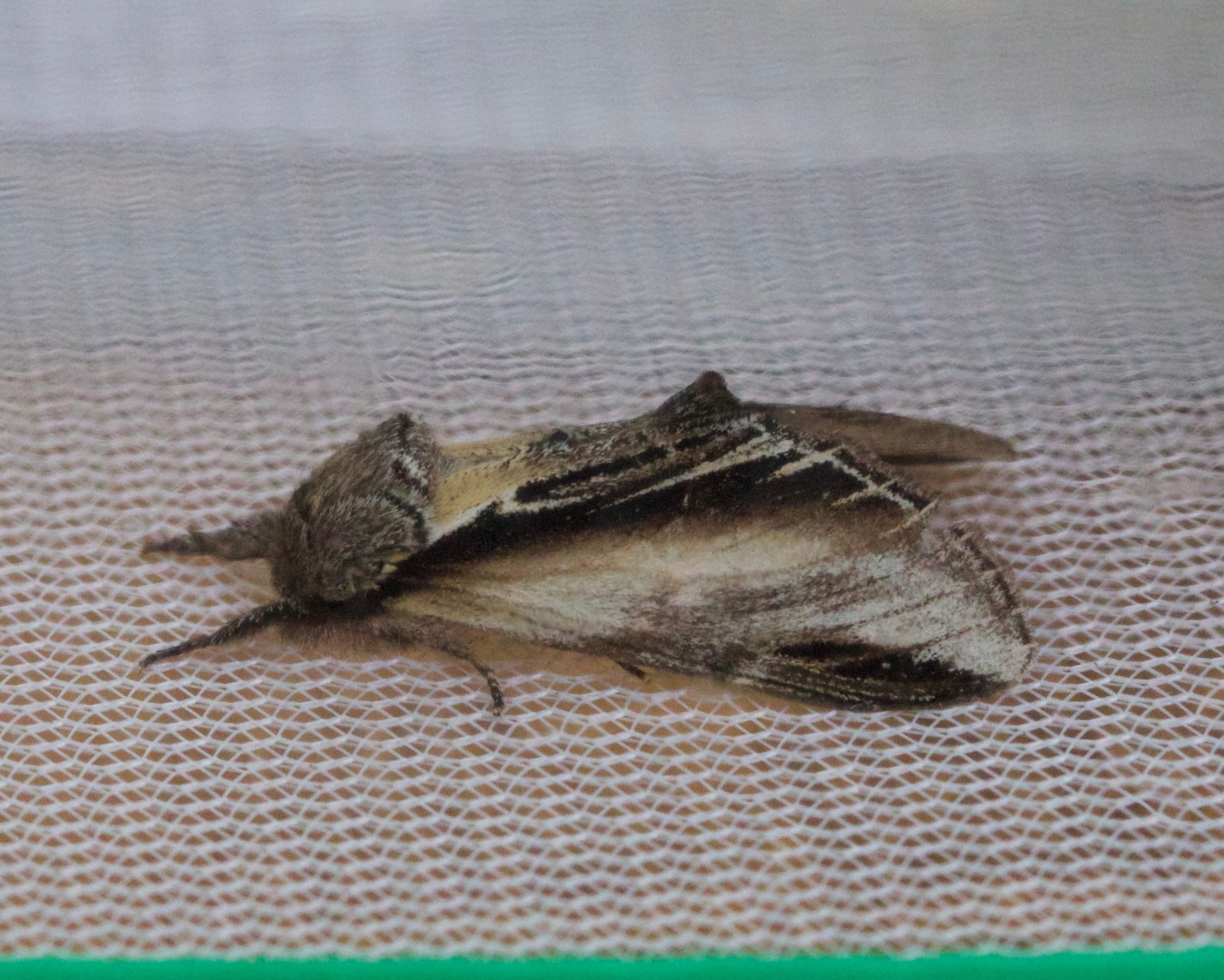
The good news is that last night was the best moth night so far this year. On previous nights, the number of species had just about crept into double figures. This morning, I had 29, 7 were new to the garden and 14 were new for the year which was quite a haul. The bad news was that I didn’t have time to take photos as I was off to help Lesley and Trevor Bourgaize with a Nature Guernsey day. I knew if I tried to identify the moths it would take me all morning so I put the egg cartons into a holding cage which went into the boot of the car. Trevor was able to reel off the IDs which I scribbled into my book. I noticed a Swallow Prominent in with everything else and have chosen a photo from last year to head up the blog.

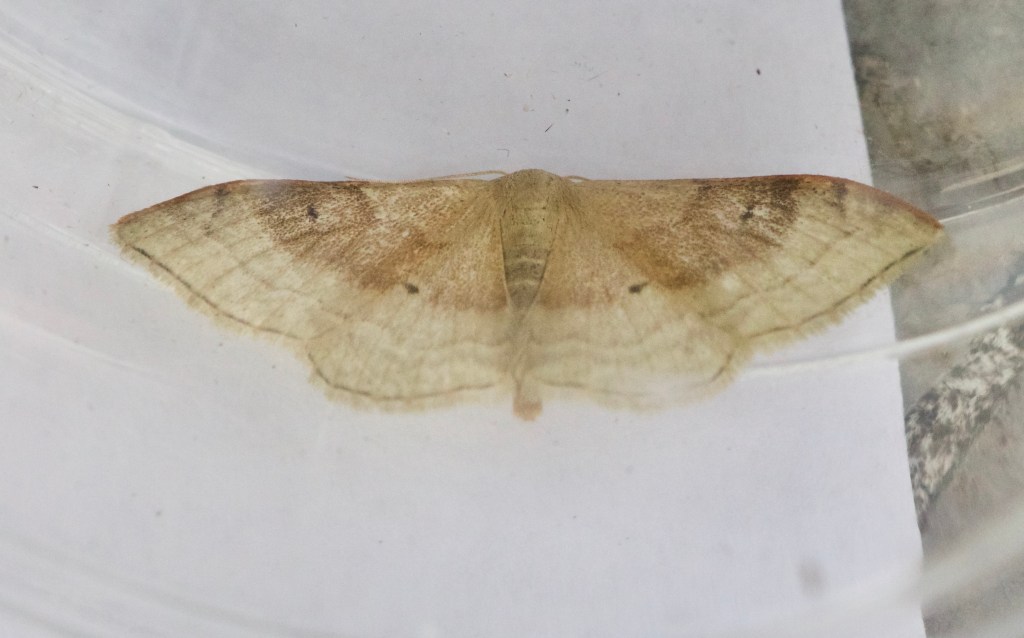
Portland Ribband Wave from 2020

The Portland Ribband Wave was new for the year for myself and Trevor. The Lime-speck Pug was the first I’d seen this year.

Lime-speck Pug

There were two Pale Tussock moths – very handsome and furry grey but sadly no photo. One other which escaped the camera was the Peppered Moth – a striking good-sized moth, speckled black and white. I just hope that last night was not a flash in the pan and I will have the opportunity to photograph some of these over the summer.

It won’t be tomorrow as I’m off to Herm as a volunteer to help a study of habitat for possible breeding sites for Manx Shearwater. I moved some furniture a few days ago and my back is feeling rather tender – not helped by the steep steps at the Silbe which we visited this morning as part of the Nature Guernsey day. I hope I shall feel a bit more limber tomorrow. Photos will follow.