Like the Black-backed Meadow Ants, I feel that winter is finally over. It’s been a long time since my last blog. The ants are busy doing housework, I’m busy checking their nests and enjoying the sight of nature waking up. I walked from Pleinmont to Le Long Cavaleux this morning and the spring flowers are a tonic.
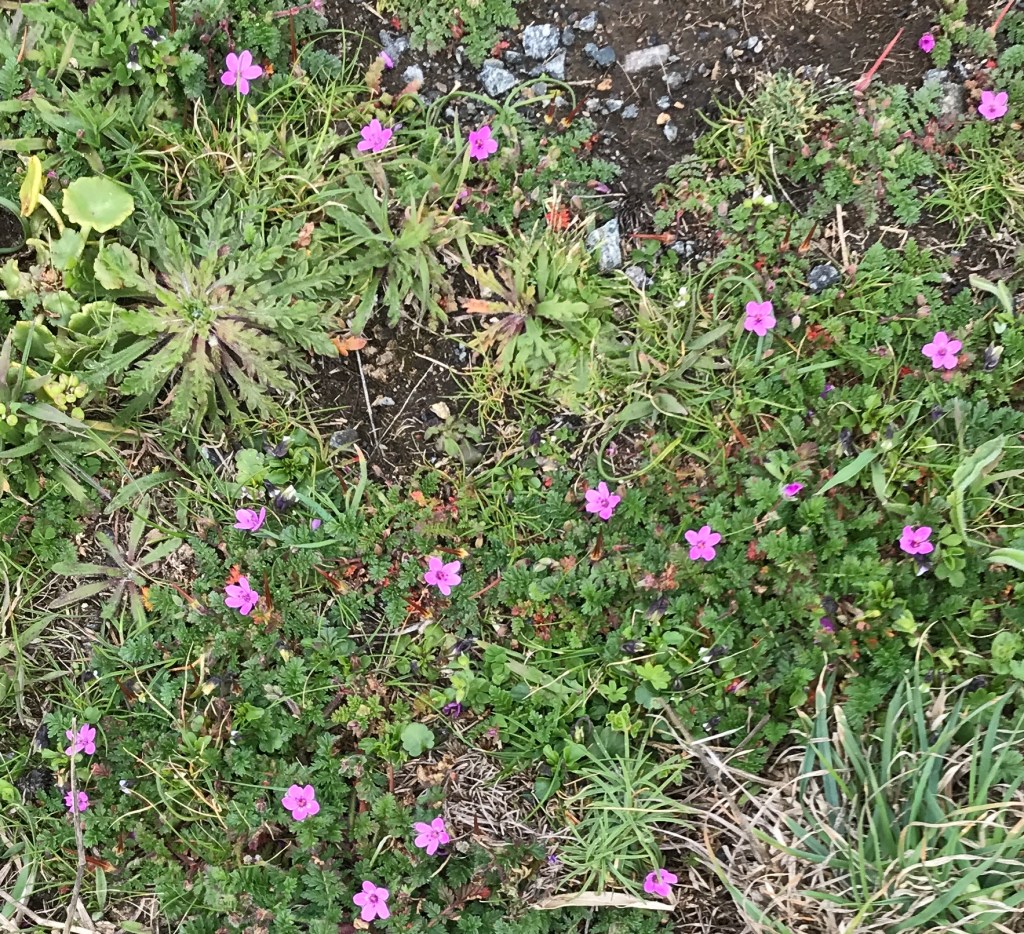
Star of the show is the tiny, exquisite Sand Crocus. One patch was in flower right on the cliff path. You need a sunny day for the flowers to open and even then, they are easy to miss.
Even smaller are the Early forget-me-not. They are coming into flower now and the intense blue of the flowers are spangling banks and path edges on the cliffs.
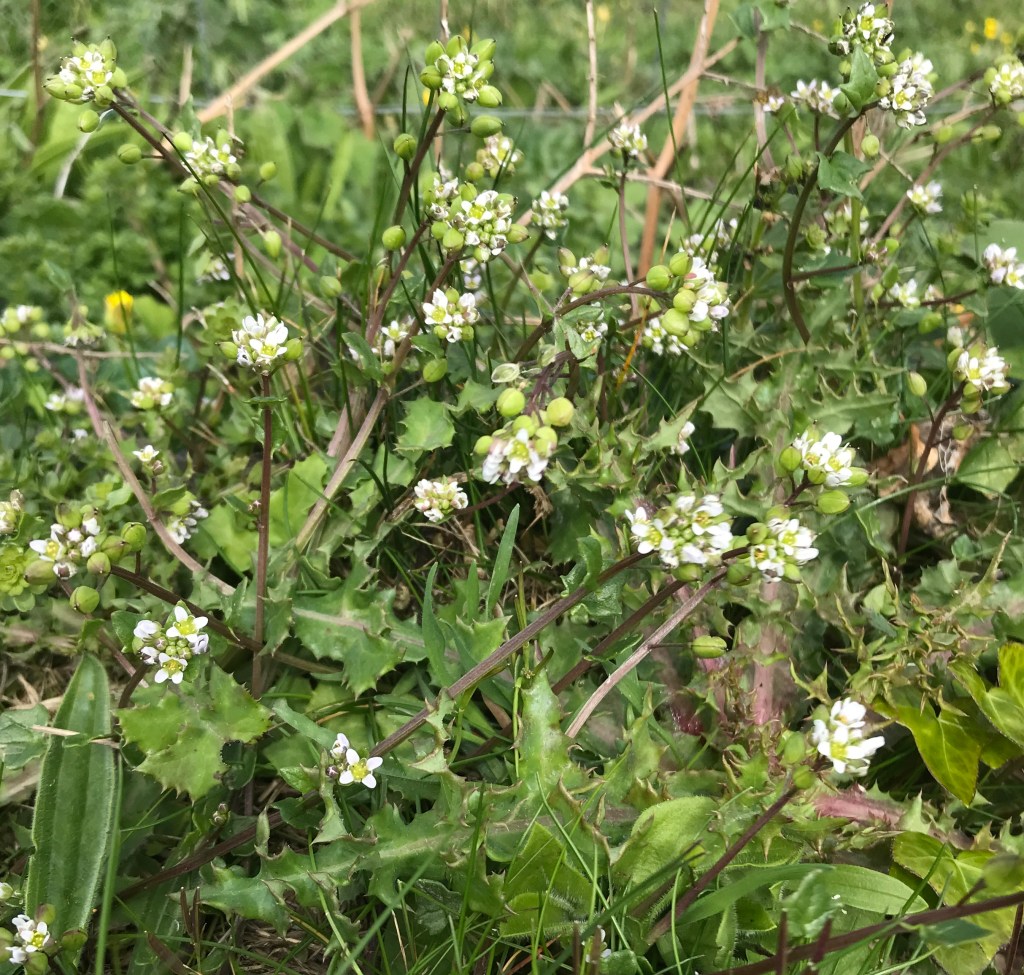
Scurvy Grass is widespread on the cliffs, thriving in the salt-laden air. It is a good source of vitamin C, hence its name as it was used to treat/prevent scurvy. Probably it wasn’t vey popular as the leaves have a tarry taste – maybe the sailors didn’t mind that. I think this species is Danish Scurvey Grass and is doing well in the UK along roads that have been salted in the winter. Passing cars pickup seeds in the tyres and help to distribute them.
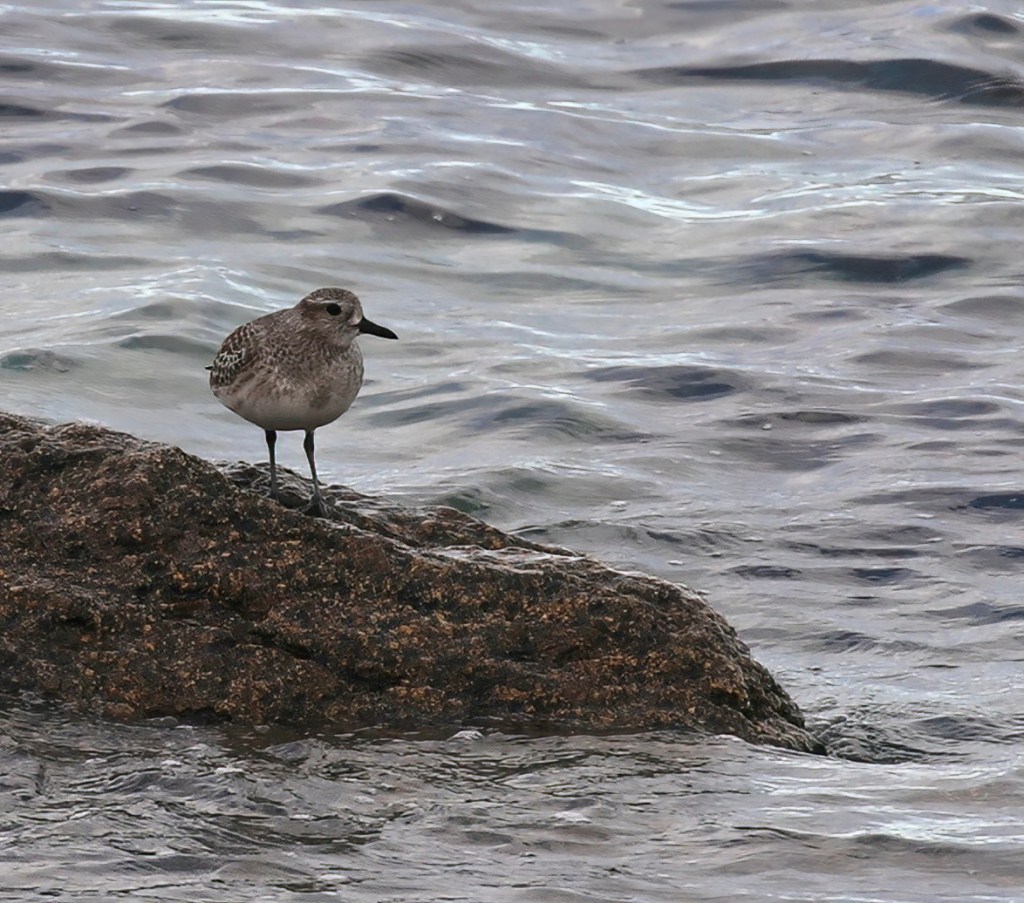
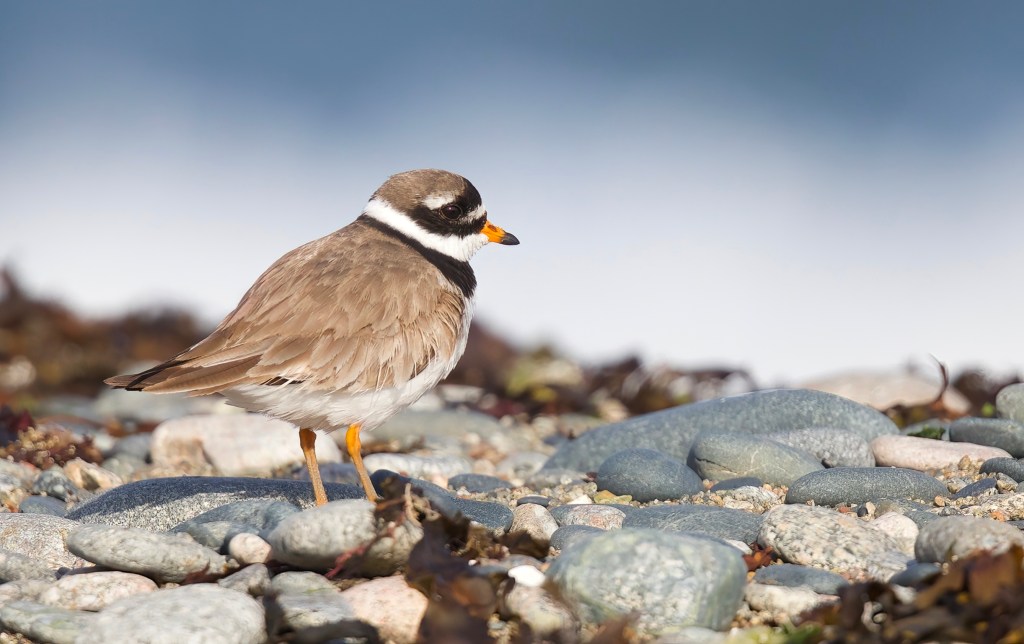
October is a good time to catch with with two members of the plover family in Guernsey as they come to our shores to overwinter after breeding further north.
The Grey Plovers are on Autumn migration and a small group can usually be found at Les Fontenelles bay, near Fort Doyle. They are attracted to Lihou Headland and the north end of Vazon, particularly on a wet day when they’re less likely to be disturbed. Out of breeding plumage they are inconspicuous on the granite outcrops where they like to be, close to the water.
When you can get close enough, their grey, black and white plumage is very neat. The dark, shortish, stout bill and black legs complete the monochrome effect.
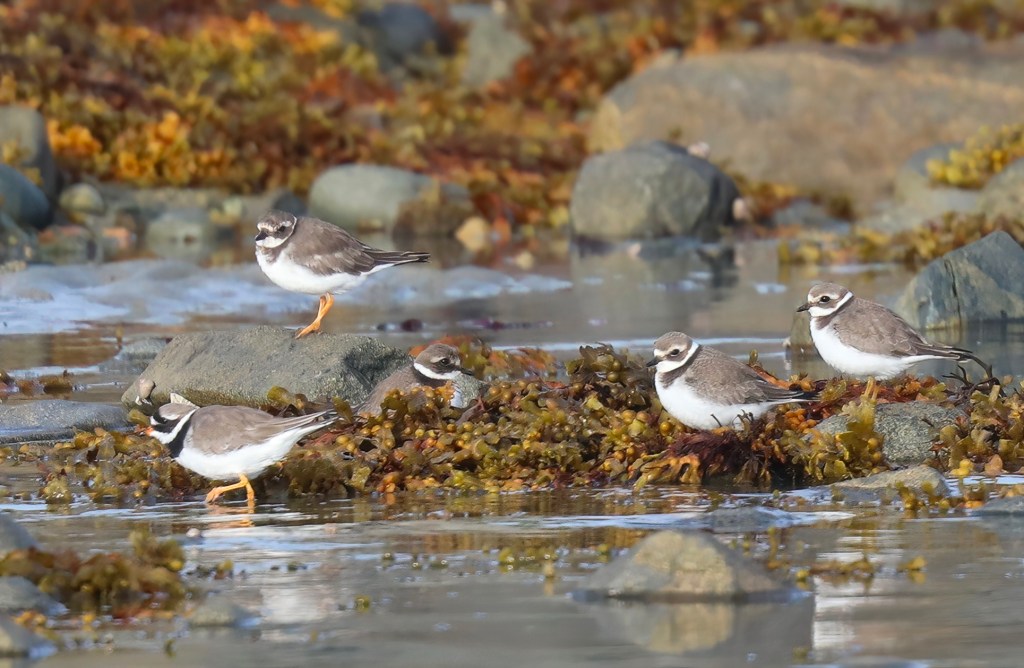
The Ringed Plover has a more stand-out appearance, especially the adults with their orange legs and dark-tipped orange bills. They have a white throat and breast, broken by a black breast band. You’d think they’d be an easy spot on the beach. In fact although they’re usually closer in than the Grey Plovers, on a pebbly beach they can be almost in front of you but blend in perfectly, only to be noticed when they move. Be patient and it’s surprising how many congregate in an area. Often you only get a good idea of the actual number when they take off and wheel around the shore. I find the Shingle Bank and Baie des Pecqueries are good places to spot them. I have also seen them on the east coast near the Red Lion and at Bordeaux. The one in the photo below was taken at the end of the summer and shows very worn plumage.
Very small numbers of Ringed Plover breed in Alderney and they bred regularly in Guernsey in the past. There have been recent attempts, but they are ground nesting birds and are very susceptible to disturbance. Unfortunately, their ‘nest’ is a simple scrape in pebbles or shingle and chicks are very well camouflaged. Guernsey has no protection zones and breeding attempts are not successful. They are rarely seen over the summer months these days, but are around our shores from late summer through to the following spring.
The final photo shows the difference between the adults, on the left, and the juveniles. The young birds have dark beaks and brown face markings and breast band. Thebrown plumage has scalloped paler fringes. Like their parents, they still have that beautiful dark eye which is typical of the group.
The wind dropped and the sun was low in the sky. All was quiet at the Vale Pond – lovely to see three Greenshank but they were all a good distance away – so I walked along Grand Havre to see if anything was around.
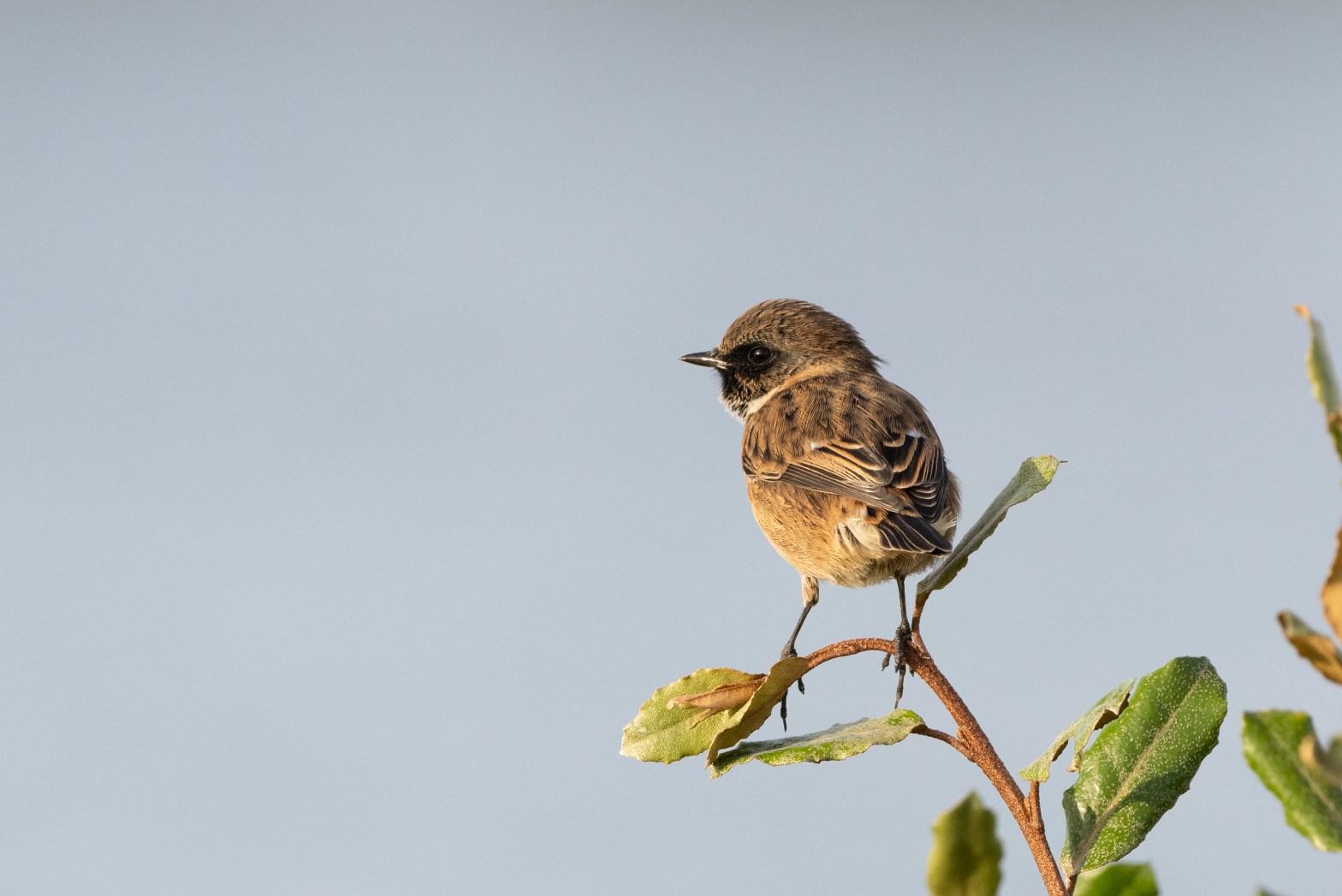
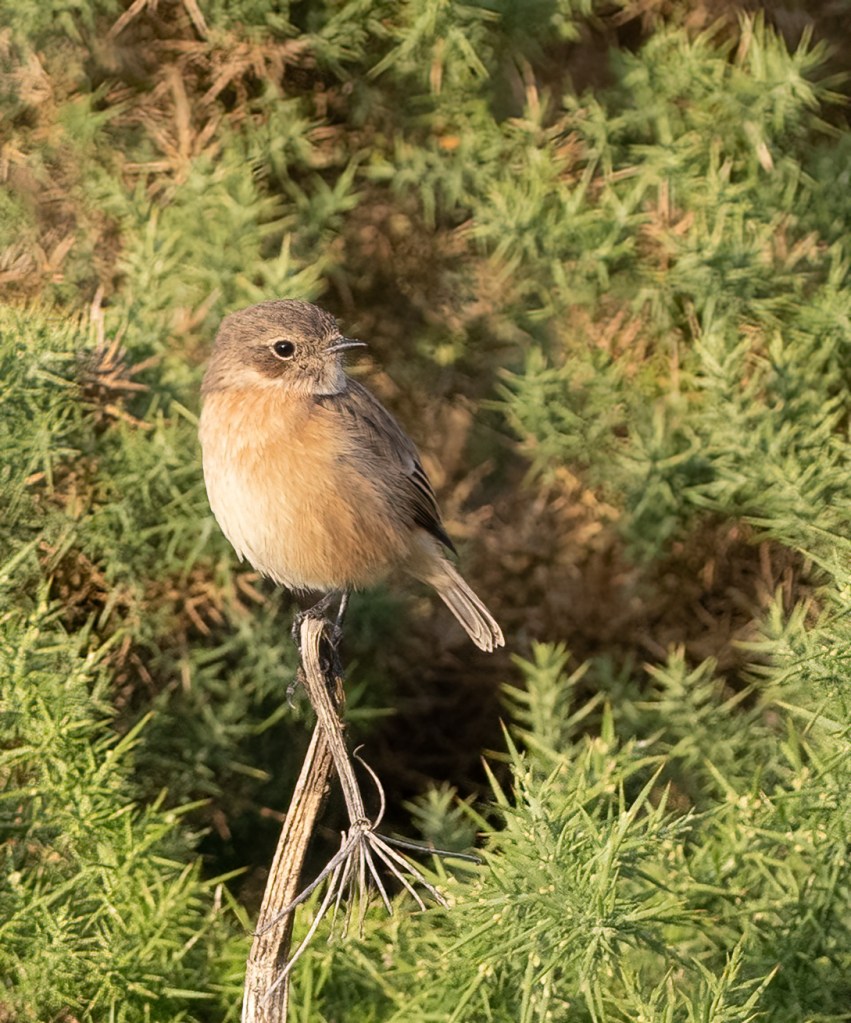
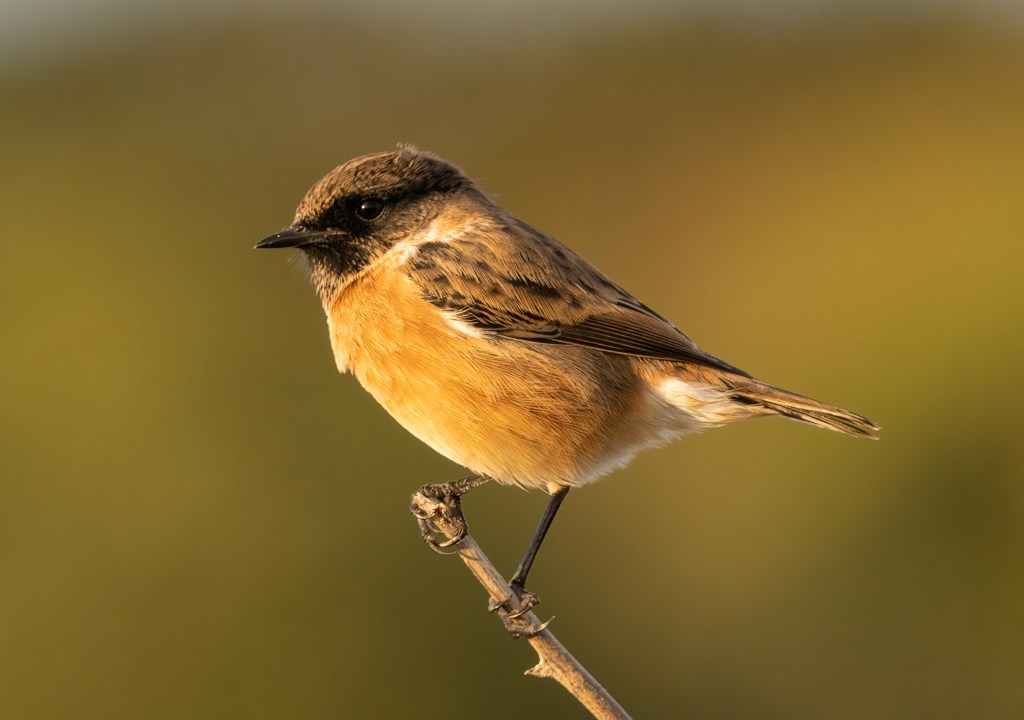
Not surprisingly, the first encounter was two Stonechats: a young male with its crown feathers showing brown speckling and no white neck patch to speak of, and a female with more subdued colouring. They both show a relatively large eye, like the Robin which is a relative and this does make them very appealing to people. Stonechats are often seen as a pair. They are relatively confiding and like to perch on top of gorse and other vegetation. I walked past them and then turned back so they were in the soft evening light. They are mainly seen around the coast.
Female and male Stonechat
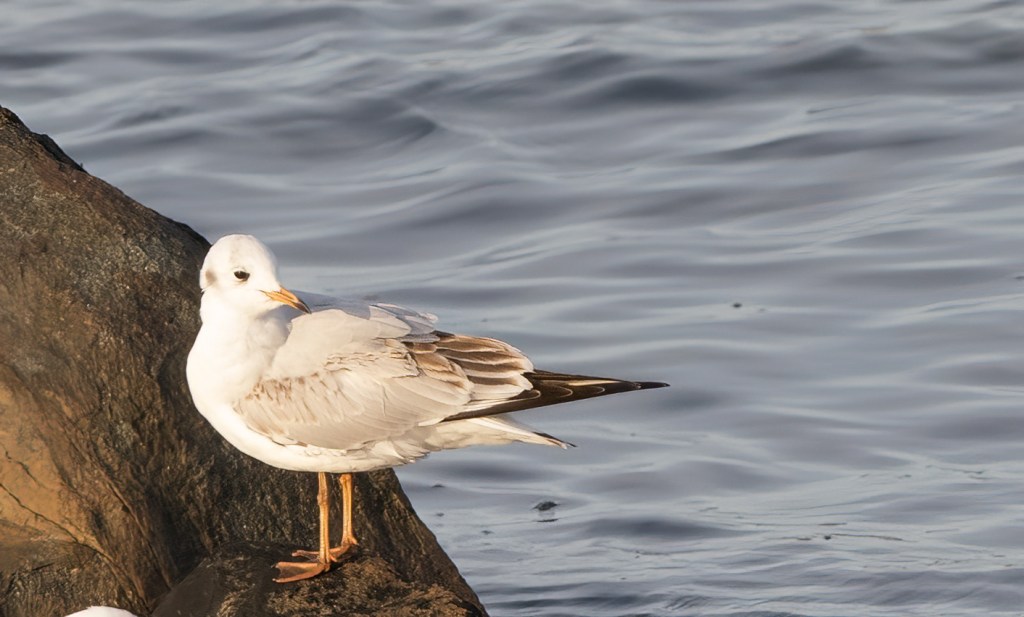
A small flock of Black-headed Gulls were roosting on the far side of Grand Havre and were close in with the rising tide. These birds breed further north but at the end of summer move into the island where they overwinter. Back in July, some individuals were still showing their dark heads (brown rather than black) but by now they have lost their breeding plumage and their heads are white, except for dark ‘earphones’ which will remain over the winter.
They are small gulls and are elegant in flight with tern-like wings.
Young birds are distinguished by their darker wings and tail which they will keep until next year. Their beak and legs are red, but are not as brightly coloured as the adults.
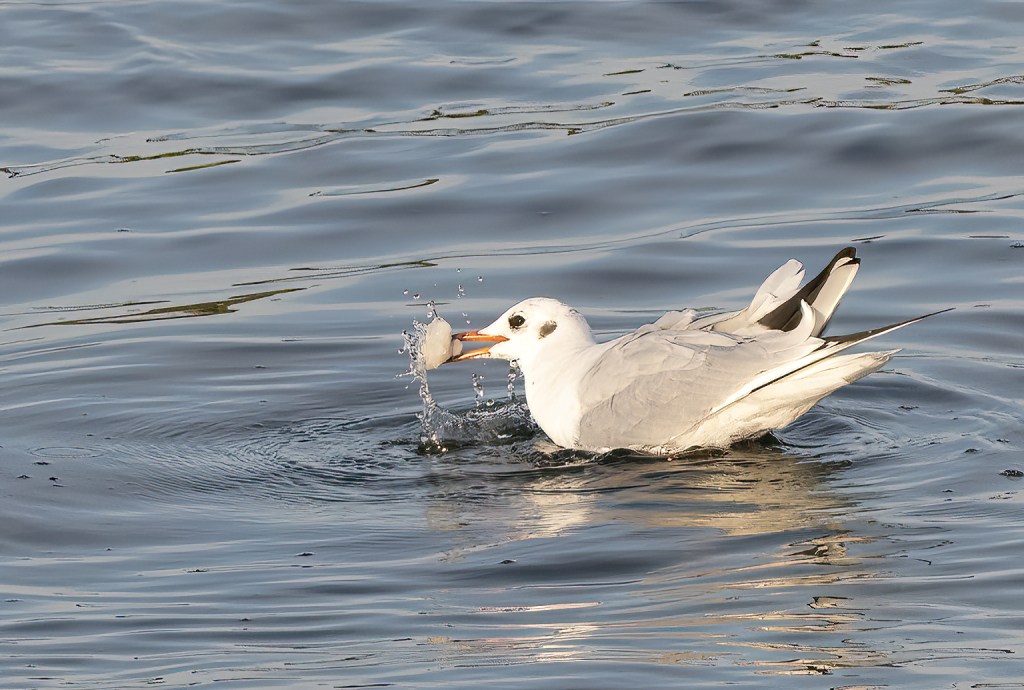
Gulls are scavengers so will eat amost anything. I couldn’t make out what the gull below was eating but it looked a good-sized snack.
I was surprised to see a solitary Curlew foraging in the dry sand well above the high tide line. It was digging down into the sand and finding stuff to eat. It wandered back down to the water’s edge, until it realised that there were people fishing from the shore further along.
It took off which gave me a chance to practise photographing ‘birds in flight’ – a work in progress. I managed to capture the v-shaped white rump.











 Natural history of the Bailiwick of Guernsey