Monday 10 May

The Silbe Nature Reserve is one of La Société’s most tranquil reserves, nestling in a wooded valley in St Peter.

The Silbe Reserve this morning.

Today was different. Environment Guernsey were out in force, showing off their very smart new van with logo, together with members of the Reserves Committee, armed with shovels, wheelbarrow, bucket, rope, pruning saw, secateurs, drain rods and a plan.

A definite improvement on the old van!

Reserves need managing. They may look as though they are simply allowed to go wild, but they need attention. The problem with the Silbe Reserve has been the stream which flows through the valley, on to National Trust property at the bottom of La Quanteraine and down to a pumping station in the aptly-named lanes La Rue à L’Eau and La Rue du Douit au Moulin before coming out into Rocquaine Bay.

The Silbe has a pond at the bottom. Originally, there was a concrete chamber where water was taken under a sluice gate into an underground pipe away from the pond. Over years the chamber has filled with mud and silt and the water cut its own way to the side and on into the pond. The result is a pond that is very full of silt which has little oxygen and a habitat that is poor for wildlife.
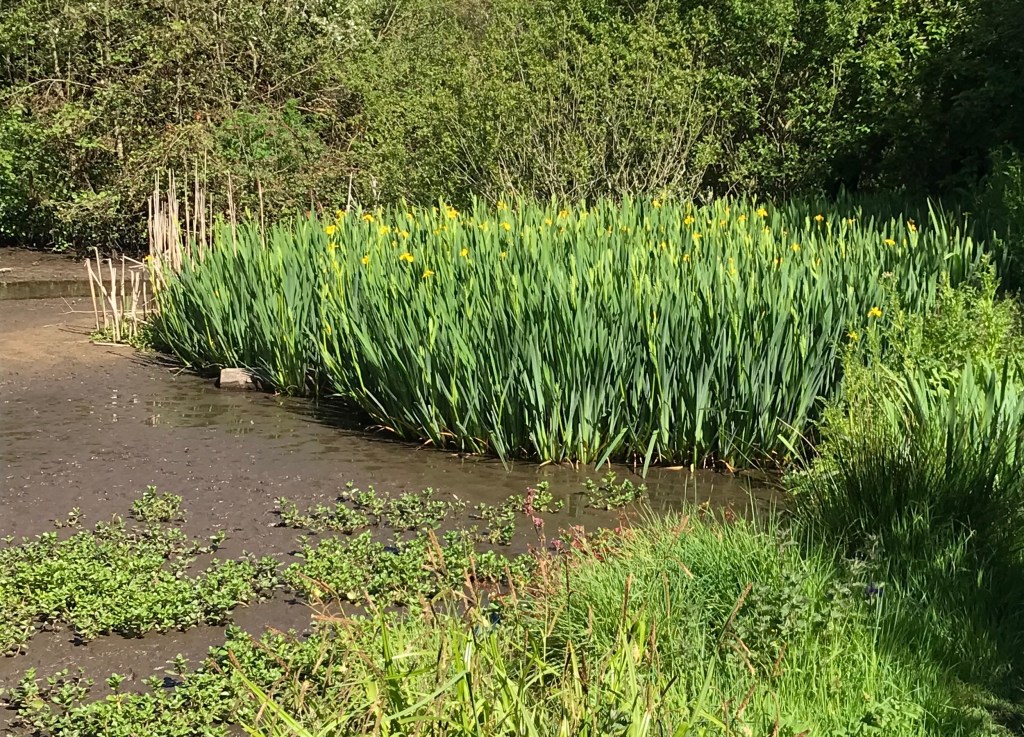
Flag Iris are coming into bloom. The silt to the left goes down many feet and is stifling a habitat that should nurture many species.

First, the large grill over the chamber had to come off. It’s great at stopping broken branches from blocking the underground channel but useless at stopping the silt.
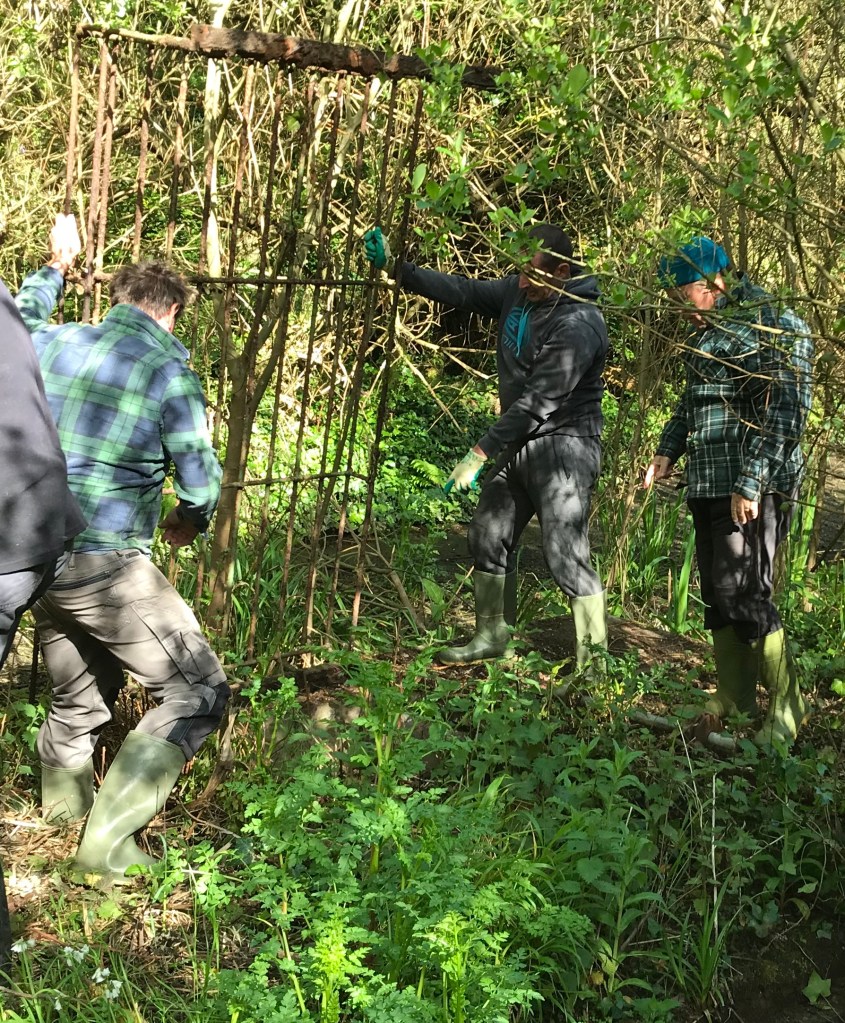
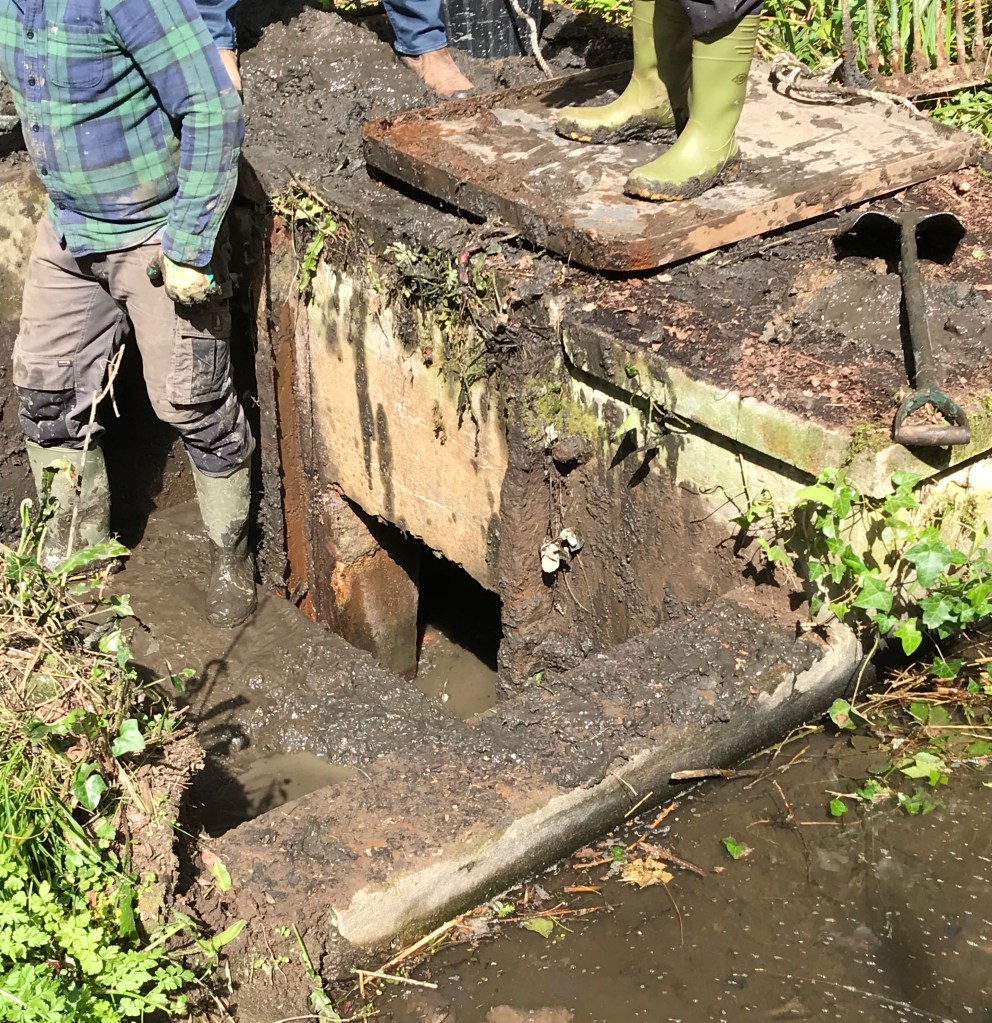
Dan, Steve and Jamie are on the edge of the concrete chamber – full of soil and greenery.

The chamber and culvert leading out of it were so blocked, the water changed course.
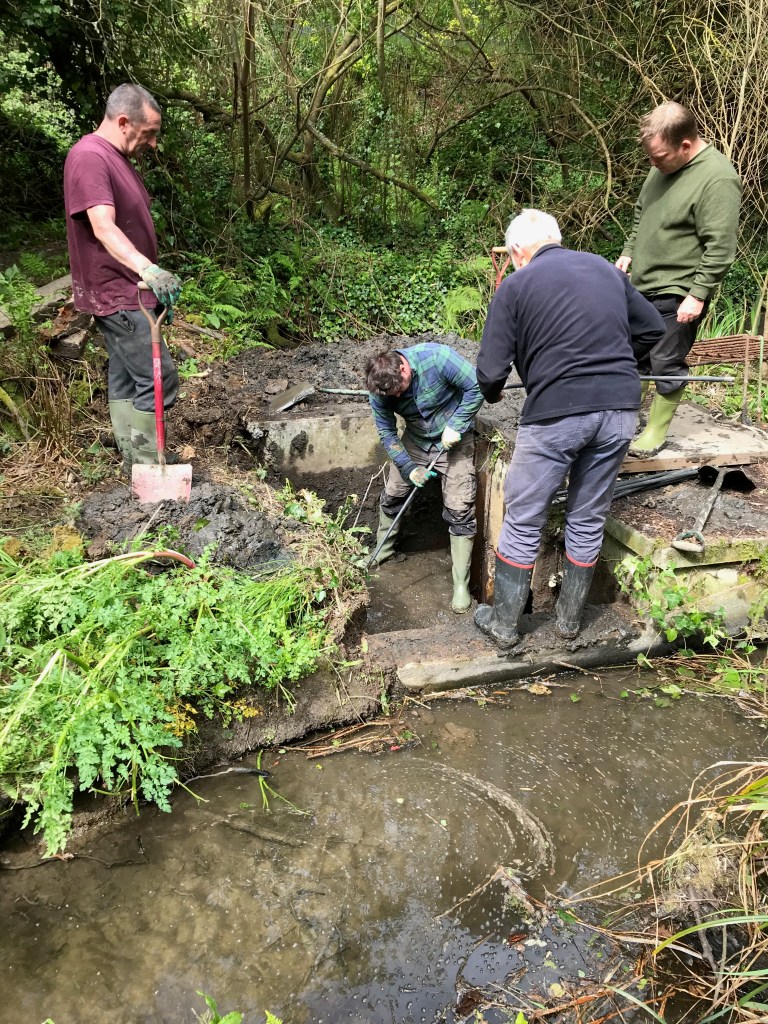
All the water in front of the concrete sill should be flowing through the chamber.

Next it was shovels to the fore as Dan and Steve cleared the chamber – it went down over four feet.
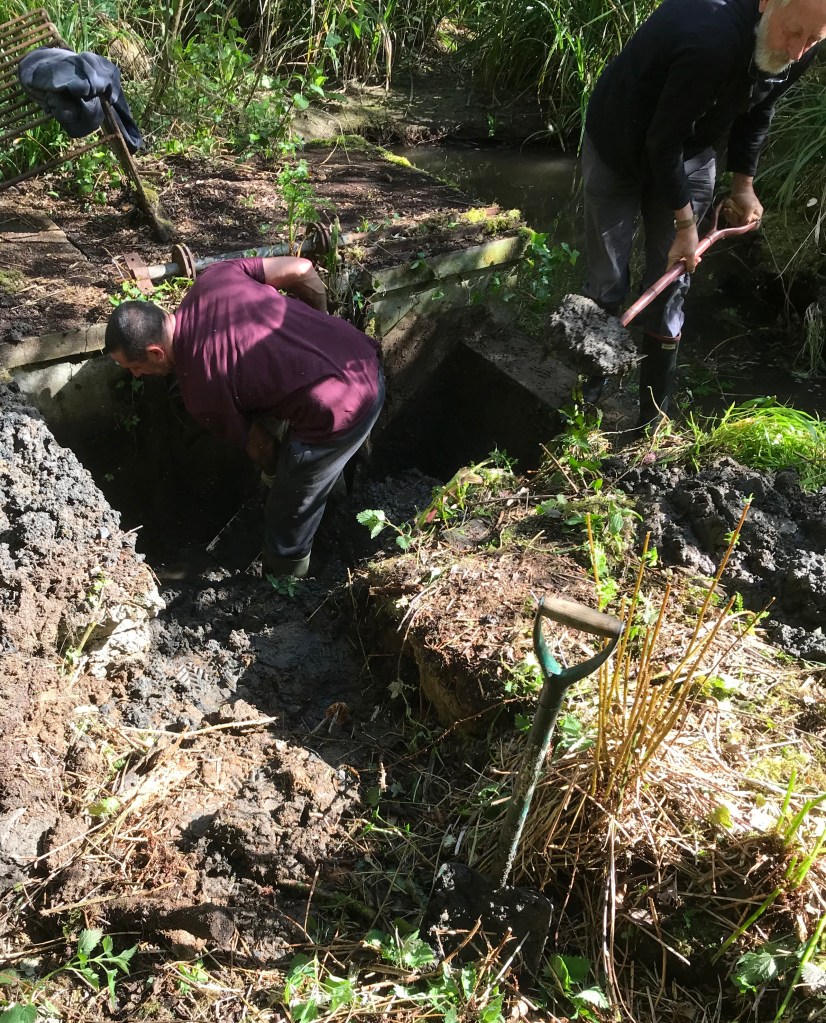
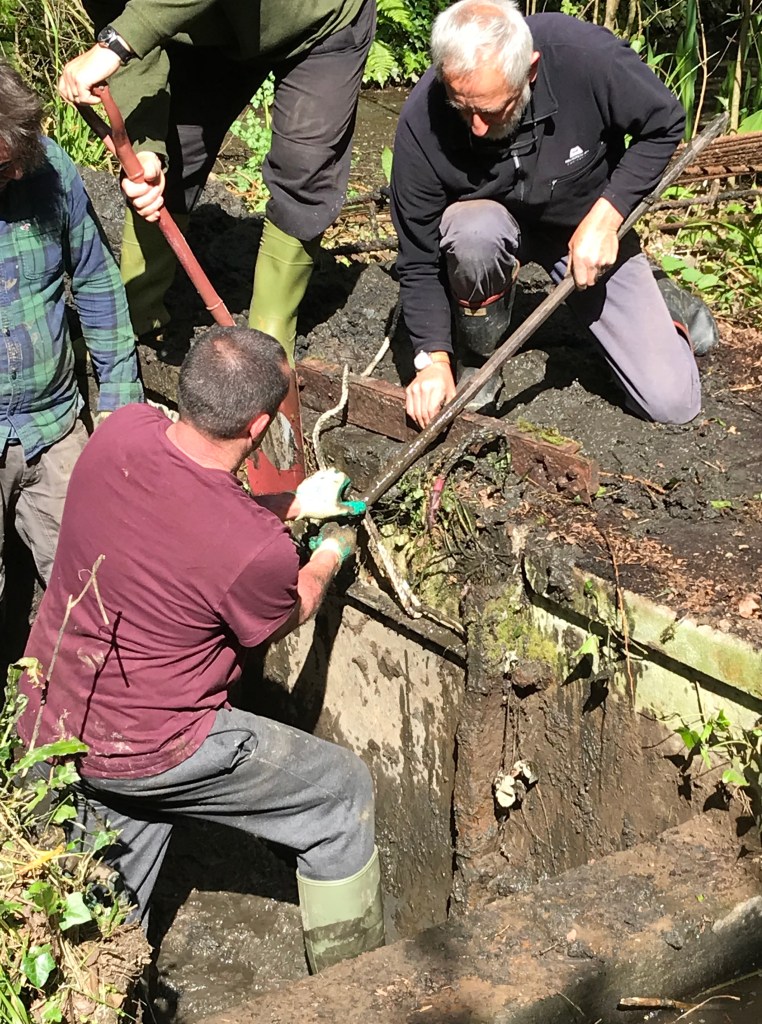
Steve, helped by Alan, is about halfway down.
Unjamming the sluice gate, with help from Alan.

Success!
The stream should flow through the gap.

With the chamber cleared, a channel was dug so the water would flow back into its original course. At this point, my phone died which was extremely annoying. Maybe I shouldn’t have taken a couple of videos of the valley and two sound recordings of Blackcap. So…no more photos but the channel worked and the stream was soon flowing through the chamber with suitable roars and gurgles. Tranquility returned to the valley this afternoon as we packed up – but not for long. Rather like Fantastic Mr Fox, the machinery when it comes will be noisy and disruptive, but at least we’re on the side of wildlife.

The work to return it to its original course is only temporary and will need to be made good. It also means that work can start on removing the silt and sludge from the pond and restoring its habitat. It’s a big job and getting machinery in there will be a challenge – that’s putting it mildly – but the aim is to restore and encourage biodiversity.

Species seen today included: Buzzard (mobbed by Herring Gulls), Grey Wagtail, Long-tailed Tits, Chiffchaff, Blackcap, Great Tit, Blue Tit and Blackbird.

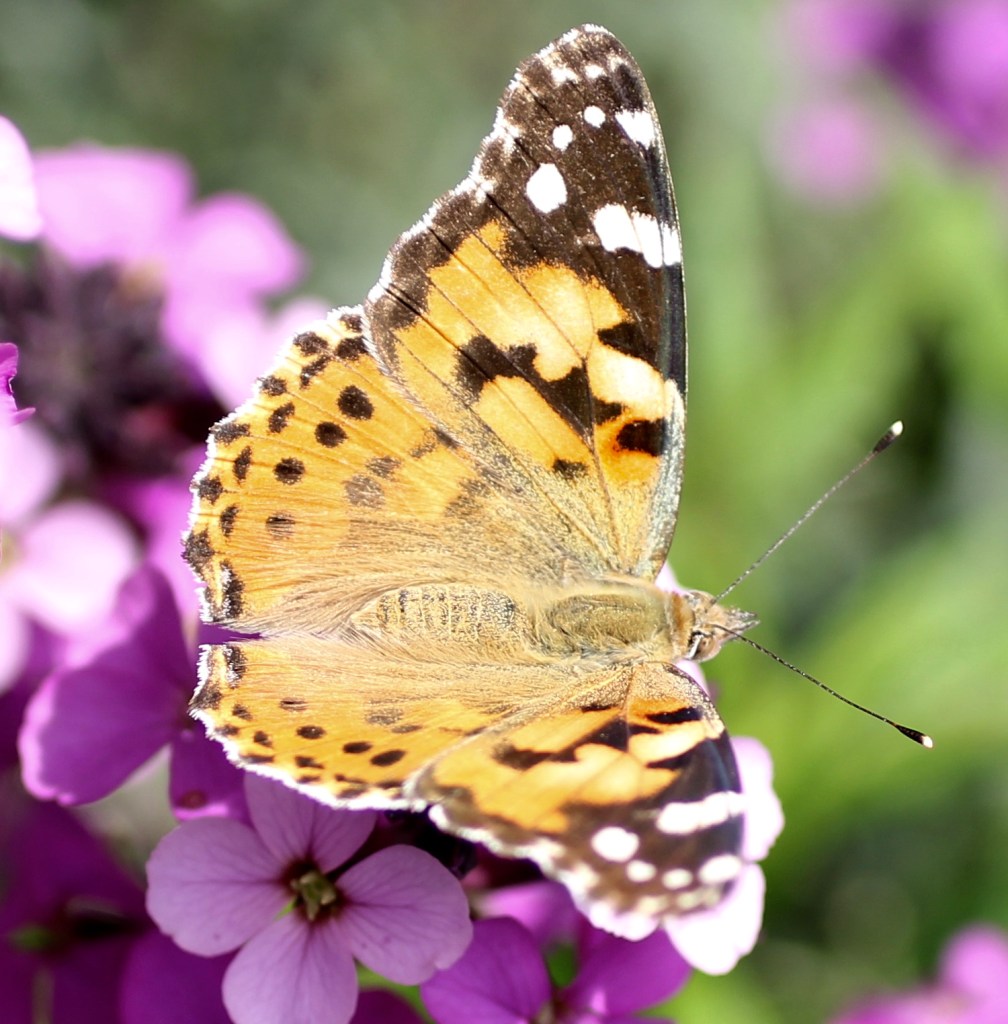
Also seen was a Painted Lady. The photo is a bit of a cheat as I took it in my garden back in 2016. Interestingly, several were sighted in Jersey and Alderney today. There are irruptions (very large numbers) of these migratory butterflies in some years, so it’s worth keeping an eye out for them.
For the record, I had no idea what I was signing up for when I agreed to go on Reserves Committee. No, I didn’t help with the shovelling but I did help to clear the arisings as Jamie judicially pruned some of the Willow! Next working party will be the invasive German Ivy at our Rue de Bergers Reserve later in the month. Before that, I’m off to Alderney (my first visit since 1977) for a few days later this week at the Bird Observatory, where I hope to do some more ringing with the guidance of John Horton.

Sunday 2 May

View from the Hogsback towards Little Sark

No blog for yesterday as the bird ringing has been dire with cold nights (frosts) and clear, often windy weather. Migrants have been few in number. We scraped a Blackcap and two Chiffchaff and furled the nets at 11 o’clock, before going to lunch at Le Fleur du Jardin – very good. Yesterday’s other event was a bat walk near La Seigneurie at dusk. We had good results last October so were disappointed only to have two Common Pipistrelles on the bat recorders. This could be due to the continuing cold weather and lack of insects, but it would be interesting to continue to monitor bat numbers in the area.

Today was even worse on the ringing front – one female Blackbird. She had a brood patch – an area where feathers are shed and blood supply to the patch increases so eggs are kept warm when she sits on the nest. Thirty-seven new birds for the week is nothing to brag about! The nets have been packed away ready to be shipped back to Guernsey on Wednesday.

Our final bird for Sark – an adult female Blackbird.

A walk along the Hogsback produced a Brown Argus butterfly – my first for the year and lovely to see as they are not common. After another delicious lunch at Le Fleur du Jardin, scallops cooked to perfection and an excellent lobster salad, we headed back to La Seigneurie and walked down to a small headland overlooking Les Autlets where a colony of Guillemots are breeding.

Looking north to L’Eperquerie and Bec du Nez

I do like seabirds and to see the Guillemots jostling together on the rocky stack or rafting together on the water at fairly close quarters was a definite highlight of the trip. We counted between 160 -170 birds on the rocks and in the sea. It went a fair way towards making up for the poor numbers of ringed birds. There were also Fulmar flying out from the cliffs and with the sea looking clear and a gorgeous green-turquoise I was left thinking how lucky we are to live in the Bailiwick. The Bird Section is organising a day trip to Sark on 22 May and I hope this will be on the itinerary.

Guillemots on the eastern side of Les Autelets where it’s more sheltered from sunshine and wind.

This is our last full day. We were due back on the afternoon boat tomorrow but when we looked at the weather forecast with winds in excess of 40 mph, we opted to go for the morning sailing which still promises to be a bit rougher than today when the sea looked flat calm.

This does mean that I may be able to make it to the Pollinator Project’s afternoon at Le Grand Pre where it might be quite sheltered. As I can’t work out how to do screenshots on my iPad, if you want to find out more about this wetland ramble, search for Pollinator Project Guernsey on Facebook. They are putting a moth trap out tonight so I hope their results will be better than mine – dismal mothing so far this spring!

Friday 30 April

OK, two Wren and a Song Thrush don’t make for a great morning’s bird ringing seeing that we were up at 5.15. The weather has not been our friend: very fine, clear days some with strong winds have meant few migrants. There has been no rain for over a fortnight and the stream in Le Vallon d’Or has dried up which has not helped.

A rather beady look from a male Song Thrush. We could sex him because he was singing while in the hand.

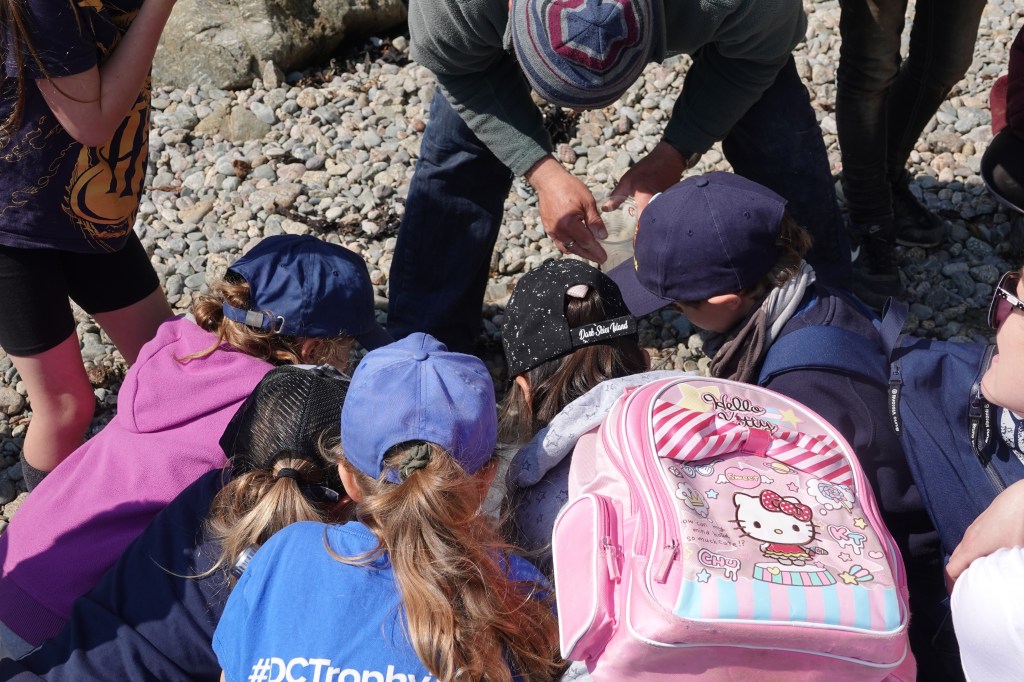
This afternoon was much more successful. We were joined by children from Sark Watch (the Junior Section of La Societe Sercquaise) as we walked down to Dixcart Bay on a hunt for Scaly Crickets. Trevor went down to the beach, before dinner at Stocks yesterday evening, which is real dedication, to set the traps. Large plastic cups were ‘baited’ with chicken nuggets and cat biscuits – honestly! (Trapping in Cornwall makes use of pasties which must be the equivalent of cordon bleu cookery). A few pebbles are added for the Scaly Crickets to shelter under and then the whole thing is buried in shingle and a rocky lid placed over the top.

The Scaly Cricket is red-listed which means that it is highly endangered. Only a few sites are known globally and the Bailiwick has the highest known population – probably more than the rest of the world put together. They live in shingle but need space at the top of the beach when there are high tides as they cannot swim.

Traps were last set here in 2019 and 12 Scaly Crickets were found. Today – huge success – 366 were counted from the traps. All were released unharmed and we enjoyed getting close-up views of one of the planets rare insects.

Trevor counting the catch.
Getting help counting the catch.
A Scaly Cricket – look in the centre!
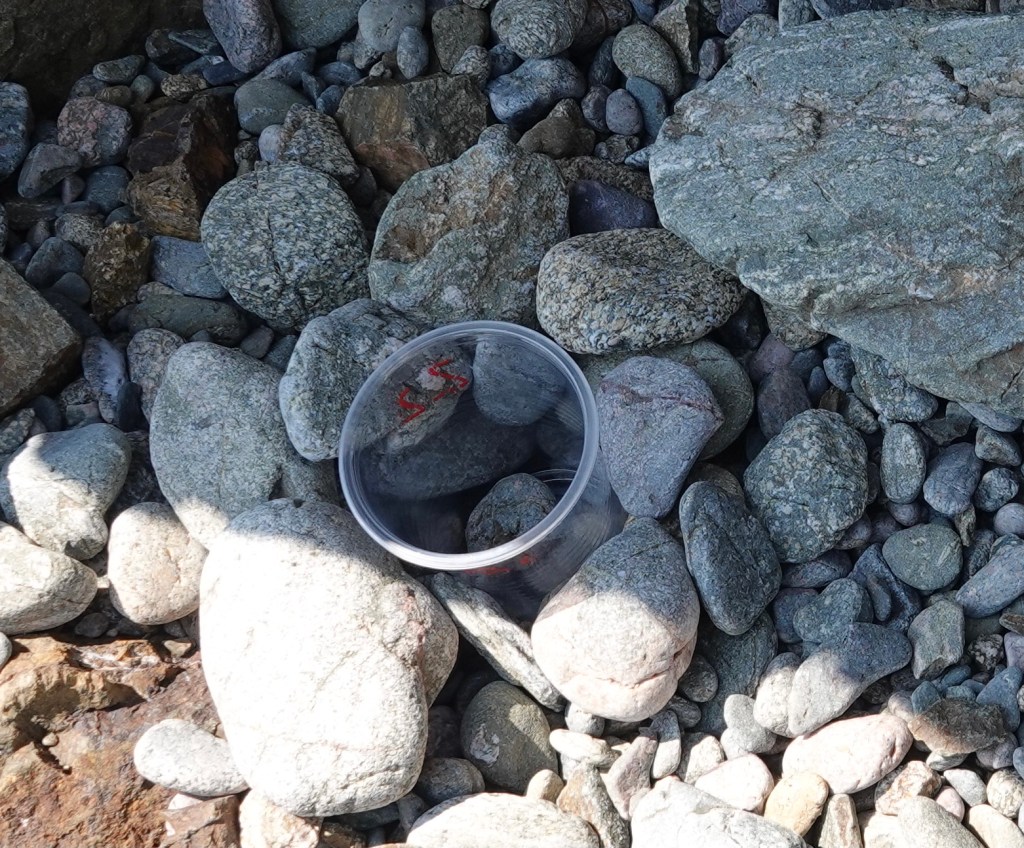
Scaly Cricket trap in situ. One trap held 80. They like chicken nuggets which is probably why they’re so rare as it’s not often found in shingle.
Lesley in charge of the traps.

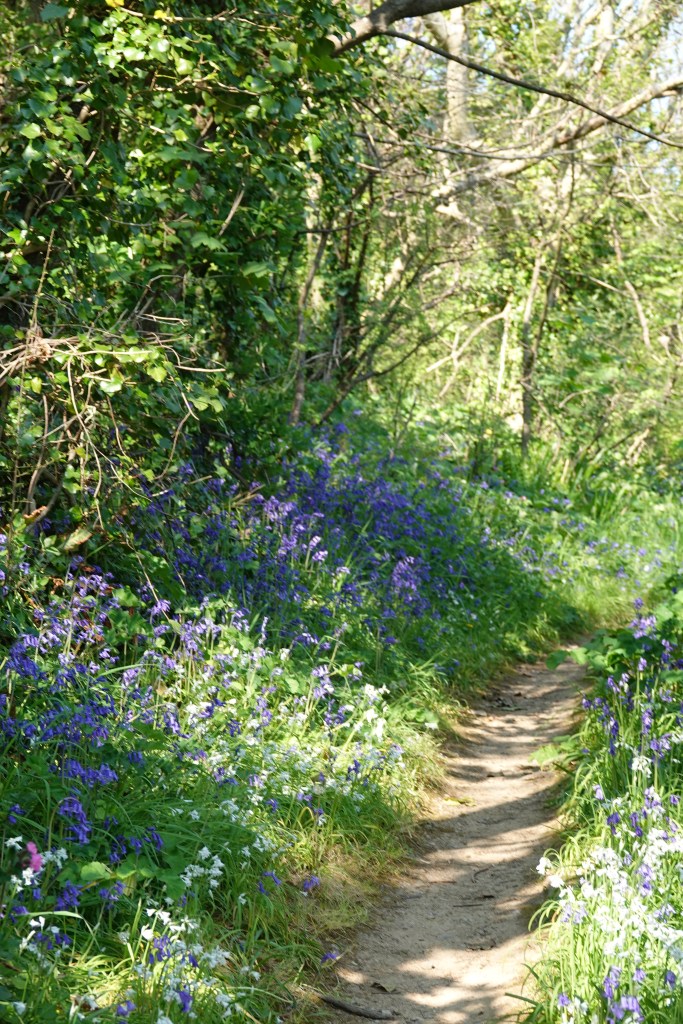
After the Scaly Cricket extravaganza, we walked back to Le Vallon d’Or through Dixcart Wood. I couldn’t think of anywhere else I’d rather be. Magical.

Beautiful Dixcart Woods