Tuesday 20 April

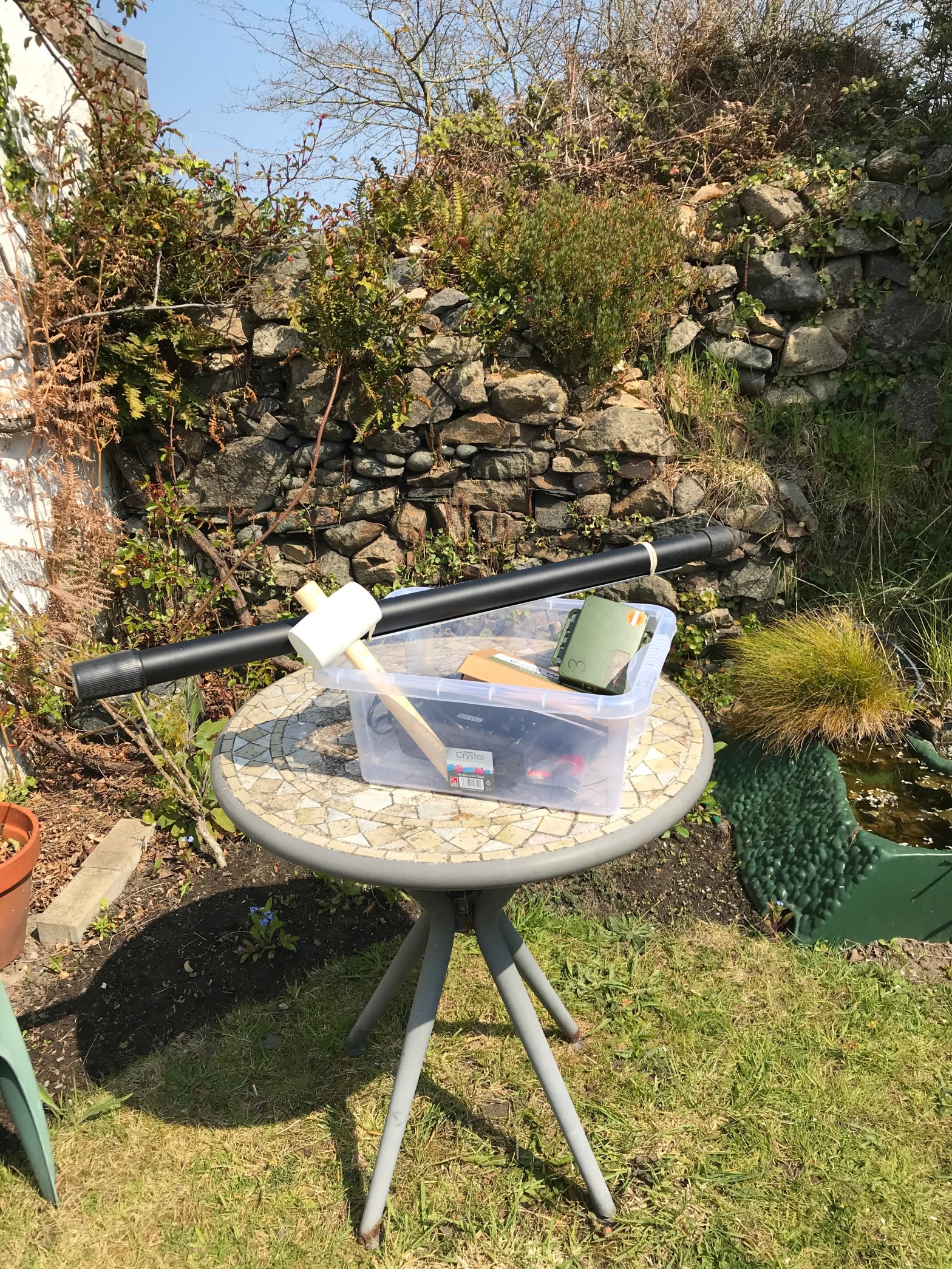
It’s the Bailiwick Bat Survey and the photo shows the equipment I picked up at the Biological Records Centre this morning. Honestly, I was rather taken aback by the amount of stuff, I was expecting something simple like a posh version of the detector that can be plugged into a smartphone. Why do I manage to do this on the day that my car is going in for a service? I am also rather alarmed as I am taking it over to Sark on Monday, with an extra stake and mallet for the detector at Sark School, so I think some stuff will go over on the Viking (Sark’s freight boat) on Thursday. As long as I don’t have to travel on the Viking, everything will be fine. We had to use it last autumn in rough seas. It was nasty, short and brutish!

The bat survey has had a good take up with many squares already allocated, so before I take my car to the garage later on, I will drop off the stake and post at a spot in my square and go back to set up the detector later this evening. (Not between 6.30 – 8.30 as I’m doing a Zoom course on moths – when do I get to cook my chicken stir fry?). The survey is linked to Guernsey’s Strategy for Nature and is running from this month through to the end of October. For more information go tohttps://www.biologicalrecordscentre.gov.gg/our-projects/bbs/ Sarah Allez of La Societe Guernesiaise is the co-ordinator and would be very pleased to give any advice and information. It’s the first time there has been an island-wide survey so the results will be interesting. She would be very happy to have some more volunteers, so if you’re reading this, give it a thought.

I enjoy seeing a tiny Pipistrelle bat flitting and darting up and down the lane in front of my cottage at dusk. I’ll be very interested to find if there are other bats out there. A few years ago I came across a dead Pipistrelle in the garden. Its fur was like velvet, so soft. As with other local species, habitat loss is a factor in the decrease of numbers. I would like to think that one result of this survey will be a greater awareness of the importance of maintaining and, if possible, increasing our natural habitats.

Monday 19 April

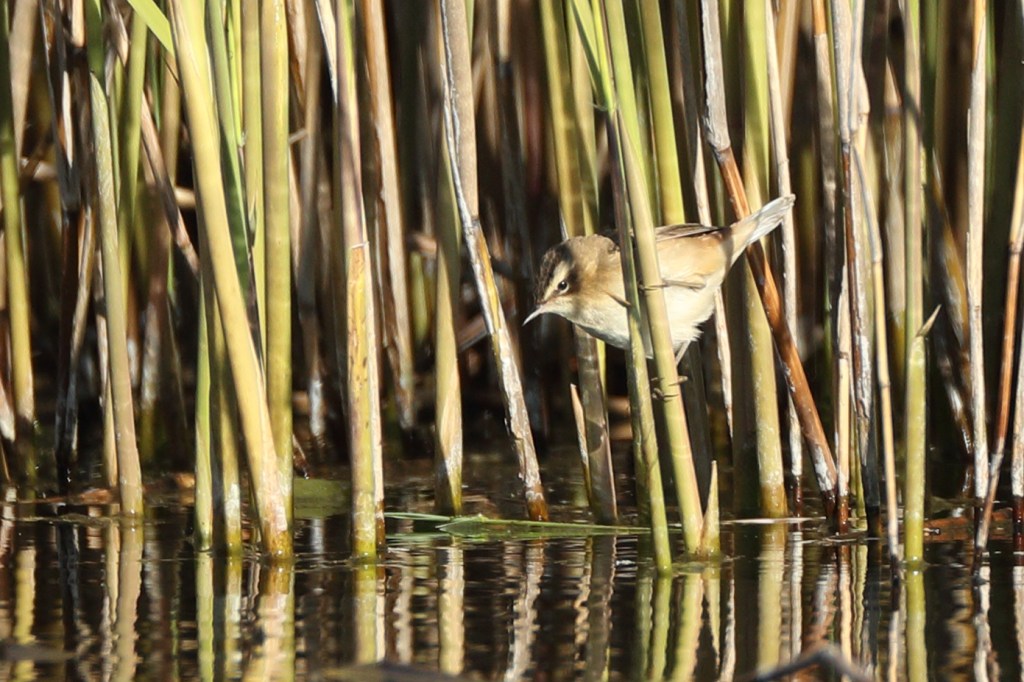
A lovely hour at Le Grand Pré this morning. Good sights (really!) of the Cetti’s Warbler as it was flying to and fro across the pond. Also present were Chiffchaff hunting insects in the willows. A Reed Warbler was chuntering and I had a lovely view of this Sedge Warbler down close to the water.

Sedge Warbler

Perhaps best of all was on my way back to the car when I heard a Grasshopper Warbler ‘reeling’. Fortuitous as I recognised it straight away – yesterday I had been listening to some migrant songs and preparing a tape for bird ringing and Grasshopper Warbler was on the list. There’s no mistaking that long whirring call. Even better – the first one heard on Guernsey this year! To hear its unique call, go to https://www.xeno-canto.org/species/Locustella-naevia

Even the Coot was looking good in the early morning sunshine.

There’s more about Le Grand Pré in the Locations tab.

Coot

Saturday 17 April

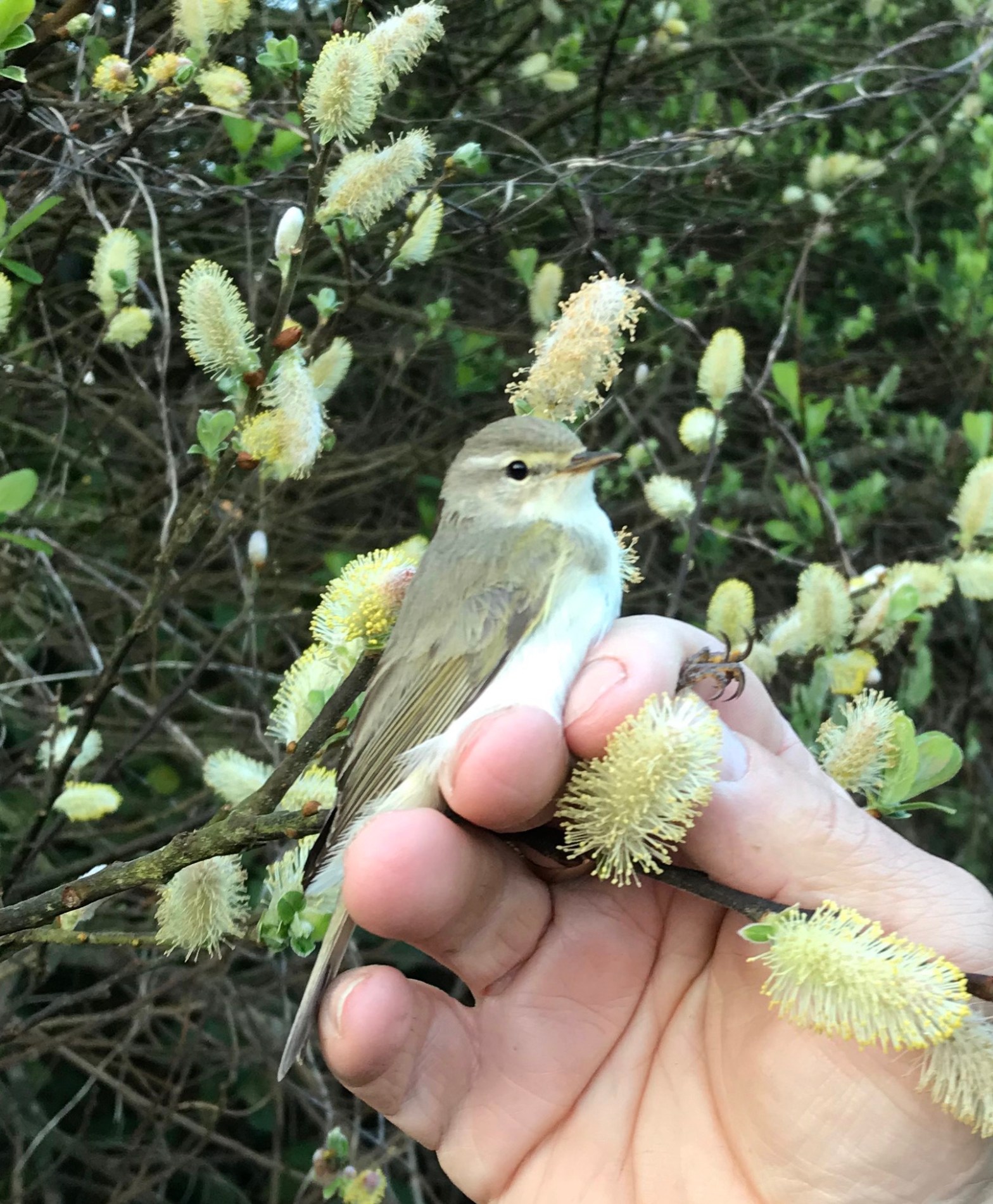
Bird-ringing this morning, so I headed off just before 6.00 a.m. to Le Chateau des Marais. My trainer, Trevor Bourgaize has been working hard over the autumn and winter to create rides for netting. Mist nets have a fine mesh and are set vertically. It takes a long time and lots of patience to develop the skills to take a bird out of the net and place it into a cotton bag. This helps to calm the bird and keep it secure before taking it back to the ringing area. The bird’s species is recorded. It is then ringed and where possible its age and sex is determined. We then measure its wing length and weight before releasing it unharmed.

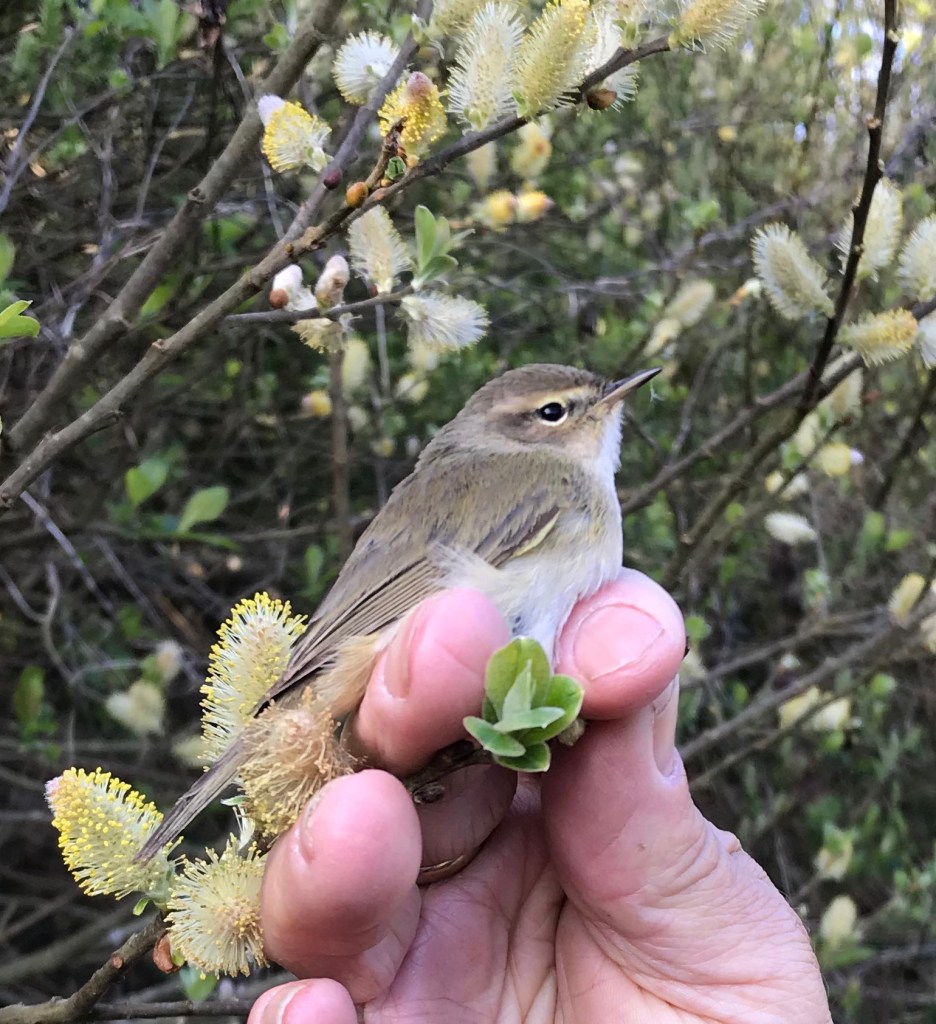
The weather this spring has been cold with north-easterly winds, so migrants have been thin on the ground so far. The first bird today was a Willow Warbler, seen in the top photo. We also had Chiffchaff and the photos show how hard it can be to tell these two species apart, unless they happen to be singing. Willow Warblers have longer wings and a knowledge of small differences in plumage helps to confirm the ID. These two species have migrated from Africa and the Mediterranean, which is nothing short of miraculous for birds that weigh around 10g.

To listen to the Willow Warbler’s flutey, descending song, and the Chiffchaff’s simpler song which heralds spring, examples can be found on the excellent website: https://www.xeno-canto.org

In recent years, milder winters have encouraged some Chiffchaffs to stay in the Bailiwick and southern areas of the UK. It’s a risky strategy that pays off if the weather stays mild and there are insects around for them to feed on, They avoid a long, hazardous flight. However, they would struggle to survive through a prolonged period of cold weather.

Chiffchaff from today, at home in the willow and scrub at Le Chateau des Marais, Guernsey.

Both Willow Warbler and Chiffchaff feed on insects in woodland and scrub where there is plenty of cover. While some Chiffchaff stay to breed, the Willow Warbler will continue to migrate up to northern England and Scotland.