Le Grand Pré

Nature Guernsey will be at Le Grand Pré later this month and there will be plenty to see: bugs, butterflies and damselflies. Work was carried out last year to recreate more wet areas with muddy margins where damselflies and drsagonflies lay their eggs. Numbers have declined locally, in part due to loss of habitat. La Société is working hard this year to monitor these species and to redress the balance.
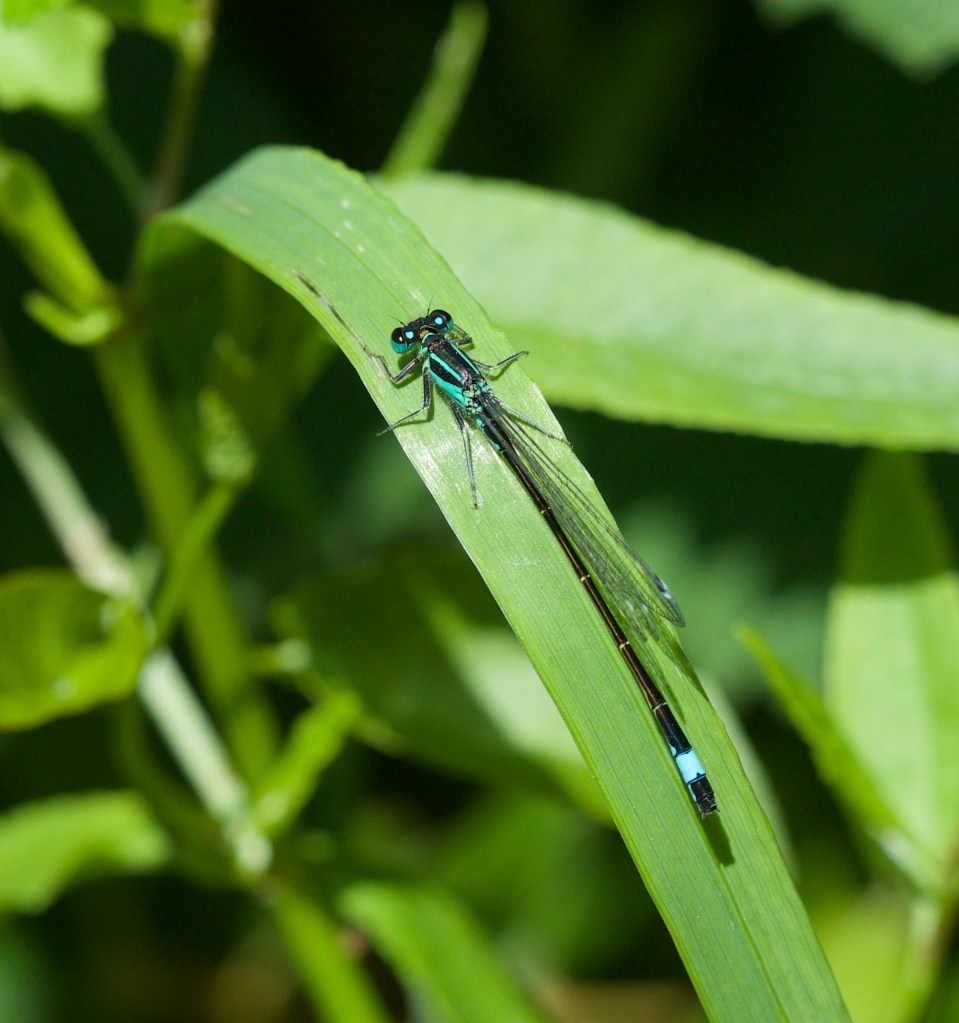
There is nothing common about the Common Blue Damselfly with their gorgeous blue and turquoise colouring. They are just starting to show now at the reserve.
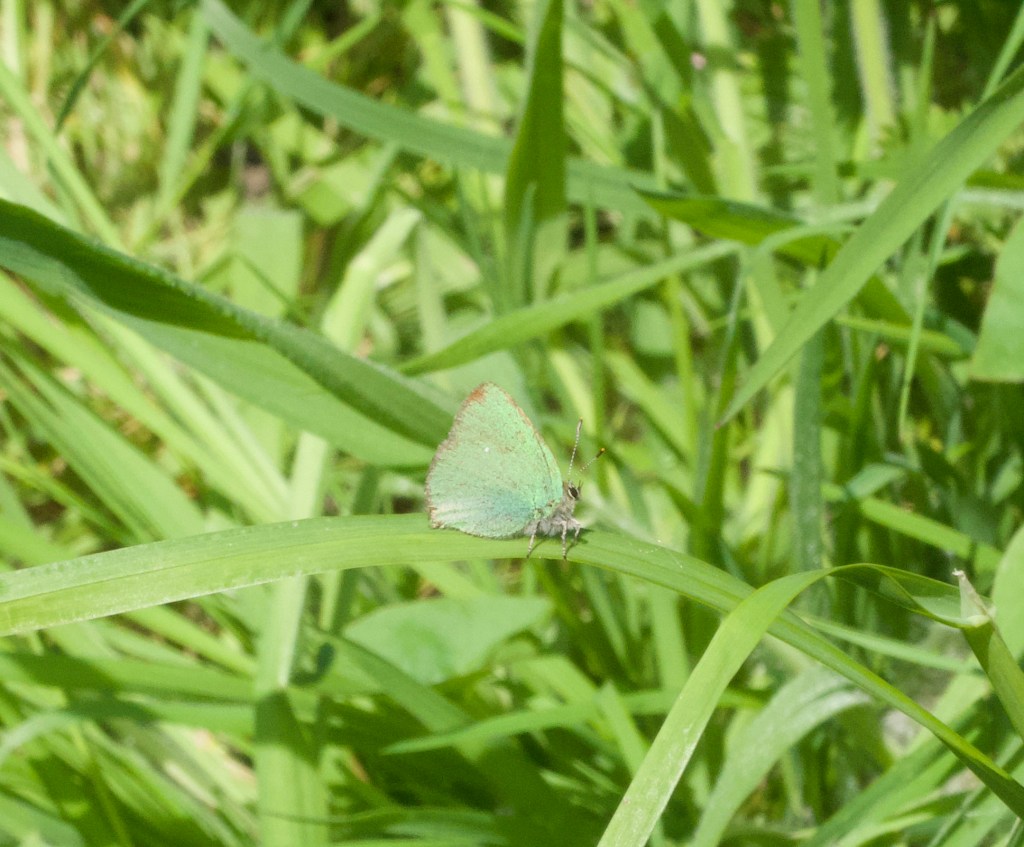
Green Hairstreak from 8th May. This delightful butterfly is more commonly seen on the cliffs. It is the first time I have seen one on my local patch – and thanks to Rachel Ann for showing it to me. They are usually quite flighty, this one was very docile enjoying the sun. Caterpillars feed on Gorse and Bird’s-foot Trefoil so they should be present on L’ancresse Common. They are easily overlooked, so I will be looking more closely on my walks during their flight season.
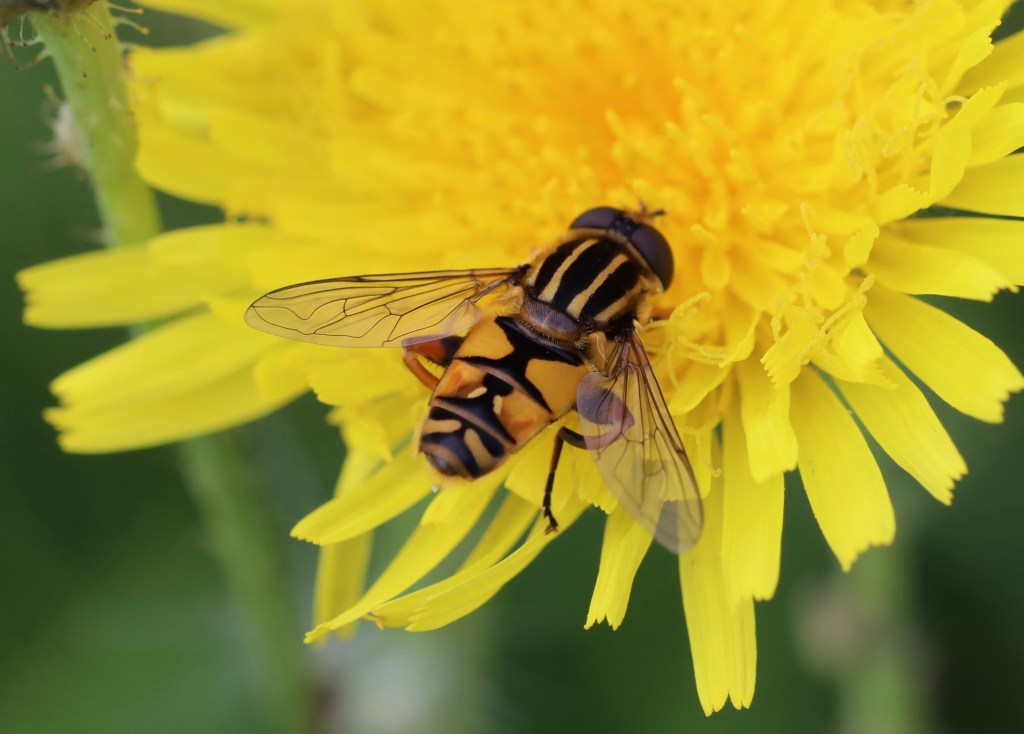
A favourite hoverfly, Helophilus pendulus, prefers habitats close to water. There is a very good chance that this smart insect will be seen sunning itself on a leaf or feeding on one of the many members of the Dandelion family.
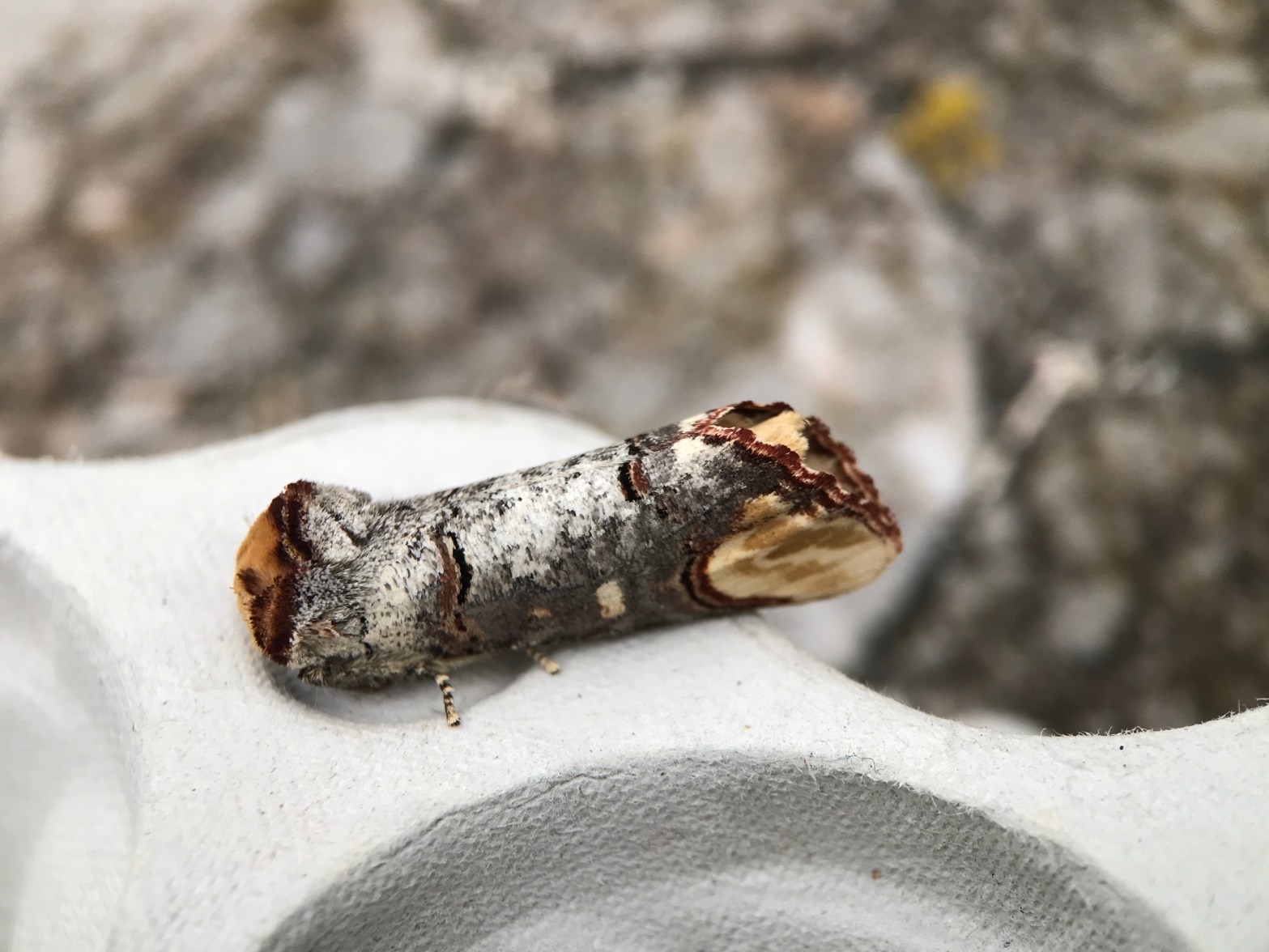
Tuesday, 3 May, Moths at Last

Finally I put out my moth trap last night. The reward this morning was 17 species, including Buff Tip. This is a favourite moth – you look at it and wonder how it can be a moth as it looks just like a bit of broken birch twig. Camouflage at its sneaky best.

It also had the good manners to stay still as I took a photo using a macro lens which attaches to my smart phone. It works well for plants and well-behaved moths, but I have to take the phone very close to the subject. I don’t think it will be as successful with other insects that take off as soon as I approach them. It’s a useful gadget and a lot lighter than my camera.

At the start of the season, my ID skills are rusty and there will be many species that I’ll have to re-learn. So, I was chuffed to ID with reasonable certainty a micro moth. There’s nothing micro about its name: Notocelia cynosbatella. I thought the piebald appearance would be the giveaway, but its the yellowy-orange labial palps (front of the face) which is the distinguishing feature.

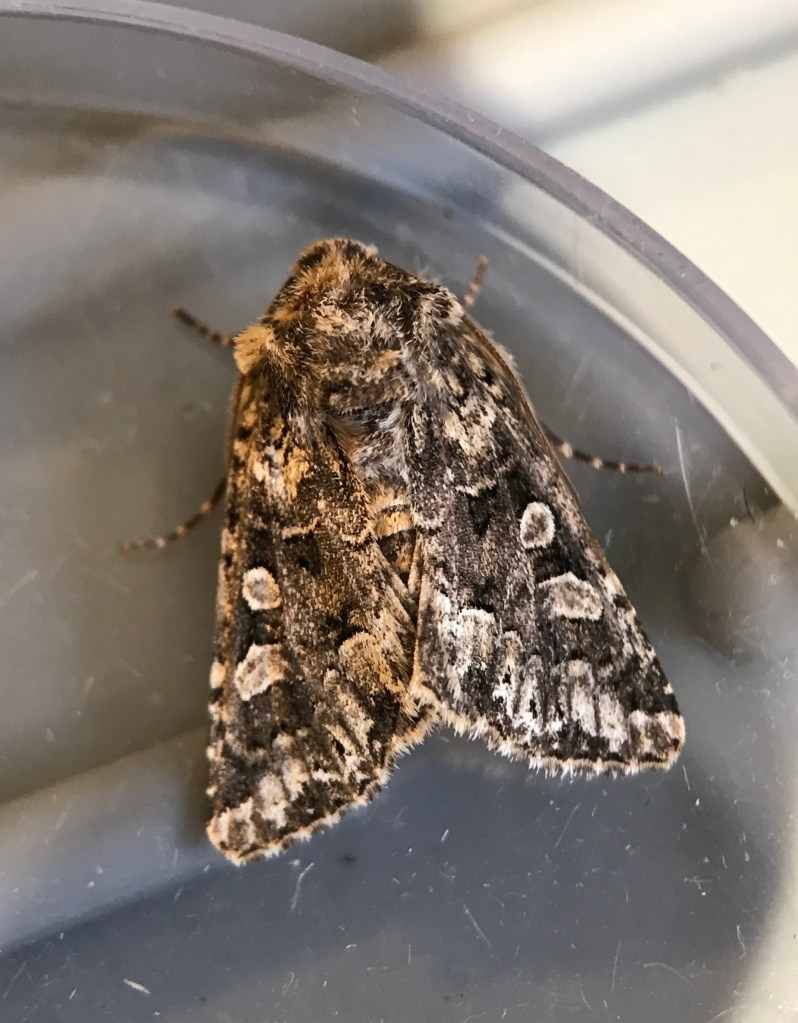
The moth that confused me is below. After turning many pages of my field guide I plumped for Tawny Shears which has been confirmed. Twitter is a wonderful social media platform – thanks @MothIDUK ! It belongs to the Noctuid family and many look, to my eye, very similar.

Saturday 2 April, Nature Guernsey

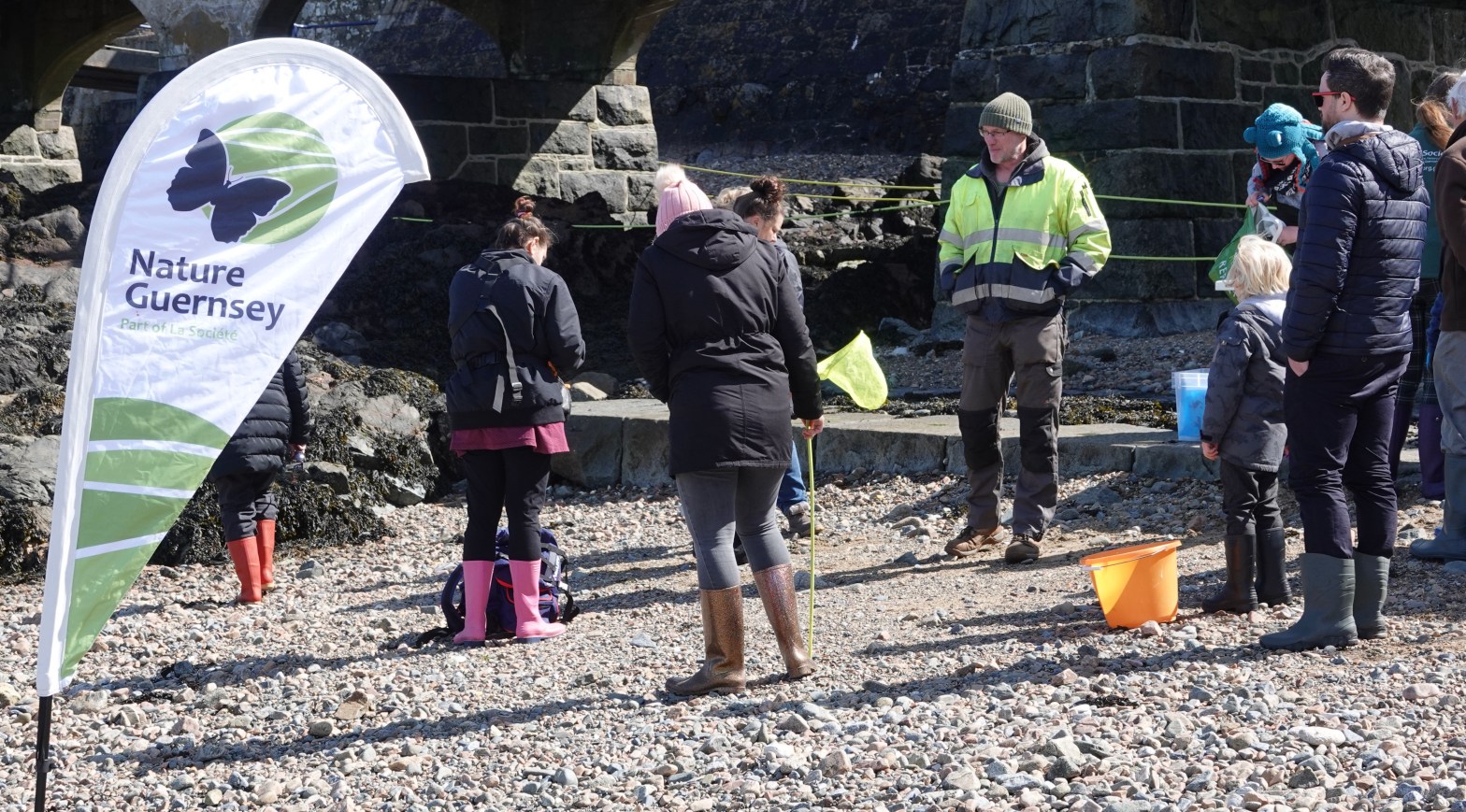
Crabs and Crocks at Cow Bay by Castle Cornet, an event put on by La Societe – great fun and lots of wildlife.

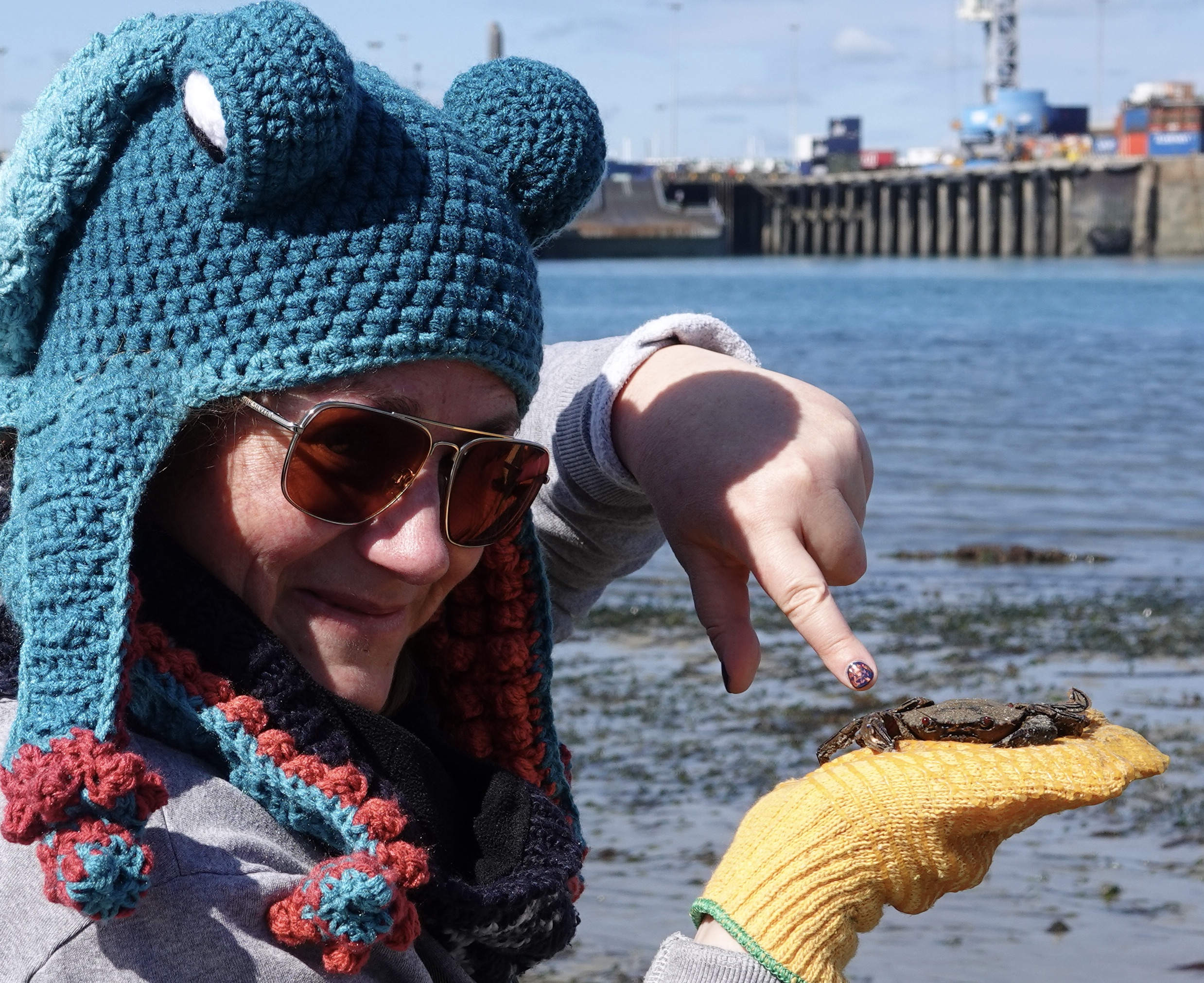
Helpers Trevor and Andy admire Liz ‘Octopus’ Sweet’s headgear.

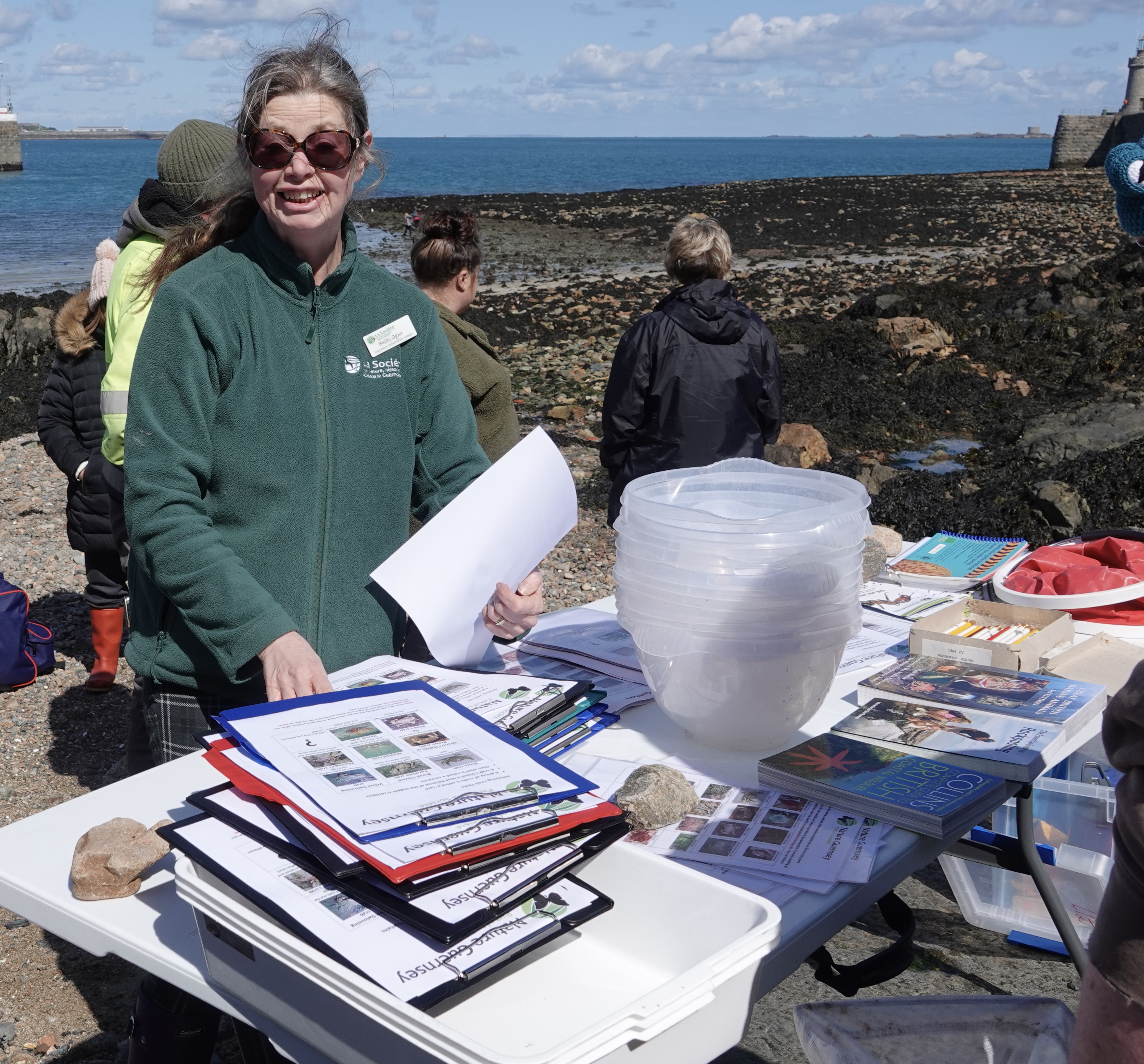
Meanwhile, Becky, Education and Conservation Leader, gets organised with the clipboards and reference books.

Eelgrass, a flowering plant, hugely important for marine ecosystems, stores carbon di-oxide very efficiently which is great news for the planet. It is right here in St. Peter Port Harbour. Oh yes, and eelgrass beds are in Belle Greve Bay.

Eelgrass, a plant worth protecting

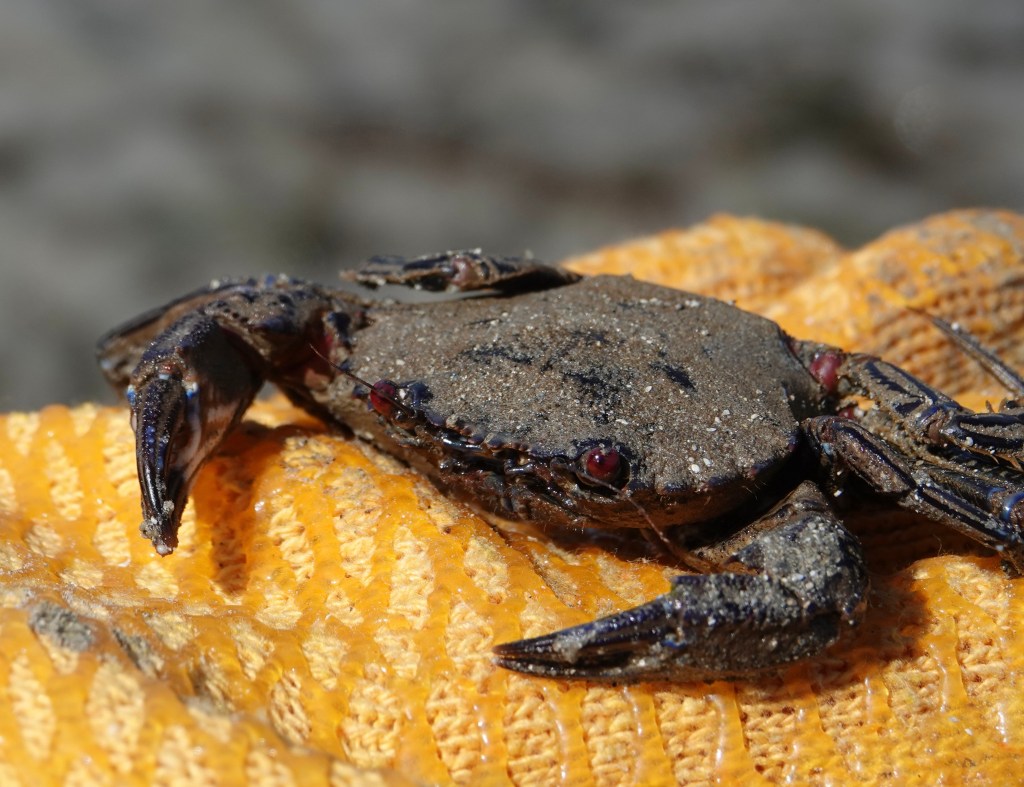
The Velvet Swimming Crab, Necora puber, with its red eyes. This one was surprisingly docile – they feisty and give a good nip.

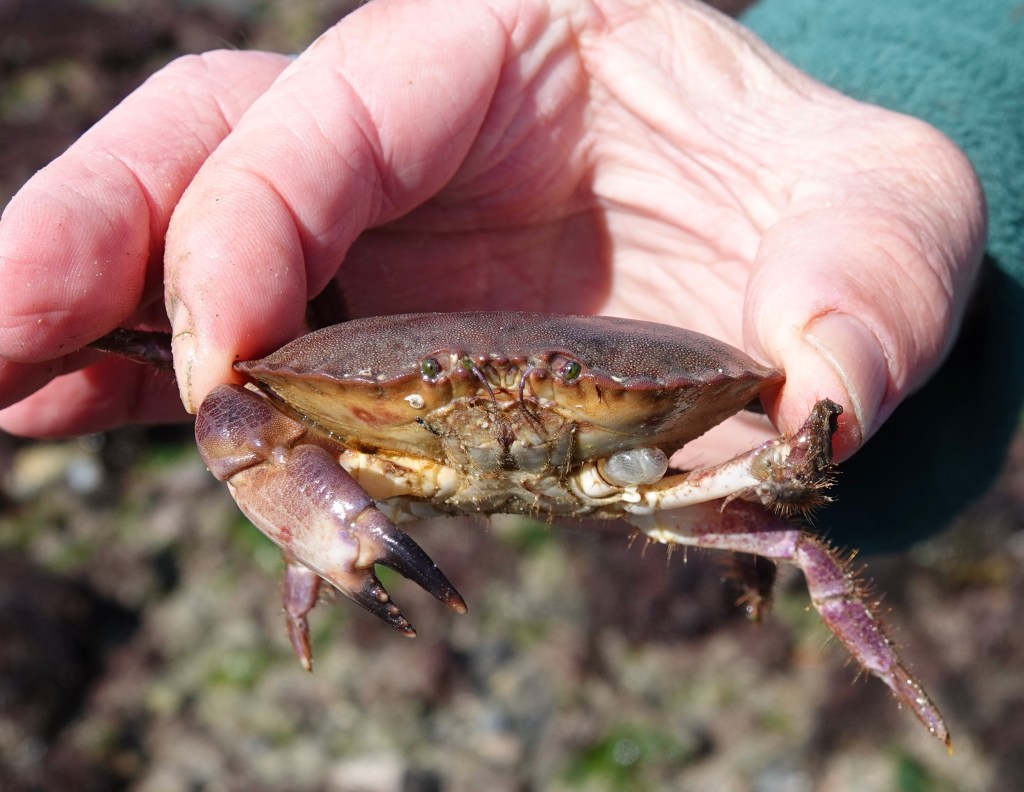
A Chancre, Cancer pagurus, showing its green eyes. this one has been in the wars and has lost a claw.

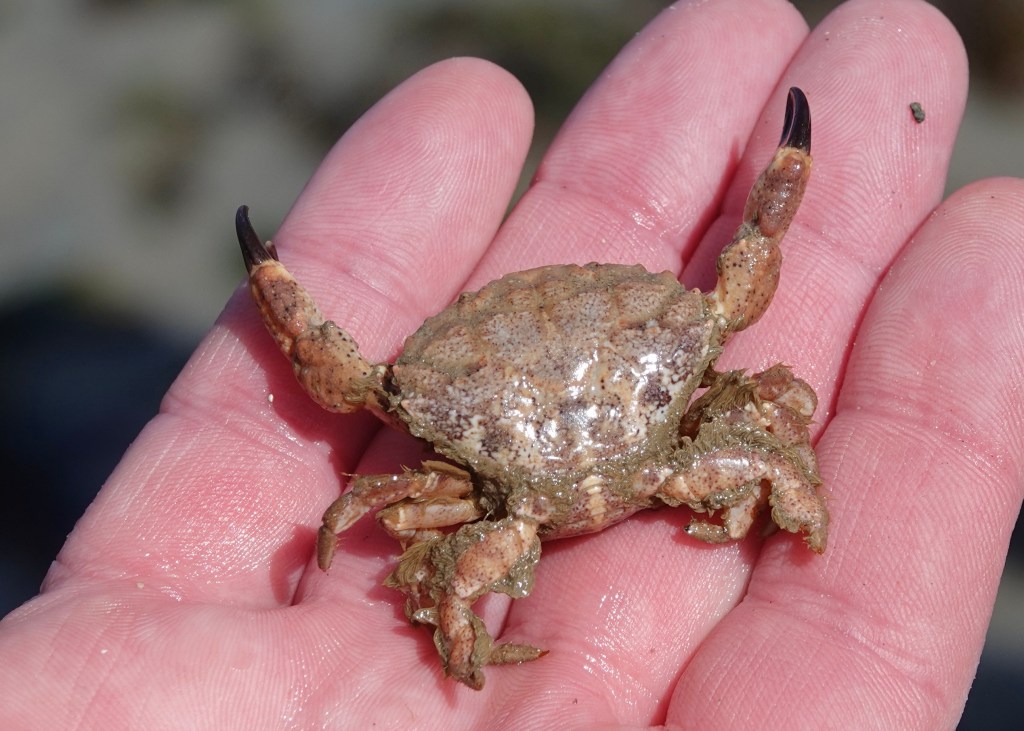
Montagu’s Crab, Xantho hydrophilus, has black tips to its claw, like the Chancre but its shell is very different .

Shrimp, or is it a Prawn?
Ormer – also found in Belle Greve Bay.

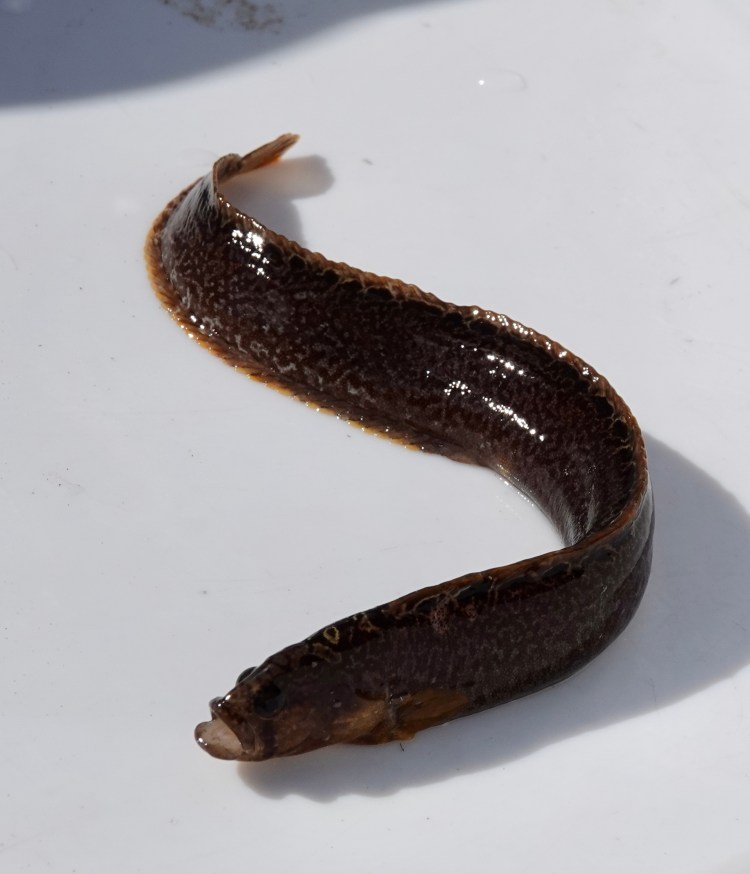
A Butterfish, so called because it’s very slimy and hard to pickup. It survives well out of water. at low tide it will hide in rocky crevices or in seaweed. This one was quickly returned to a shady, damp area by a rock.

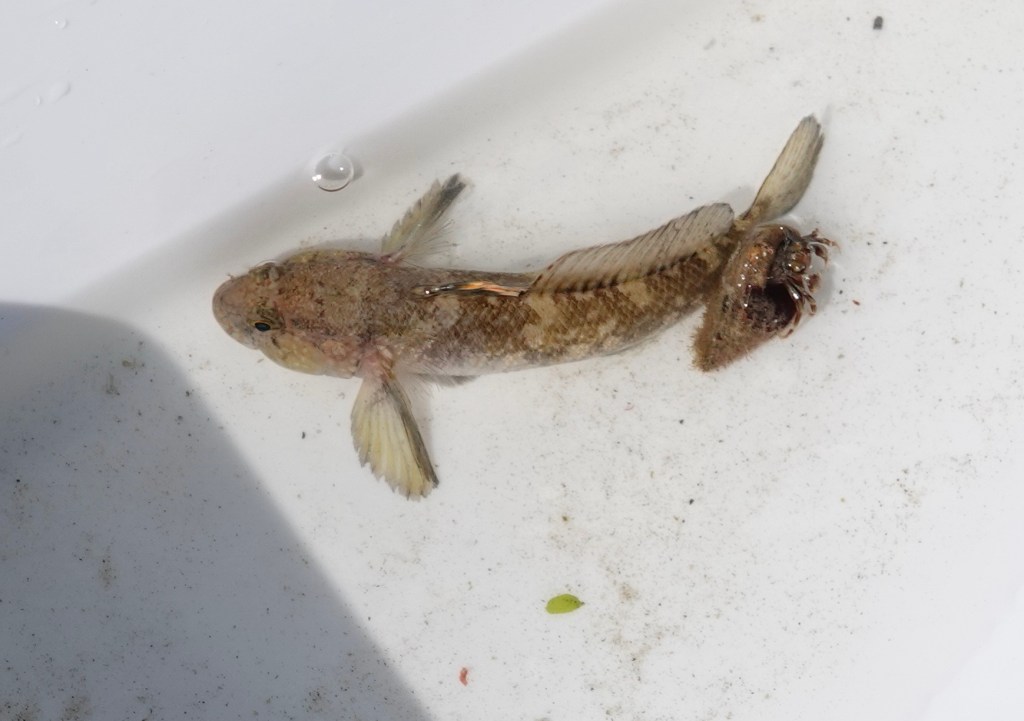
Blenny (I think) and a hermit crab.

After an hour, everyne had collected 40 species of animals and plants. The crab TBC (to be confirmed) I believe Andy Marquis later had an ID of Long-clawed Porcelain Crab. On the board, it has INNS written after its name, Invasive Non-native Species, as we weren’t sure what it was. It is a native crab but tiny (5mm) and only grows to 10mm so is easily overlooked and is not familiar.

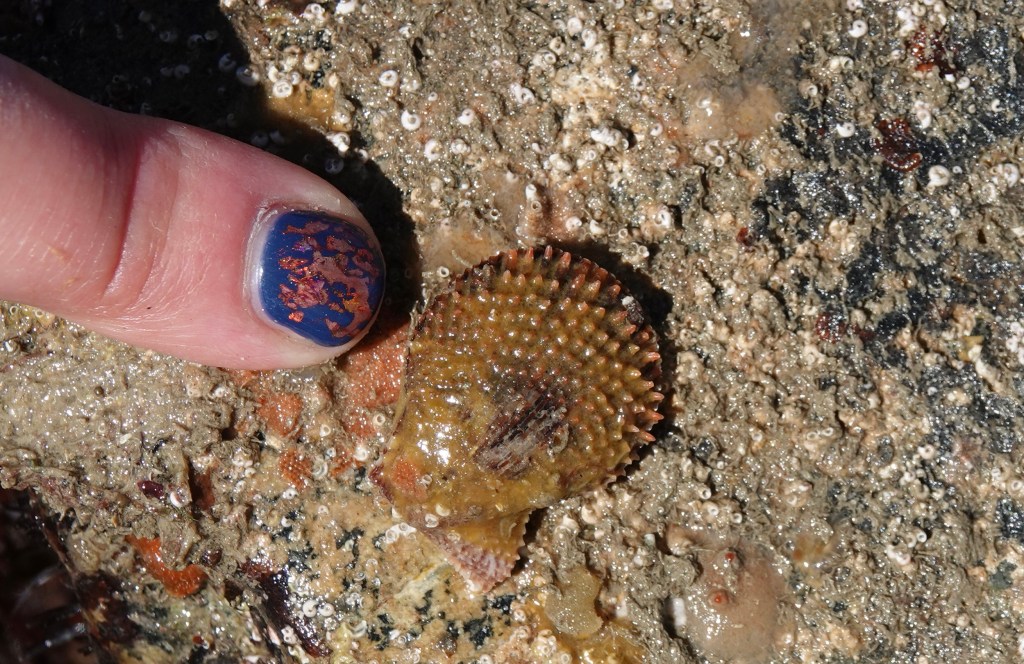
I had to include one of Liz’s snazzy nail varnish, next to a tiny and very ridged Scallop.