
The Grey Plover, Pluvialis squatarola, as its name suggests, belongs to the sub-family Plovers of which there are sixty-six species. Together with Lapwings they make up the family Charadriidae. They typically have a short, sturdy bill and hunt by sight, unlike many longer-billed waders that probe into mud and sand, using the sense of touch to catch food items. They will catch worms, molluscs and crustaceans that are moving around on the surface or in shallow pools.
They are rarely seen locally in their breeding plumage as their breeding grounds are far north in Arctic regions. In breeding plumage, these birds have dramatic black plumage from their chin down to their belly, with wide white edging on the breast. Non-breeding plumage is less spectacular but still very neatly marked in grey, black and white with a black bill and dark legs. In flight they have a distinctive black ‘armpit’ which shows up well against the rest of the paler underwing.

Above, a small group of Grey Plover roosting on rocks at Les Fontenelles Bay.
Post-breeding, they disperse south to many coastal locations. Some non-breeders are occasionally seen at the end of summer. Autmn migration into Guernsey usually starts in August, the main influx happens during October. Groups remain around the island’s coast until the spring when they start their northward migration back to their breeding grounds. Flocks of 30 – 40+ are most likely to be seen in January, possibly with birds coming in from other areas because of cold weather. It is more usual to see small groups feeding along the shoreline between tides. They are easily overlooked because of their grey plumage. They seem to like to roost further out, on rocks right by the sea so again are hard to spot. The one below was on the west side of Lihou Headland.
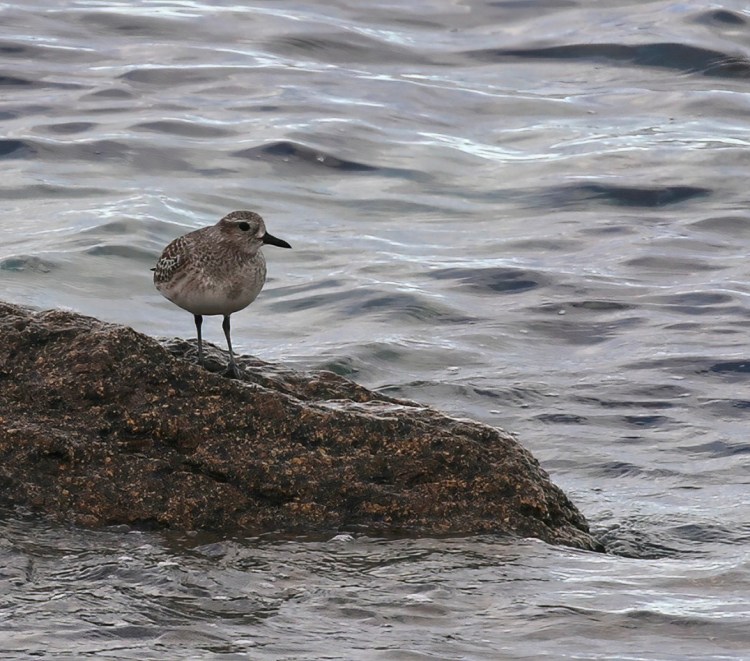
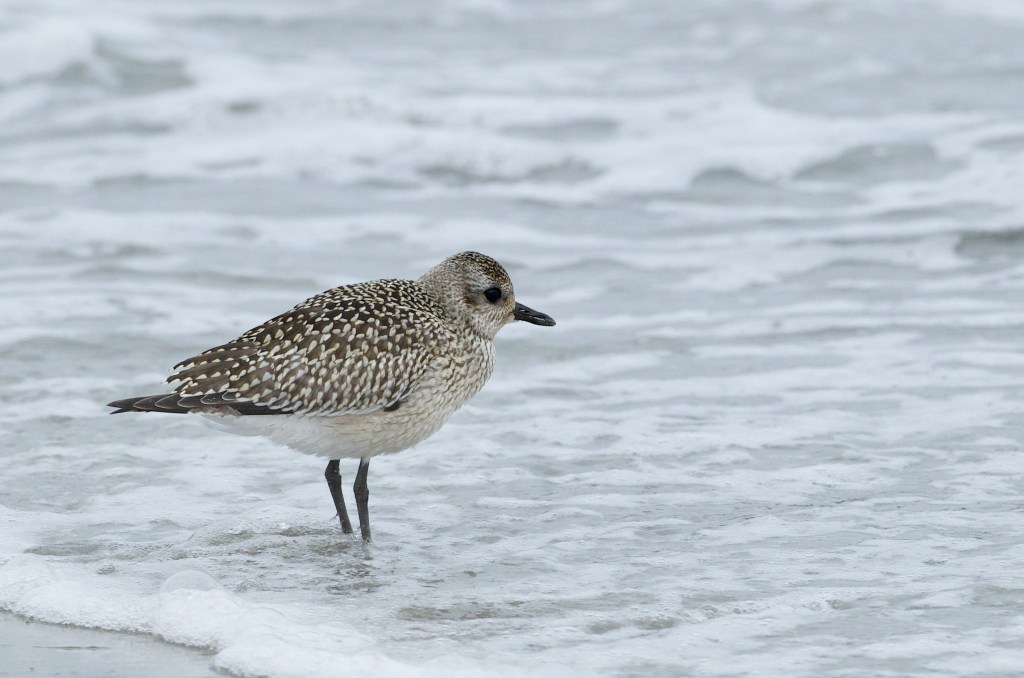
Mostly seen on rocky, pebbly or shingle beaches, they also feed along the sandy shore. The one above was at the north end of Vazon on a wet day when there was less disturbance.
They have been amber-listed in the UK since 1996, due to a decline in the numbers that overwinter. Numbers recorded locally are well below those for the Jersey shore which has nationally important numbers. Their typical lifespan is nine years, the record holder is just over twenty-five years from when it was ringed.
 Natural history of the Bailiwick of Guernsey