The blog has had to wait until I returned home to Guernsey as I forgot to pack the power cable for my laptop and I defy anyone to use WordPress on a mobile phone. This trip was booked a few months ago as a short Staycation and the chance to do a little bird ringing with John Horton, Warden of the Alderney Bird Observatory, https://alderneybirdobservatory.org
Britain’s most southerly bird observatory, John was instrumental in getting this project off the ground in 2016. Supported by companies such as Zeiss and Naturetrek, the observatory has contributed important data through ringing and recording. It has benefited the island by bringing in birdwatchers, particularly in the ‘shoulder’ months when there are fewer tourists. It has also been of immense benefit to the Channel Islands Bird Ringing Scheme.
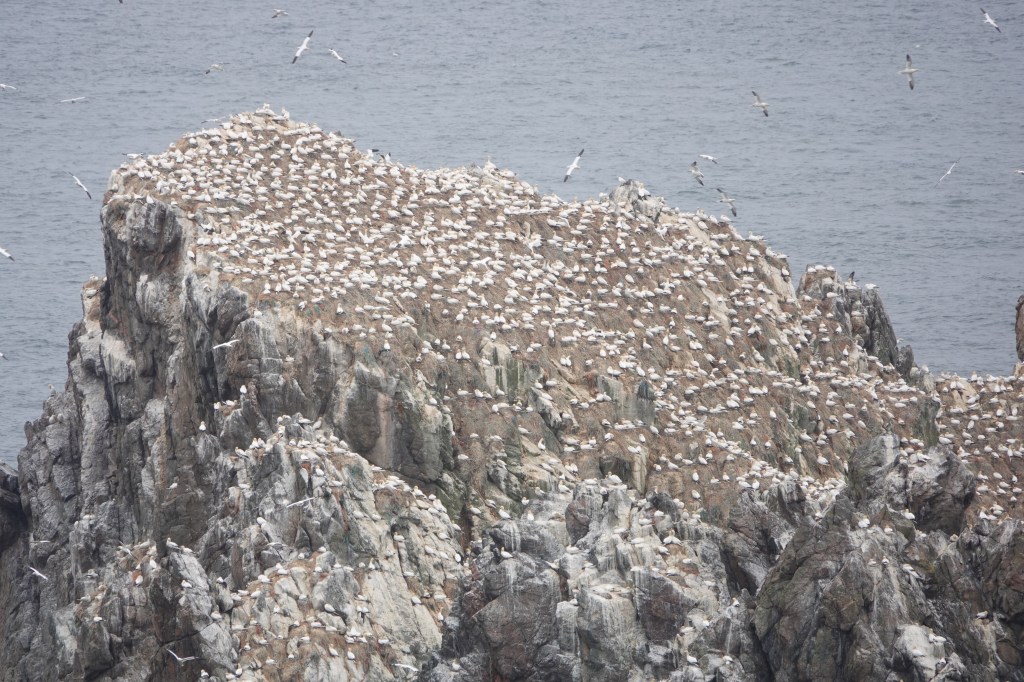
This trip was my first visit for many years and the must-see were the ganneteries on Les Etacs, rock stacks off Alderney’s south-west tip. Coming out of the airport, the sign post points right for St Anne’s (Alderney’s town) and left for Gannets! In 1945 there were only a handful of birds but this number has now grown to over 6,000. These rocks are at the southern edge of their breeding range and they are now full, as is nearby Ortac.


The bird ringing did not quite go to plan. It rained on the first full day, a few hours on the second day produced meagre results and on the last day it was too windy to put up most of the nets so we packed up and did an hour’s birdwatching instead. On Friday evening, Matt, the ABO’s Assistant Warden took me to the hide at Longis Pond to watch the Swallows coming in to roost in the reeds. What a sight in the fading light to see well over a hundred circling and flickering over the water before finally coming in to take shelter in the reeds. Some were netted and these were ringed back at the Nunnery, together with a Sand Martin. My ringing rate was rather slow as they have such tiny legs.
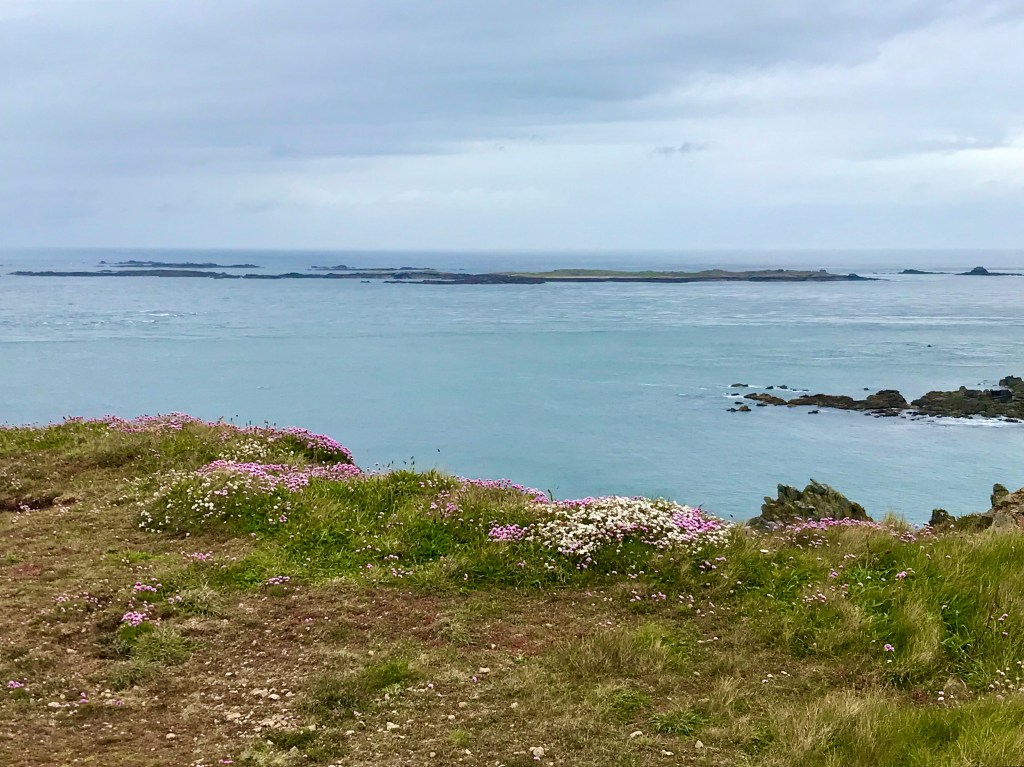
Between Giffoine and Fort Clonque – Alderney has more fortifications than you can shake a stick at thanks to the Brits in the nineteenth century and Nazi Germany in the twentieth – there is a coastal walk along the cliffs.

The gorse this year has been stunning and interspersed with good patches of heather this is a great area for birdwatching. Ian Le Page, who had been helping the ABO with its daily census, kindly showed me the patch where Dartford Warblers had been seen. Having spent time in Sark back in the autumn (blowing a hooley) and again in the spring (cold) I had only succeeded in hearing a brief snatch of song. With time to spare on Friday, after an early morning ringing session, I went to investigate.
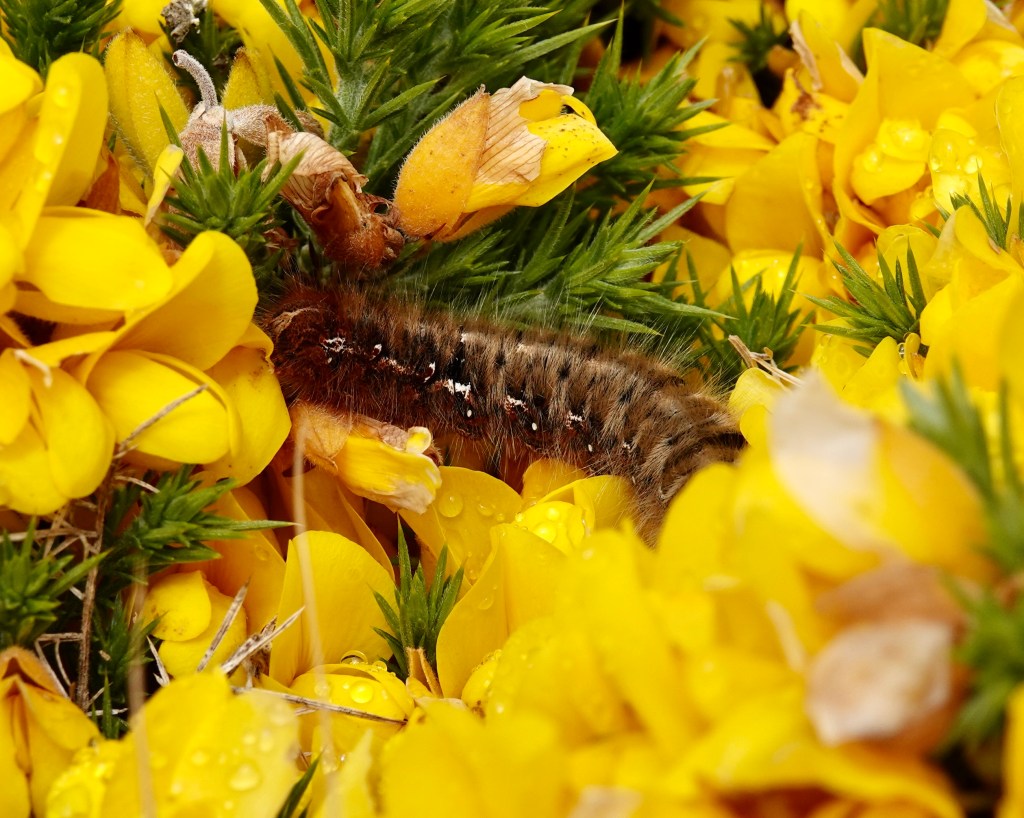
First up were a couple of caterpillars. My knowledge of caterpillars is woeful, so I’m hazarding a guess that the first one is the larva of an Oak Eggar. The second one? I haven’t a clue, so I’ve posted on the excellent Facebook Group, Insects of the Channel Islands so will label it when I get some replies. Andy Smith posted this reply: I think this is The Drinker 66.010- Rich’s list shows it as listed for Guernsey in 1899, no further records, one Herm record in 2003, but common in Alderney. We are so fortunate to have some very knowledgeable people, not just in the Bailiwick but in Jersey as well.

Then I mis-identified a male Stonechat for a male Pied Flycatcher – my excuse is that the light was against me and it really did look just black and white. Back in Guernsey yesterday I looked at the photo and realised my mistake – record corrected. One that needed no correction was the Cuckoo which was calling and seen in flight three times. There were good sightings of Whitethroat, their scratchy song attracting my attention.
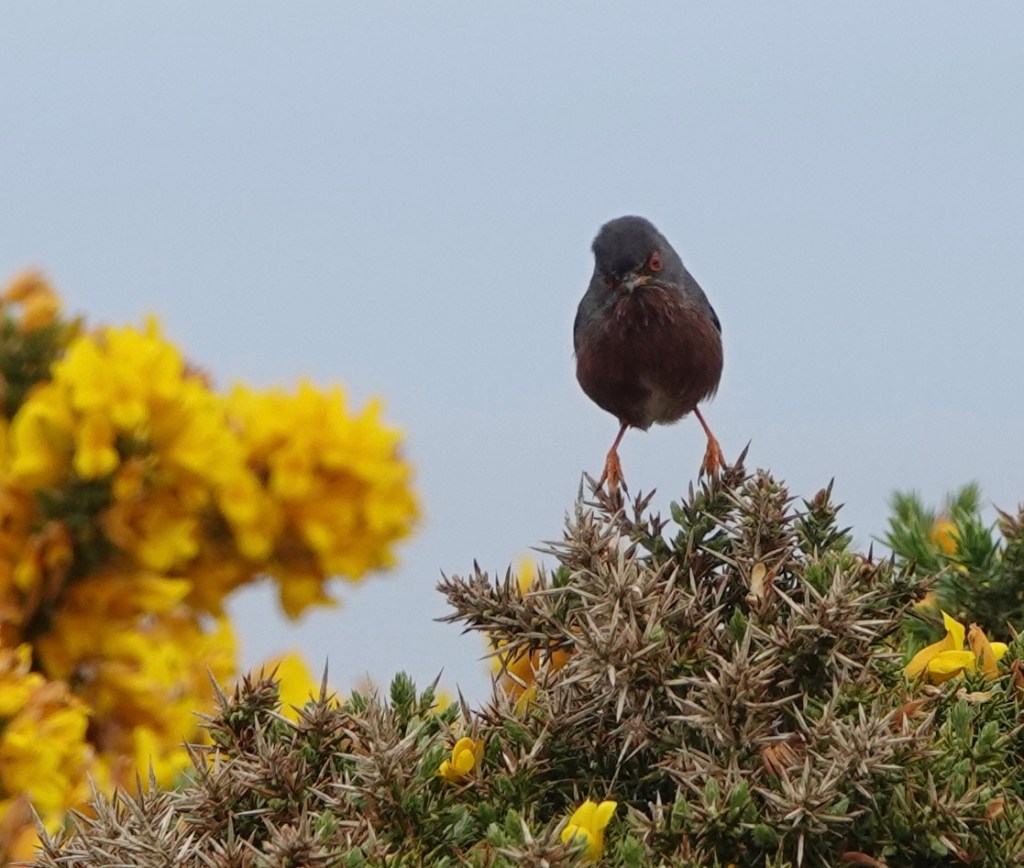
Best of all was – yessss – Dartford Warbler. Again, their scratchy staccato call, although rather quieter than I thought it would be, attracted my attention. They are not shy birds and showed up well with tail cocked and that red eye. Watching from a distance and keeping still, I enjoyed their company for about twenty minutes before walking on to leave them in peace.

 Natural history of the Bailiwick of Guernsey
As someone who knows next to nothing about bird watching, I found this really enlightening – and I am jealous of your hearing a cuckoo! I have not heard one in west Dorset for years. My favourite photo is the Dartford Warbler carefully perched on the gorse bush – a great shot.
LikeLike